For decades, Nollywood has dazzled the world with its ambition, producing thousands of films, building vast fandoms across continents, and shaping cultural conversations well beyond Africa’s borders. Yet beneath the colourful tapestry of creativity lies a harder truth. Nollywood is still deeply underfunded. It is an industry celebrated globally, but rarely supported with the level of investment that matches its influence.
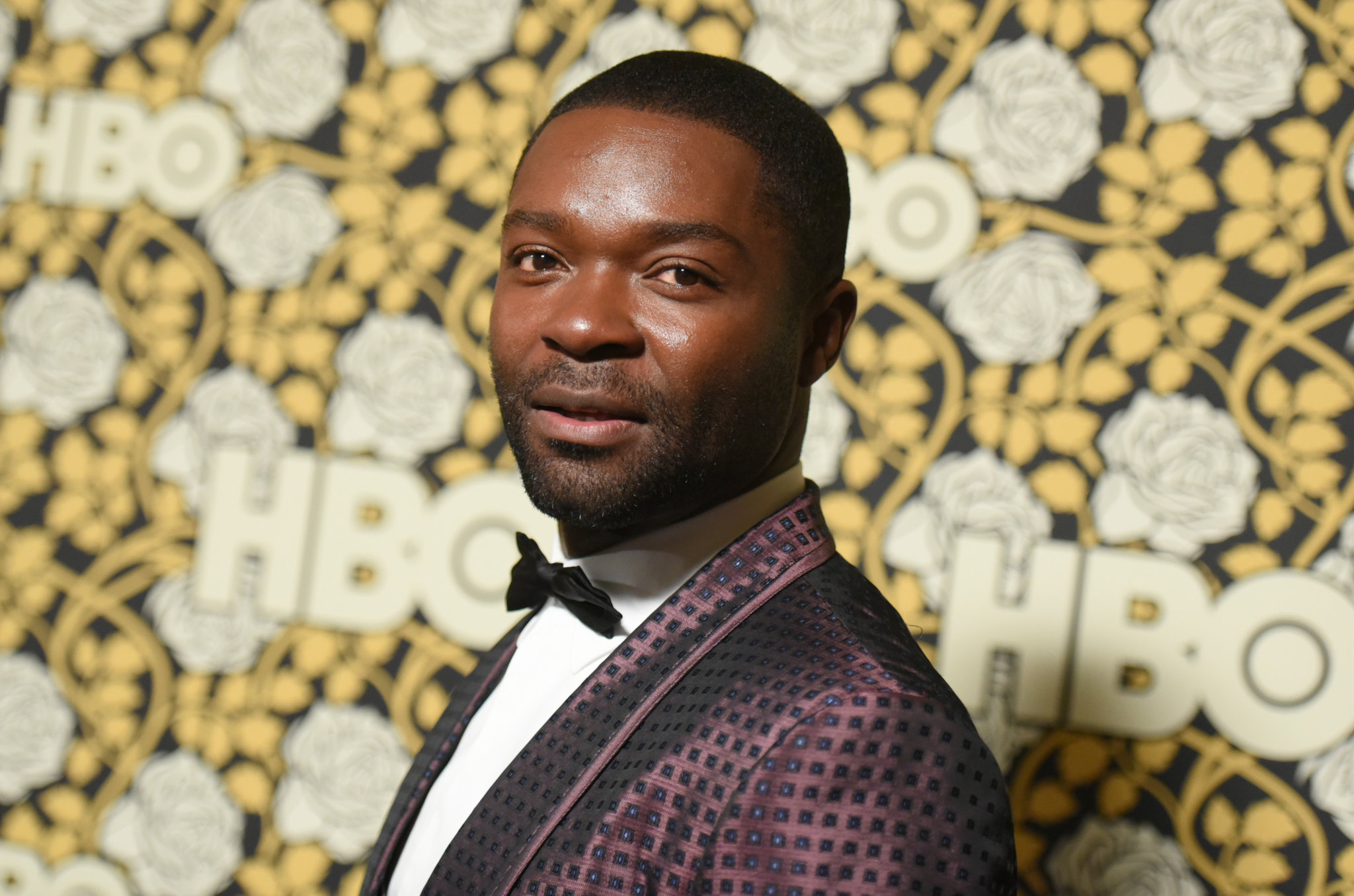
Few voices understand this contradiction more intimately than David Oyelowo. The British-Nigerian actor and filmmaker has become one of the most outspoken advocates for African cinema, not just its artistic value, but its right to be resourced, respected, and recognised on its own terms. From film sets in Lagos to stages in London and studios in Hollywood, Oyelowo has witnessed the same pattern. Audiences embrace African stories far more readily than the executives who decide what gets funded.
YOU CAN ALSO READ: Aigboje, Ofovwe Aig-Imoukhuede Named Co-Chairs of King’s Trust International Africa Advisory Board
“When you ask whether the world is ready for African stories,” he says, “the truth is the audience already is. It’s the gatekeepers who haven’t caught up.” He references Squid Game, the South Korean series that exploded into one of Netflix’s biggest global hits. “It wasn’t an executive’s bold vision,” he notes. “The audience discovered it and forced the industry to notice.” For Oyelowo, this was proof that global tastes have evolved far beyond the imagination of traditional Hollywood institutions. But the barriers facing African filmmakers are much older and more deeply rooted.
Oyelowo’s understanding of representation is not academic, it is carved into his family’s history. Years ago, he made theatre history by becoming the first Black actor to portray an English king at the Royal Shakespeare Company. When his father, who had lived through racism in 1960s Britain, watched him play Henry VI, something shifted. “It wasn’t just that he saw me on stage,” Oyelowo recalls. “He saw possibility. He saw that a system that once said ‘you don’t belong here’ could be challenged.” That moment revealed what he believes to be the greatest power of media. Its ability to rewrite the limits people place on themselves.
The lesson returned years later when Oyelowo told his twelve-year-old son he was starring in a Disney movie. The boy instantly assumed he would be cast as the best friend, the sidekick. The reflex, Oyelowo says, came from years of only seeing Black characters in secondary roles. “That’s why representation matters,” he says. “Because before the world limits you, your imagination can already limit you.”
Oyelowo’s career is built on choosing roles with weight and meaning. But the more successful he became, the more he saw the limits built into the system. Even when Black creators raise their own money and complete their own films, distribution still lives in the hands of gatekeepers with very different priorities. “You can pour your soul into a project,” he says, “and the people who benefit most are often the ones with the least connection to the story.” Streaming platforms, which once promised liberation, introduced new complications. Global access increased, but traditional revenue streams collapsed. Companies claim they “can’t track viewership,” leaving creators in the dark about how well their own work performs. “Visibility became the new reward,” he says. “We were told, ‘Just be grateful you’re being seen.’” It is this imbalance that pushed Oyelowo toward building a new model.
Oyelowo is now one of the co-founders of Mansa, a streaming platform dedicated to Black creators, designed to provide what Hollywood rarely offers, transparency, ownership, and fair participation in the value created. “Mansa is not charity,” he clarifies. “It’s infrastructure. It’s a bridge between Africa and its diaspora. A place where cultural power isn’t filtered through people who don’t understand it.” He sees Mansa as part of a wider movement, a reclaiming of global Black narratives after centuries of systems specifically designed to fracture communities.
To understand the inequities in global filmmaking, Oyelowo widens the lens. He points to a long pattern, brief moments of progress followed by swift, constricting backlash. During America’s Reconstruction era, Black advancement was met with violent suppression. Across Africa, newly independent nations were undermined by global interests that kept their economies dependent. And today, the global wave of racial awakening from 2020 has already been replaced by pushback, with “DEI” framed as a threat and inclusion treated as a burden. “It’s unfair,” Oyelowo says quietly. “Five years is not enough time to recover from 500 years of oppression. We barely get a breath before progress is reversed.”
Oyelowo’s reflections return often to Selma, the Martin Luther King Jr. biopic he led, a film that changed his life and career. The public embraced the film. Viewers praised the performance. Audiences around the world believed the awards season would honour it. But when the nominations were announced, Oyelowo and director Ava DuVernay were absent. “It was the first time I heard the word ‘snub’ attached to me,” he says.
“And it hurt.” After seven years trying to make the film, after the emotional weight of playing King, the awards narrative overshadowed the art itself. Then came the eruption of Oscars So White, with Oyelowo and DuVernay cast as symbols of Hollywood’s failures. For two years, conversations focused on what they didn’t receive.
YOU CAN ALSO READ: From McDonald’s to Space: Jeff Bezos Shares Vision and Leadership Insights in Miami
But time offered perspective. “We made a film about the denial of Black voting rights,” he says. “And in doing so, we unknowingly exposed a parallel issue in Hollywood.” The film shifted the industry. Doors opened. Systems were questioned. And Oyelowo learned a lesson that anchors him today. “Awards are beautiful, but they can become a trap. You start chasing validation instead of purpose.” He sees talented friends consumed by the need for recognition, a hunger he now guards himself against. “You must never let an award own you,” he says. “Let the work be the reward.”
For Oyelowo, this is a historic turning point for African cinema. Technology has removed many barriers. Young African creators are producing world-class work. Global audiences are more open than ever. What remains is the final, crucial ingredient, investment that matches African talent. “Nollywood has already earned its place,” Oyelowo says. “Now it deserves the resources to match its potential.” Across the continent and its diaspora, a rising generation is ready. The question is no longer whether African stories are worthy. It is whether the world will invest in the future they represent.
This content does not belong to EnterpriseCEO and is not our original material. It is sourced from Afropolitan – YouTube, where they featured an in-depth interview with British-Nigerian actor David Oyelowo. We are sharing it here solely for informational purposes, to provide insight into Oyelowo’s perspectives on African cinema, representation, and the global film industry. All rights and ownership remain with Afropolitan Podcast.