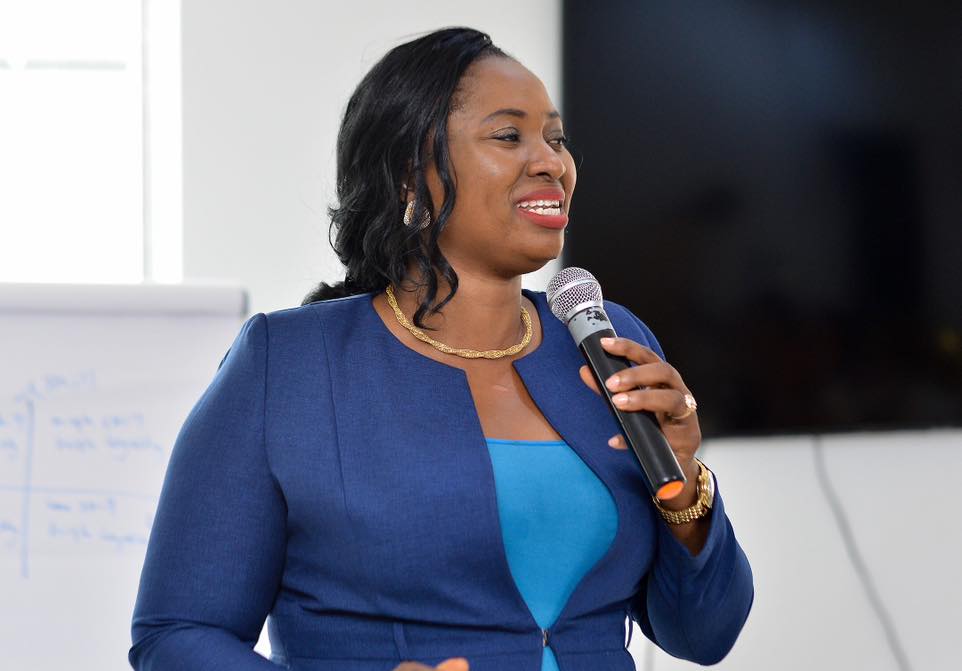
Co-founder and Managing Director of Xtralarge Farms and Group of Companies, Dr. Moji Davids has called for urgent national commitment to agriculture, insisting that Nigeria’s economic survival depends on returning to the land. She warned during an interview on AriseTV that the era of relying on crude oil for national stability is fast fading, and any nation that ignores its agricultural potential risks long term economic vulnerability.
For decades, oil has delivered more than 90 percent of Nigeria’s export earnings, creating a dangerous overdependence on a single commodity. Yet Nigeria possesses millions of hectares of fertile, unused arable land capable of feeding the population, generating employment, and unlocking sustainable wealth. Dr. Davids, drawing from her experience as a practicing farmer and agribusiness leader, believes agriculture holds the key to the country’s future. “If Nigeria truly wants a future beyond oil, agriculture must lead the way. No country grows by abandoning its own land,” she said.
YOU CAN ALSO READ: Brilliant but Stuck: The Gap That Stops Technical People from Becoming CEOs
Although trained as an accountant, Dr. Davids proudly calls herself a farmer. After years abroad, she returned to Nigeria with her husband, Farmer Seyi Davids, to build Xtralarge Farms into one of the nation’s most expansive agricultural enterprises. Today, the company operates more than 14 farming locations across the country, with offices in Lagos, Abuja, and other states, as well as international business and sales branches in the United Kingdom, United States, Europe, Canada, and Dubai. Under her leadership, Xtralarge Farms has become a leading voice in clean food production, organic farming, and agribusiness empowerment, with thousands of members benefiting from its growth model.
Her message, however, goes beyond corporate success. She believes Nigeria’s biggest obstacle to agricultural development is not a lack of land, talent, or youth population, but a lack of seriousness. According to her, “Countries with far less land are doing extraordinary things in agriculture. Meanwhile, we have fertile soil and unemployed youths, yet we still import food. The issue is not potential, it is commitment.” She adds that cultural perceptions must change, noting that many young Nigerians still associate farming with poverty or backwardness, instead of seeing it as an industry powered by technology, innovation, and high profitability.
She argued that Nigeria must make agriculture appealing to young people by embracing modern tools and mechanization. “Today’s youth will not pick up hoes and cutlasses. They are drawn to technology, drones, smart farming, and data driven systems. We must modernize agriculture if we want the next generation to take it seriously.” She emphasizes the need for free, accessible agricultural training programs that offer hands on farm experience rather than classroom theory.
However, she insisted that even innovation cannot take root without security. The rising insecurity in farming regions has become one of the biggest threats to food production. “A farmer cannot produce food when unsure of returning home safely. Security is not something individuals can solve. The government must prioritize protecting food basket regions. Without safety, agriculture cannot thrive.”
YOU CAN ALSO READ: A Mosaic of Changed Lives: Daystar Marks 30 Years of Raising Role Models
Dr. Davids recently participated in the Nigerian Diaspora Investment Summit, where she witnessed firsthand the growing interest in agribusiness among young innovators. She recounts an inspiring example of a young woman who developed a solution for reducing tomato waste and secured a 250 million naira investment. For her, this was proof of what is possible when youth receive the right exposure and platforms.
Her appeal to Nigeria is clear. Diversification is no longer a topic for speeches, it is a national emergency. Agriculture offers a pathway to wealth creation, job generation, food security, and economic stability. As she puts it, “We have talked about diversification for too long. It is time to act. Agriculture is the pathway to national survival. If Nigeria wants a future beyond oil, agriculture must lead the way.”