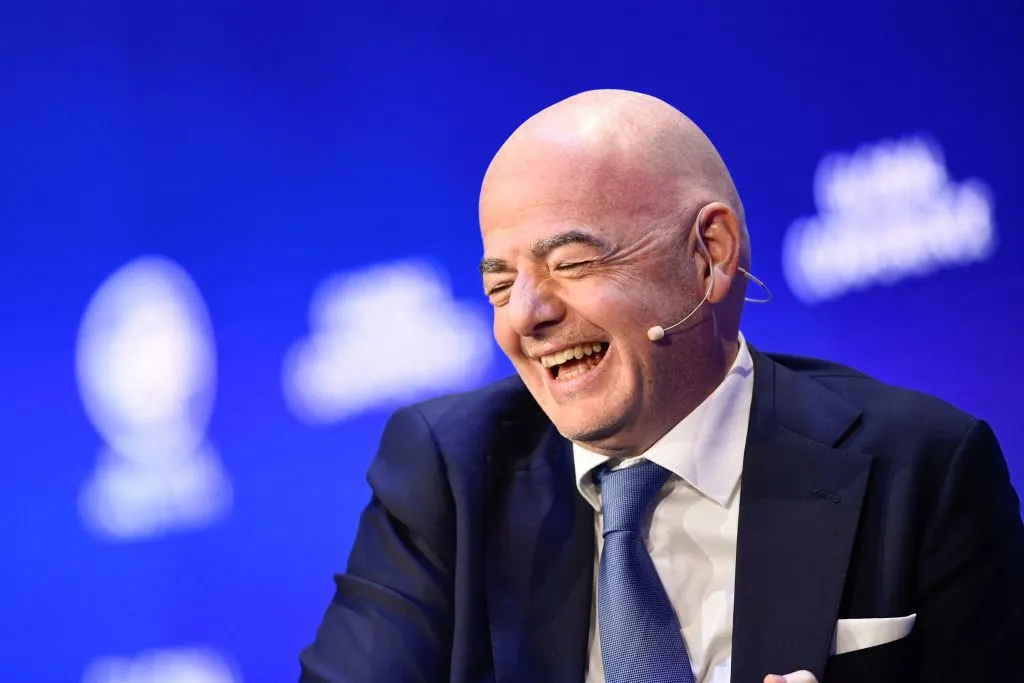
Gianni Infantino never imagined that the son of Italian immigrants growing up in a small Swiss community would one day become the president of FIFA. Yet, as he reflects on his journey, he credits one constant force that shaped his life from childhood: football.
“I grew up in Switzerland as the son of Italian immigrants,” he recalled. “Football, from the moment I was very small, was a way of life. It was how you integrated, how you connected, how you became part of a society that was not originally yours.”
Infantino often tells the story with humor. Standing before an American audience, he playfully clarified the sport’s name. “Everyone outside this beautiful country calls the game we play with our feet football. Here, you play football with your hands. I don’t know who is right or wrong, but whether we call it soccer or football, it does not matter as long as we have fun.”
YOU CAN ALSO READ: Nigeria’s Tax Reset: How Taiwo Oyedele Plans to Make Taxes Fair, Transparent, and Less Painful
Behind the laughter is a defining childhood memory. “Italy won the World Cup when I was 12. That was a strong moment where I truly fell in love with the game.”
Infantino says he realized early that his talent on the pitch would never take him to the World Cup as a player. So he took a different route. “If I ever wanted to touch the World Cup, I needed to become FIFA President,” he said. “With some friends, we took over our local Italian team in the Swiss mountains. The key argument that won us the election was that my mother was ready to wash the jerseys for free. We organized matches, managed the team, looked for sponsors. Today, I do the same thing, just on a different scale.”
The leap from a volunteer in local amateur football to the most powerful administrator in global sport still feels almost impossible, he says.
As head of FIFA, Infantino manages the world’s most watched sport, interacts with global leaders, and faces intense scrutiny. He acknowledges that diplomacy is part of the job and describes a close relationship with former United States President Donald Trump. “He has been very helpful in everything related to the World Cup,” Infantino noted. “He is incredibly energetic. He does what he says and says what he thinks.”
The partnership will be on display on December 5 at the Kennedy Center, where FIFA will host the World Cup draw and present a new award, the FIFA Peace Prize, centered on the theme Football Unites the World. “We want to use this platform for unity and peace,” Infantino explained. “The world is very divided today. The prize will recognize individuals doing exceptional work for peace.” When asked whether the first recipient is someone already seen on stage, he smiled and said, “Maybe. You will find out on December 5.”
Infantino also emphasized FIFA’s often overlooked humanitarian and developmental role. “FIFA is nonprofit. All revenues from the World Cup are reinvested into the game,” he said. With 211 member nations, which is more than the United Nations, he sees football as a global tool for hope. “If you give a child a ball, you give them joy, hope, and opportunity.”
YOU CAN ALSO READ: ‘Leadership Is Not for Rascals’: Goodluck Jonathan Reflects on Future of Governance in Africa
His tenure has included hosting World Cups in Russia and Qatar, two of the most politically charged tournaments in recent history. Infantino argues that engagement, not isolation, produces progress. “When I took over, FIFA was toxic. People were arrested, jailed, sponsors gone,” he said. “The pressure for Qatar was extremely high, but leadership means standing firm and engaging with everyone. Between staying in a nice office in Switzerland and going somewhere to try to make positive change, I will always choose the second.” He still believes the 2022 final, Argentina’s dramatic victory, was something out of this world.
Despite leading a multibillion dollar global organization, Infantino insists he remains grounded in the passion that first drew him to the sport. “I am a fan myself,” he said. “You kick a ball, talk football, and you connect instantly with heads of state or ordinary people.”
Perhaps the most emotional moment for him came recently, when FIFA helped reunite and field the Afghan Women United team, refugees now living across the world. “It was deeply emotional,” he said. “Football writes new beautiful stories every day.”