Artificial intelligence is no longer a distant concept or experimental tool. It is actively reshaping how companies operate, how people work, and how decisions are made. At the center of this transformation are a group of tech CEOs whose leadership choices are defining what the AI era will become.
YOU CAN ALSO READ: What Sets Mark Zuckerberg Apart from Other Tech CEOs
Creating AI as a side project, these leaders are embedding it deeply into products, platforms, and long term strategy. Their decisions are influencing productivity, creativity, regulation, and global competition.
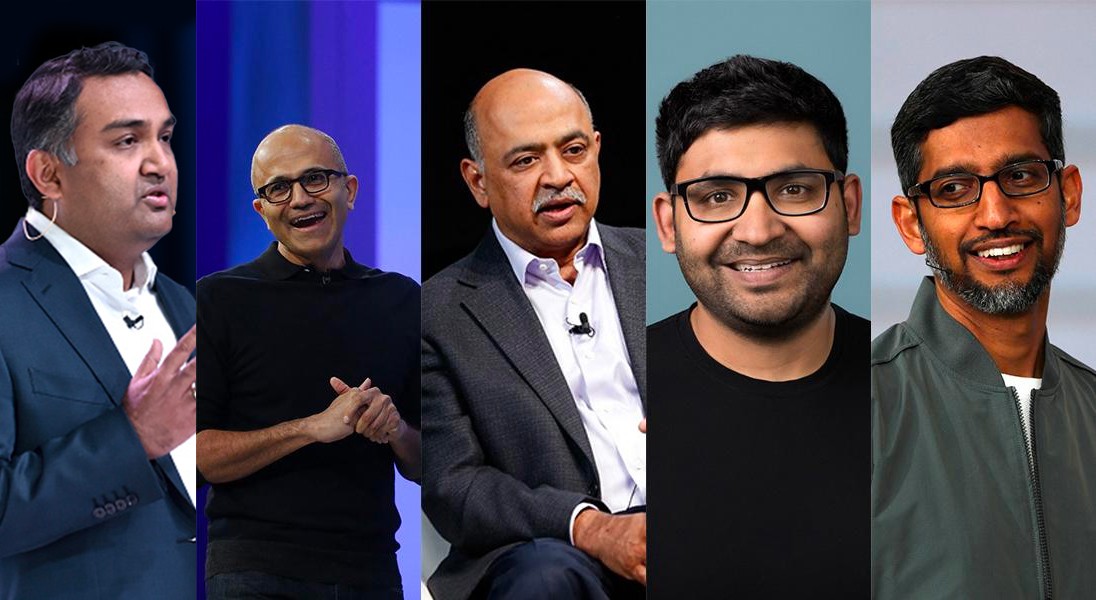
Satya Nadella, CEO of Microsoft, has been one of the most influential figures in bringing AI into everyday business use. Under his leadership, Microsoft has integrated generative AI across its core products, from workplace software to cloud services and developer tools. Nadella’s approach positions AI not as a futuristic add on, but as a foundational layer of modern work. The goal is clear: make AI practical, scalable, and accessible to businesses and individuals alike.
At Google, CEO Sundar Pichai is steering the company through a pivotal AI moment. AI has always been central to Google’s identity, but recent moves signal a stronger sense of urgency. Pichai has pushed for faster deployment of generative AI across search, productivity tools, and consumer platforms. His challenge has been balancing innovation speed with responsibility, as AI systems increasingly shape how people access and trust information.
In the creator economy, Neal Mohan, CEO of YouTube, is defining how AI can support rather than replace human creativity. Under his leadership, AI tools are being used to help creators edit content faster, translate videos into multiple languages, and reach global audiences more efficiently. Mohan’s approach reflects a belief that AI should lower barriers and expand opportunity, not remove the human element that drives culture.
Sam Altman, CEO of OpenAI, represents a different dimension of AI leadership. Beyond building widely used generative AI systems, Altman has become a central voice in global discussions about AI safety, governance, and long term impact. His leadership has helped move conversations about AI regulation from academic circles into boardrooms and government offices worldwide.
YOU CAN ALSO READ: Coca-Cola Appoints Henrique Braun as CEO
Jensen Huang, CEO of Nvidia, plays a critical role in the AI ecosystem from a hardware perspective. While many companies focus on software and applications, Nvidia provides the computing power that makes modern AI possible. Under Huang’s leadership, Nvidia’s chips have become the backbone of AI training and deployment across industries, positioning the company as a key enabler of the entire AI economy.
What connects these CEOs is not just belief in AI, but how deliberately they are choosing to deploy it. Across the tech industry, there is a shift toward practical use cases, responsible development, and long term value creation. AI is increasingly seen less as a headline grabbing feature and more as a core business capability.
At the same time, pressure is rising. Governments are watching closely. Workers are concerned about job disruption. Users are demanding transparency, trust, and accountability. The decisions these leaders make now will shape public confidence in AI for years to come.
The future of artificial intelligence is not being decided by algorithms alone. It is being shaped by the people leading the companies that build and deploy them. As these tech CEOs continue to define the pace, direction, and boundaries of AI, their leadership may prove just as important as the technology itself.
In this new era, AI leadership is no longer optional. It is the defining responsibility of modern tech CEOs.