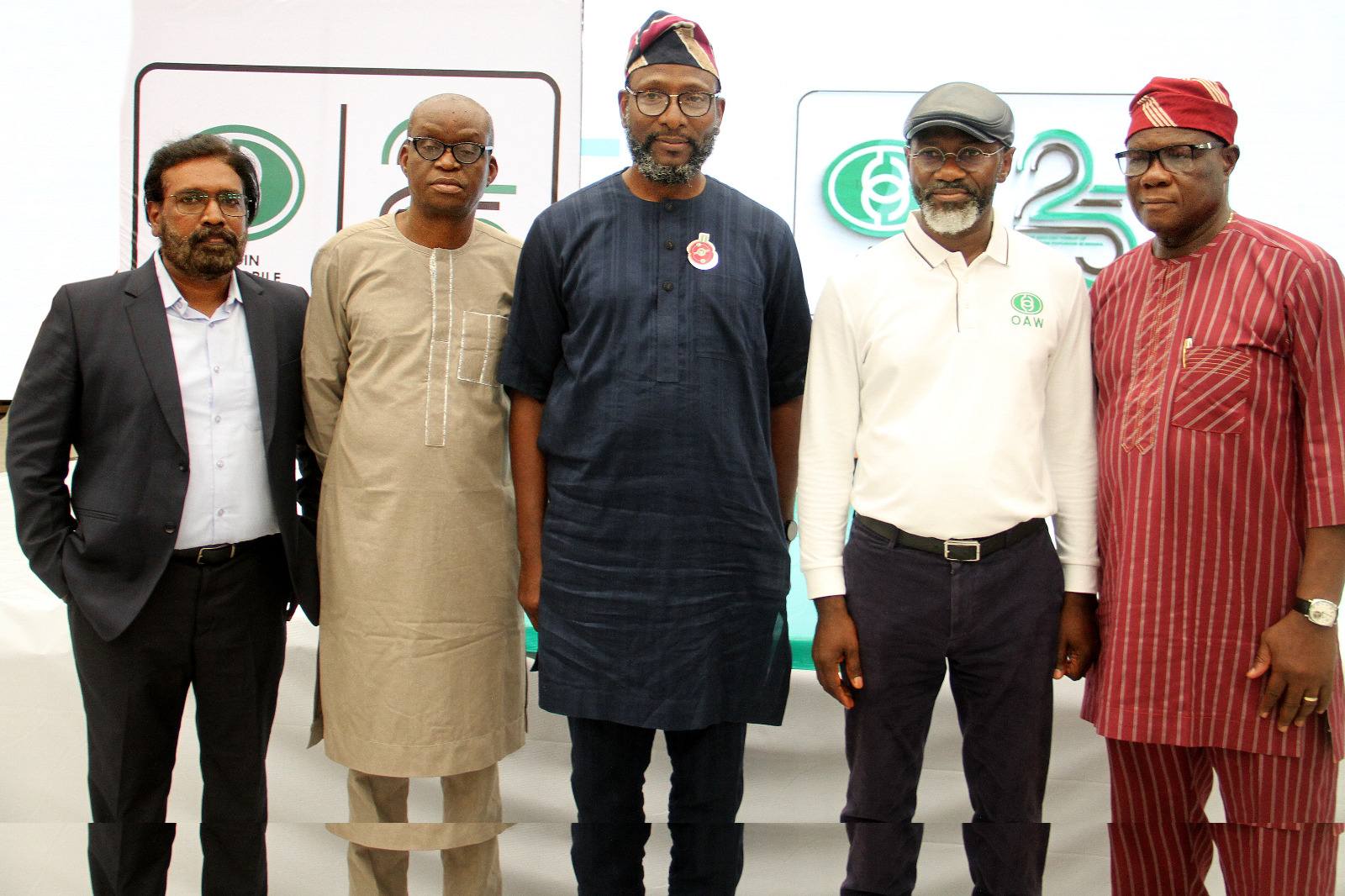
Nigeria’s agricultural challenge, according to the Chairman, Origin Tech Group, Samuel Joseph Samuel, is not a lack of land, labour, or ambition. It is a productivity crisis driven by fragmentation, weak continuity, and the absence of scale. Speaking at the company’s media briefing in Lagos to mark the 25th anniversary of the company, he argued that until Nigeria confronts these structural weaknesses, agriculture will remain uncompetitive despite the number of people involved in it.
He explained that while a significant portion of Nigeria’s population is engaged in farming, output per farmer remains low. Many farmers are widely dispersed, making them expensive and difficult to service. As costs rise, productivity falls, and Nigerian farmers lose their ability to compete with their global counterparts. In contrast, countries with successful agricultural systems rely on fewer farmers who are fully present, structured, and supported to operate at scale.
YOU CAN ALSO READ: Origin Tech Chairman Commends Nigerian Workers’ Grit, Grace
According to Samuel, presence is non-negotiable in agriculture. Either the farmer must be physically involved, particularly in the early stages, or they must invest in competent management. Where neither exists, farming becomes speculative rather than productive. Nigeria, he noted, does have full-time farmers who are succeeding, but they remain exceptions in a system still dominated by subsistence thinking.
A recurring theme in Samuel’s remarks was the danger of mistaking participation for productivity. He drew attention to global comparisons that expose Nigeria’s structural inefficiency. Countries like the United States and the Netherlands generate over 100 billion dollars annually from agricultural exports while engaging less than four percent of their workforce in farming. Nigeria, by contrast, has close to 40 percent of its workforce in agriculture and more than 60 percent involved across the food value chain, yet remains heavily dependent on food imports. For Samuel, the conclusion is unavoidable: Nigeria’s problem is not manpower, but output.
He rejected the narrative that Nigeria’s agricultural policies have failed outright. Instead, he described them as underdeveloped and repeatedly abandoned. Agriculture, he argued, is a long-gestation sector that demands continuity. Policies must be transferred from one administration to the next and allowed to mature over time. Countries that dominate global agriculture have applied consistent frameworks for centuries, while Nigeria often resets its approach every political cycle.
This lack of continuity, Samuel said, is why strong enterprises are indispensable. Unlike governments, enterprises provide stability, institutional memory, and long-term execution. Nigeria’s failure to protect and nurture its own enterprises, he warned, has weakened the agricultural ecosystem and discouraged sustained investment.
YOU CAN ALSO READ: From Relief to Growth – Taiwo Oyedele Charts Path for Equitable Taxation
Samuel was equally blunt about branding and exports. He argued that Nigeria’s obsession with branding agricultural products without addressing scale is misplaced. In his view, scale precedes branding, not the other way around. As an example, he noted that despite Nigeria’s reputation as a major yam producer, no single producer can supply large, consistent volumes required for global trade. Fragmentation, weak coordination, and poor administration make branding ineffective until production is consolidated and scaled.
Mechanisation, he said, is central to breaking this cycle, but it must be approached realistically. Origin Automobile, a subsidiary of Origin Group, has spent years providing equipment financing to individuals and cooperatives across Nigeria and West Africa. The company has also assembled tractors locally for over two decades. However, full-scale manufacturing remains difficult in a market where annual tractor sales are below 1,200 units. Without demand certainty, industrial-scale production is unsustainable.
To address this, Origin Group is shifting focus toward supporting large-scale farming. Samuel disclosed plans to roll out financing initiatives targeted at farms of at least 1,000 hectares, with a long-term objective of enabling 1,000 such farms nationwide. In his view, scale is the only viable path to mechanisation, productivity, and competitiveness.
On leasing, Samuel acknowledged its potential but cautioned that it cannot succeed without strong insurance systems, maintenance infrastructure, and functional secondary markets, elements that are still weak in Nigeria. He stressed that leasing must be driven by large, vertically integrated enterprises with deliberate government backing to be effective.
Technology, particularly data and artificial intelligence, featured prominently in Samuel’s vision for the future. He revealed that Origin Group is developing an AI-powered agricultural platform built on over a century of accumulated data. The platform is designed to deliver Nigeria-specific insights for farmers, investors, and policymakers. Alongside this, the group is deploying drones for farm imaging and precision agriculture tools, all of which are tested internally before being released to the market.
YOU CAN ALSO READ: Thinkmint Nigeria: Creating Transparent Pathways to Property Ownership
Samuel described Nigeria as standing at a critical juncture. After decades of underinvestment and policy inconsistency, the country has reached a point where decline is no longer an option. However, he cautioned against politicising agriculture or abandoning farms. Land left idle for just a few years, he noted, reverts to forest, dramatically increasing the cost of recovery. For Nigeria to make progress, state governments must ensure that agricultural enterprises, public or private, are protected and sustained.
Beyond capital and policy, Samuel emphasised people as the foundation of long-term change. Through the Origin Eagle Programme, the group is training young engineers and technicians through immersive, hands-on exposure to large-scale agricultural projects. Participants receive accommodation, stipends, and direct mentorship, creating a pipeline of skilled professionals capable of sustaining the sector.
If there were one policy Samuel would prioritise, it would be to ensure that every public office holder owns or partners in a farm. Such ownership, he argued, creates understanding, accountability, and empathy. When people have a personal stake in agriculture, decisions become more grounded, and policy becomes more realistic.
For Samuel, Nigeria’s agricultural transformation will not come from rhetoric, quick fixes, or isolated interventions. It will come from scale, continuity, enterprise-led execution, and a collective willingness to treat agriculture not as a fallback sector, but as a serious national industry.