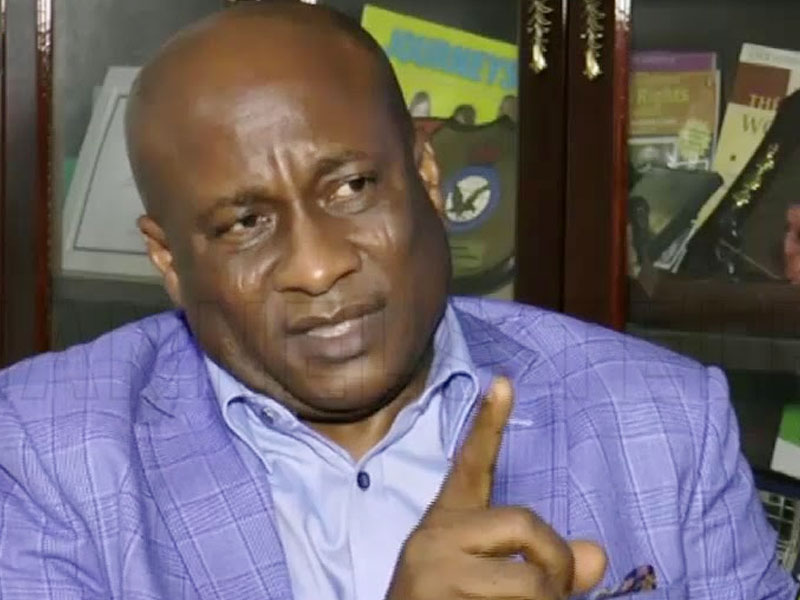
As Nigeria’s aviation industry comes under renewed scrutiny over airfare pricing, flight disruptions, and regulatory pressure, Chairman and Chief Executive Officer of Air Peace, Allen Onyema, has mounted a strong defence of domestic airlines, insisting that operators are being unfairly targeted despite crippling costs and systemic challenges.
Speaking during a recent interview, Onyema declared that the constant criticism of Nigerian airlines, particularly allegations of exploitative pricing, has become exhausting and unjust.
“Enough is enough. The constant bashing of Nigerian airlines must stop,” Onyema said.
“It is painful when agencies that should understand the aviation industry accuse airlines of exploitative and coordinated pricing without clearly explaining how they arrived at such conclusions.”
YOU CAN ALSO READ: Flying High: Air Peace Announces Landmark Abuja to London Heathrow Route
The controversy follows reports of domestic airfares rising to between ₦400,000 and ₦650,000 on certain routes during the festive season, prompting investigations by the Federal Competition and Consumer Protection Commission (FCCPC) and a Senate probe. Onyema rejected the narrative that airlines deliberately exploit passengers, explaining that aviation pricing is globally dynamic and demand-driven.
“It is not true that all tickets are ₦400,000 or ₦500,000,” he said. “Even today, you can still find fares of ₦115,000 to ₦150,000. On the same flight, one passenger may pay ₦125,000 while another pays ₦350,000. That is how aviation works all over the world.”
He further explained the peculiar economics of certain routes, particularly the Southeast during festive periods.
“Planes go into the Southeast full and return almost empty. Who pays for the cost of bringing that aircraft back?” Onyema asked.
“Even charter operators charge for both legs. Airlines are not running charity services.”
According to Onyema, when measured in dollar terms, Nigerians still enjoy some of the cheapest domestic airfares anywhere in the world.
“Nigerians are flying the cheapest domestic fares globally,” he said.
“A one-hour flight abroad can cost over $400. In Nigeria, you can still find tickets below $60.”
Yet, he noted, Nigerian airlines operate under some of the harshest financial conditions.
“We borrow at 30 to 35 percent interest, while foreign airlines borrow at 2 to 5 percent,” Onyema stated.
“We buy aircraft, engines, spare parts, and fuel in dollars. Nothing is produced locally.”
He added that between 65 and 70 percent of ticket revenue goes to taxes, charges, and levies, leaving airlines with a fraction of the fare paid by passengers.
Responding to persistent complaints about flight delays and cancellations, Onyema insisted that safety remains non-negotiable.
“Delays happen globally,” he said.
“But in Nigeria, airlines are deliberately overburdened, and when we delay for safety reasons, we are attacked.”
He revealed that Air Peace recorded 49 bird strikes within Nigeria between January and September alone, incidents that often ground aircraft for weeks or months.
“One bird strike can take an aircraft out of service for months,” Onyema explained.
“Insurance does not cover lost revenue. Who pays for that?”
One of Onyema’s strongest criticisms was directed at ground handling companies, which he accused of repeated negligence and costly damage to Air Peace aircraft.
“Our aircraft have been damaged more than 15 times by ground handlers,” he disclosed.
“A brand-new aircraft worth over $85 million had its engine damaged by a ground handling truck. One engine alone costs about $17 to $18 million.”
In another incident, Onyema alleged that an engine was destroyed during offloading after the airline had waited nearly three years for delivery.
“Despite warnings, they damaged it. To me, that was outright sabotage,” he said.
He called for urgent legislative reforms to hold ground handling companies accountable and allow airlines to self-handle where possible.
Onyema also warned that recent tax policy reversals could push Nigerian airlines to the brink.
“From a ₦350,000 ticket, an airline may receive only about ₦81,000,” he said.
YOU CAN ALSO READ: Maria Carey’s Holiday Hit That Became a Global Business Phenomenon
He recalled that the 2020 Finance Act, which removed VAT on air tickets, aircraft, engines, and spare parts, provided critical relief to the sector. However, he said the reintroduction of VAT under the new tax regime could be catastrophic.
“If VAT is imposed again, ticket prices will skyrocket and airlines will collapse within months,” Onyema warned.
“Banks will also suffer massive losses.”
Despite the challenges, Onyema revealed that Air Peace is investing heavily in long-term solutions, including the construction of one of Africa’s largest Maintenance, Repair, and Overhaul (MRO) facilities in Lagos.
“We have invested between ₦20 billion and ₦32 billion in this MRO,” he said.
“It will be ready in about 15 months and will serve Nigerian and international airlines.”
On passenger conduct, Onyema signalled a tougher stance going forward.
“Some passengers behave in ways they would never try abroad,” he said.
“From January 1, unruly behaviour will no longer be tolerated. The law will take its course.”
As regulatory scrutiny intensifies, Onyema insists that the survival of Nigerian aviation depends on fairness, understanding, and policy consistency.
“Aviation is a catalyst for economic growth,” he concluded. “It should not be treated as a sacrificial lamb.”