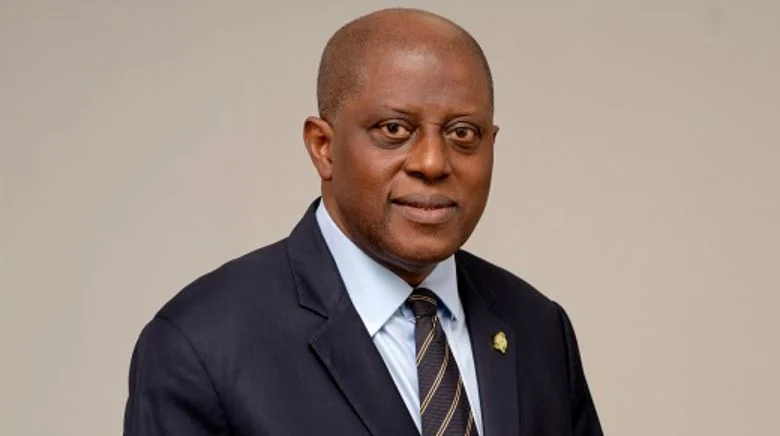
As Nigeria steps into 2026, the Governor of the Central Bank of Nigeria (CBN), Wale Cardoso, has outlined a reform-driven agenda aimed at deepening macroeconomic stability, strengthening the banking system, and restoring global confidence in Africa’s largest economy.
In his 2025 year-end address to the banking and business community, delivered at the Chartered Institute of Bankers of Nigeria (CIBN) Dinner in November, Cardoso presented a detailed assessment of Nigeria’s financial landscape and set out six strategic priorities that will guide the apex bank’s operations in the year ahead. The address comes at a time when markets are closely watching Nigeria’s reform trajectory following major policy shifts in foreign exchange management, monetary tightening, and financial sector governance.
YOU CAN ALSO READ: How Nigerian Entrepreneurs Can Capitalize on Global Opportunities in 2026
At the core of Cardoso’s message is the growing recognition of Nigeria’s reform momentum by international markets. Global rating agencies have responded positively to the country’s policy direction. Nigeria’s sovereign rating has been upgraded by Fitch from B- to B (Stable), while Moody’s raised its assessment from Caa1 to B3. Standard & Poor’s has also affirmed Nigeria’s B-/B rating and revised its outlook to positive, citing rising external reserves, improving fiscal metrics, and sustained reform implementation.
These developments, the CBN Governor noted, have translated into tangible gains. Nigeria recently returned to the international capital market with a €2.35 billion Eurobond issuance that attracted over $13 billion in investor demand, the largest order book in the country’s history. The successful transaction reflects renewed confidence in Nigeria’s economic management and improved borrowing terms for the sovereign.
Cardoso also highlighted the resilience of Nigeria’s banking sector, describing it as a cornerstone of financial stability. Ongoing reforms, including the transition to Basel III standards and strengthened risk-based supervision, are designed to improve capital quality, liquidity management, and governance across the system. With the recapitalisation exercise approaching its March 2026 deadline, the Governor disclosed that several banks have already met the new capital thresholds, while others are progressing steadily. Stress tests conducted during the year further confirmed the sector’s ability to withstand shocks.
Beyond capital adequacy, the CBN has taken steps to improve operational discipline within the financial system. A comprehensive review of the cash cycle has led to new measures on cash printing, ATM deployment, branch closures, and sanctions for cash-dispensing failures. These interventions, according to Cardoso, are aimed at addressing structural issues rather than temporary symptoms.
Support for micro, small and medium enterprises (MSMEs) featured prominently in the Governor’s address. Microfinance lending expanded by more than 14 per cent in 2025, while digital credit solutions reached over 1.2 million small businesses. The CBN continues to promote tailored financial products, stronger microfinance institutions, and technology-enabled lending to widen access to credit and support entrepreneurship.
Nigeria’s digital finance and fintech ecosystem has also seen rapid growth under the current reform framework. More than 12 million contactless payment cards are now in circulation, while over 40 fintech firms operate within the CBN’s regulatory sandbox. Enhanced agent banking guidelines, improved interoperability among switching companies, and tighter anti-money laundering controls have strengthened the payments ecosystem. Nigeria now ranks among Africa’s most advanced digital payments markets, with a fintech sector that has produced eight of the continent’s nine unicorns.
A major milestone in 2025 was Nigeria’s exit from the Financial Action Task Force (FATF) grey list, following coordinated reforms across government and regulatory agencies. The development has eased compliance frictions for international transactions, restored correspondent banking relationships, and improved access to global capital.
Financial inclusion has continued to deepen, with 74 per cent of Nigerian adults now having access to formal financial services. The CBN is shifting focus from access to meaningful participation, rolling out initiatives targeted at women entrepreneurs, displaced persons, and underserved communities.
YOU CAN ALSO READ: Iyin Aboyeji on Scaling Startups, Building Talent, and Transforming Africa’s Economy
Looking ahead, Cardoso outlined six strategic priorities for 2026, including safeguarding financial stability, delivering durable price stability, modernising payments, fostering responsible fintech innovation, strengthening institutional capacity, and deepening partnerships with domestic and international stakeholders. He stressed that these priorities are practical, measurable, and aligned with the CBN’s core mandate.
As Nigeria enters a politically and economically significant year, Cardoso’s message signals a continuation of reform anchored on discipline, transparency, and long-term resilience. For investors, financial institutions, and citizens alike, the direction of travel is clear: the Central Bank is positioning Nigeria’s financial system to withstand shocks, support growth, and compete more credibly in the global economy.