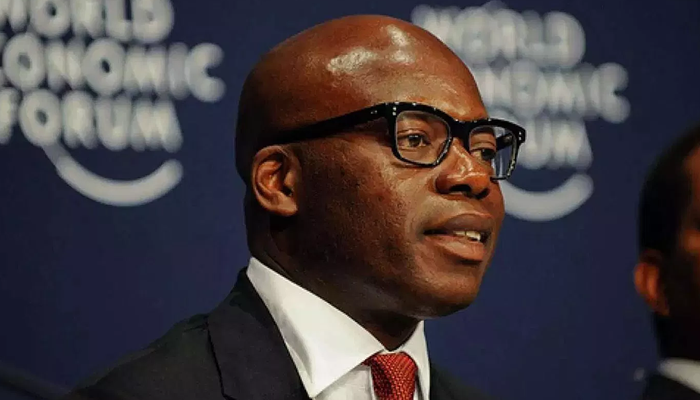
As global leaders gathered at the World Economic Forum amid heightened geopolitical tension and economic uncertainty, Group Chief Executive Officer of Oando, Wale Tinubu has said the 2026 edition of Davos reflected a world in transition that was reshaping global energy markets and reopening opportunities for Nigeria’s oil and gas sector.
Speaking on the second day of the forum, Tinubu described the atmosphere as unusually charged, driven by expectations around an address by US President Donald Trump and recent geopolitical flashpoints involving Venezuela and Greenland. He said these developments signalled a shift away from the traditional multilateral order toward a more unilateral, interest-driven global system.
YOU CAN ASLO READ: Nigeria Pivots Away From Debt, Courts Investment Amid Global Trade Tensions
According to Tinubu, the emerging global posture raised important questions for Africa and Nigeria, particularly around future business, economic, and security relationships. He noted that despite the uncertainty, engagement within the global oil community in Davos remained active and forward-looking.
Tinubu said oil prices were expected to soften but not collapse. While supply remained relatively steady, global demand continued to grow by about one million barrels per day annually, with total consumption at roughly 103 to 104 million barrels per day. He added that years of underinvestment, combined with geopolitical disruptions involving Russia, Ukraine, and Venezuela, had fractured global oil markets and reinforced more regional trading patterns.
He said energy transition featured prominently in discussions but stressed that Africa’s position had often been misunderstood. Tinubu noted that the continent accounted for only about 3 percent of global emissions despite representing nearly 20 percent of the world’s population, yet continued to suffer disproportionately from climate-related impacts such as widespread flooding.
Tinubu argued that Africa required a fair and just energy transition. He said the continent still needed to utilise its abundant hydrocarbons, particularly gas, given that nearly 45 percent of Africans lacked access to electricity. He called for carbon credits and adequate climate financing to support renewable investments while allowing oil and gas exports to continue generating income for development.
On Nigeria’s oil and gas sector, Tinubu said the country no longer needed to convince international investors of its viability. He pointed to the passage of the Petroleum Industry Act as a turning point that provided regulatory clarity and fiscal certainty. He also highlighted reforms at the Nigerian National Petroleum Company and a more proactive upstream regulator as factors that had strengthened investor confidence.
He said recent divestments, new bid rounds, and the announcement of final investment decisions, the first in nearly a decade, signalled renewed momentum in the sector. Improved security in the Niger Delta, he added, had significantly reduced operational disruptions and encouraged capital inflows.
Tinubu said recent executive orders signed by President Bola Ahmed Tinubu had streamlined procurement and contract approvals, enabling companies to move more quickly from final investment decisions to development and drilling.
YOU CAN ASLO READ: Microsoft’s Africa AI Push Signals a New Playbook for Global Leadership
Looking ahead, Tinubu said Nigeria’s oil production stood at around 1.5 million barrels per day and could increase by at least 500,000 barrels per day by 2026 as reactivated fields came onstream. At Oando, he said the company planned an aggressive drilling programme, targeting up to 100 wells over the next few years, supported by the deployment of additional drilling rigs.
He said Oando aimed to optimise its roughly one billion barrels of reserves and improve the balance between reserves and production. Tinubu expressed confidence in both the macroeconomic environment and the operational outlook for Nigeria’s oil industry.
As discussions in Davos continued, Tinubu said Nigeria’s oil sector was entering a more stable and competitive phase, supported by policy clarity, renewed investment, and a pragmatic approach to energy transition in an increasingly fragmented global economy.