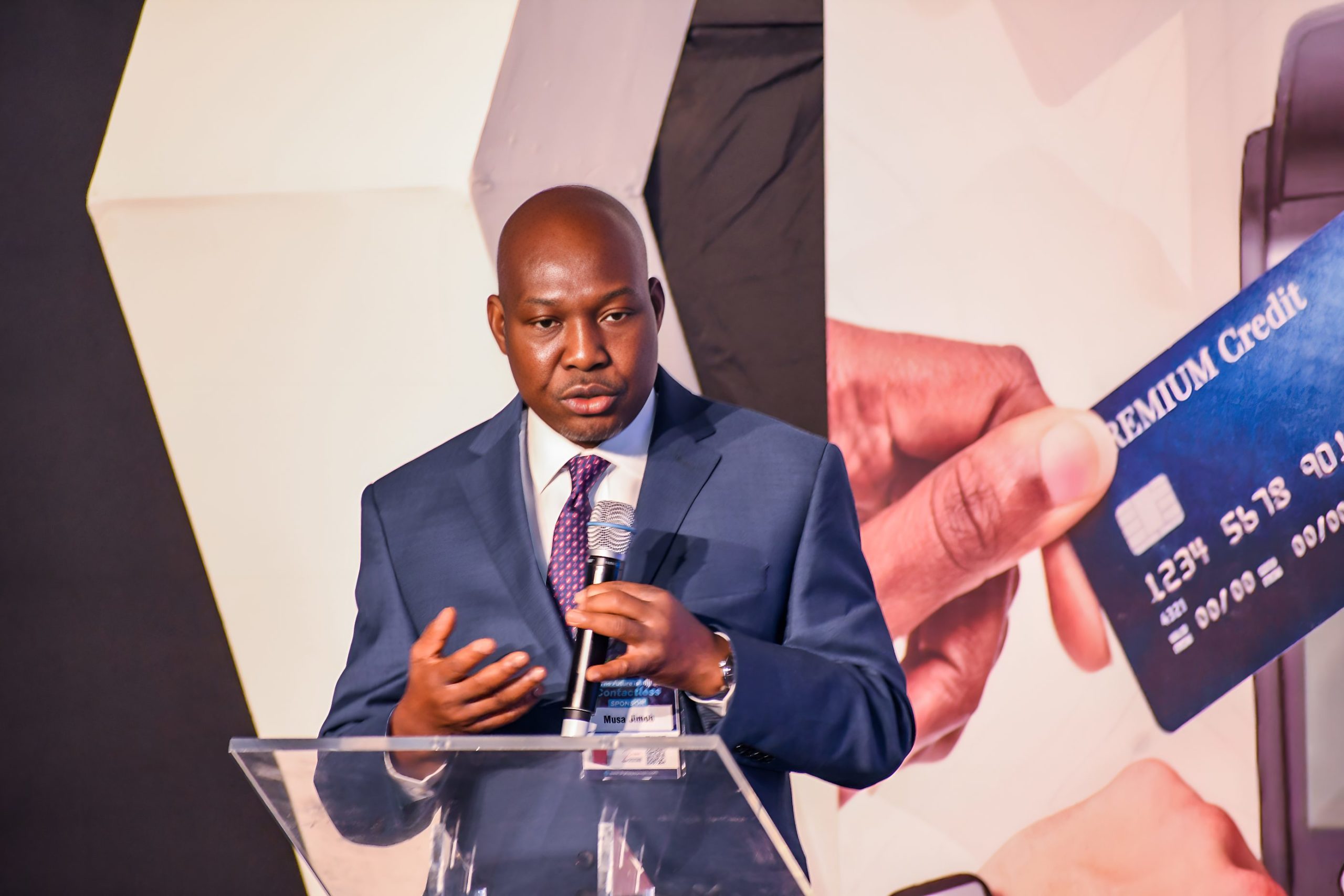
Jeffrey Sachs does not speak in slogans. He speaks in long arcs of history, in data curves that rise and fall over centuries, and in ideas shaped by decades of studying how nations grow, fail, and recover. When the renowned economist and global development scholar takes the stage, he does not merely comment on current affairs. He reframes how power itself moves through time.
In his sweeping lecture, Sachs dismantled one of the most persistent assumptions of modern geopolitics. The belief that the United States still dominates the world technologically and economically, while China remains a challenger rather than a peer, is in his view no longer accurate. More importantly, Sachs argued that clinging to this belief is dangerous. The world has already changed. What remains is for political thinking, especially in the West, to catch up with reality.
YOU CAN ALSO READ: Making Big Shifts: Why Africa’s Boldest Leaders Are Heading to Lagos
At the heart of Sachs’s argument is a simple historical truth. Global power is never permanent. It shifts when technology, demographics, and institutions align. The nineteenth century marked one such decisive shift, when Europe rose to global dominance through industrialization. The steam engine, commercialized in Britain, unlocked unprecedented energy and productivity, enabling European powers to dominate Asia and Africa through empire, finance, and force.
Before this rupture, Sachs reminded his audience, Asia was the center of the world economy. In 1820, China and India together accounted for roughly sixty percent of global output, closely matching their share of the world’s population. Income differences between regions were modest, and the idea of Western supremacy had not yet taken hold.
That balance changed rapidly. Industrialization gave Europe overwhelming advantage, and by the end of the nineteenth century nearly all of Asia and Africa were under European imperial control. India became a colony of the British Empire, while China was battered by the Opium Wars, internal rebellion, and foreign domination. By 1950, Asia’s share of world output had collapsed from sixty percent to about eighteen percent. Poverty, Sachs emphasized, was not destiny. It was the outcome of subjugation.
The turning point came with independence. After the Second World War, the imperial order unraveled, and with sovereignty came the possibility of development. China’s revolution in 1949 and India’s independence in 1947 were not merely political events. They were economic inflection points. From that moment, Asia began a long, uneven, but historic recovery.
Sachs knows this trajectory intimately. Nearly three decades ago, he published a book titled Emerging Asia, predicting that the region would reclaim its central role in the global economy. The timing seemed unfortunate. Just weeks after the book’s release, the Asian Financial Crisis erupted, and Western commentators rushed to declare Asia’s rise a mirage. Sachs never accepted that conclusion. He believed the fundamentals were too strong to fail.
History has since validated his view. By 2025, Asia’s share of global output had risen by roughly twenty percentage points, almost exactly as Sachs had forecast. China, in particular, exceeded expectations. Through sustained investment, long term planning, and a relentless focus on industrial capacity, it overtook the United States as the world’s largest economy in purchasing power terms around 2018. Today, Sachs argues, China rivals or surpasses the United States in most areas of industrial and technological capability.
This shift, he stressed, is not a zero sum contest. Economics is not about taking from others. It is about expanding knowledge, productivity, and capability. China’s rise did not impoverish the United States. The deeper failure, Sachs suggested, lies in political systems that refuse to distribute the gains of growth fairly, leaving segments of society behind and searching for external scapegoats.
Sachs’s most forward looking argument, however, was not about China or the United States. It was about Africa.
Demography, he explained, is now the most powerful force shaping the global future. While China’s population is projected to decline sharply due to persistently low fertility rates, Africa’s population is set to rise dramatically. By the end of this century, Africa could account for nearly forty percent of the world’s population. Combined with Asia, the two regions may represent more than eighty percent of humanity.
This demographic transformation carries enormous economic implications. If Africa follows a path of convergence similar to Asia’s over the past forty years, its share of global output could rise from about five percent today to as much as thirty percent by 2100. Such a transformation would redefine the world economy, positioning Africa not at the margins but at its core.
Sachs rejected the persistent narrative of Africa as doomed to poverty. No region, he argued, is condemned by fate. Development depends on choices. Education, investment, health systems, sustainable cities, clean energy, and digital infrastructure will determine outcomes. In this context, Sachs sees Africa’s most promising partnership as one with China. It is a collaboration between a resource rich continent and a technology rich economy, capable of delivering mutual benefit rather than exploitation.
YOU CAN ALSO READ: Building Africa, Decision by Decision: Aigboje Aig-Imoukhuede at AFC Retreat
The greatest danger, Sachs warned, lies not in China’s rise or Africa’s growth, but in outdated mindsets that refuse to accept a multipolar world. The United States now accounts for roughly fourteen percent of global output and no longer controls any major technology outright. Yet political leadership often behaves as though Western dominance remains intact. This illusion fuels trade wars, technological confrontation, and geopolitical instability.
History, Sachs reminded his audience, does not reward arrogance. The last time global power shifted so dramatically, the world descended into catastrophic war. Avoiding a similar outcome today requires realism, humility, and cooperation.
The world has already changed. Asia has returned. Africa is rising. The remaining question, Jeffrey Sachs suggested with quiet urgency, is whether global leadership will adapt to this new reality or stumble into conflict while clinging to a past that no longer exists.