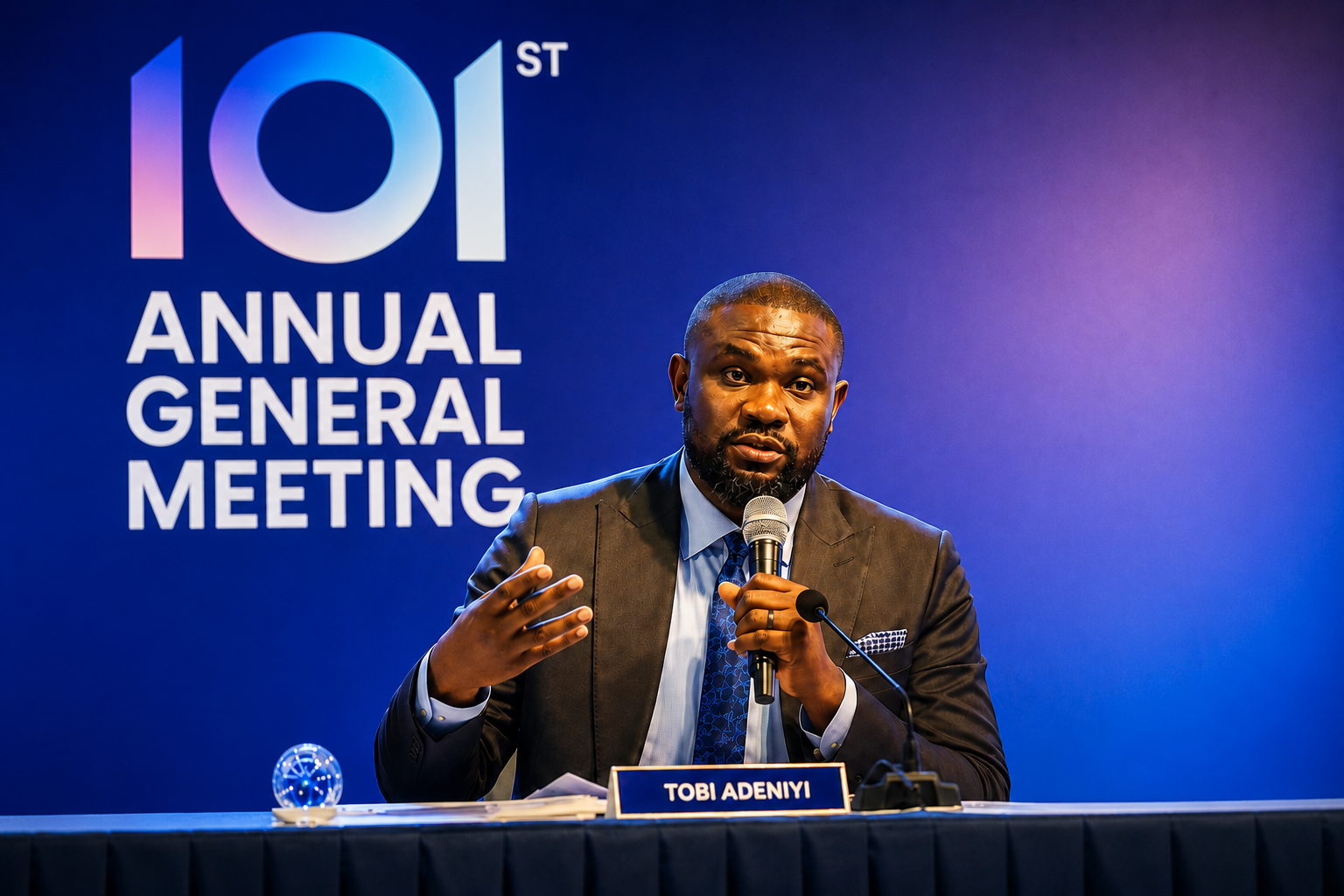
Long before the applause, there was a quiet recognition in the room that this was not just another conference conversation about growth or scale. At the International Family Business Conference 2026, hosted by the Lagos Business School Family Business Initiative, the real question was deeper and far more personal: what truly survives when the founder is no longer in the room?
It was into this moment of reflection that John Momoh, Chairman and Founder of Channels Media Group, stepped forward as keynote speaker, not merely to address the theme “Beyond Survival: Governance & Culture as the Foundation of Lasting Family Legacies,” but to challenge an entire generation of business leaders to rethink what they are really building.
He began with disarming honesty. For many Nigerian entrepreneurs, he noted, the goal was never legacy. It was survival. Survival through policy instability, infrastructure failures, cash flow constraints, and the relentless unpredictability of the business environment. This reality drew quiet nods across the room.
Then came the pivot.
“Survival is not legacy,” he said, firmly reframing the conversation. “What helps you start a business is not what sustains it.”
YOU CAN ALSO READ: Nigeria Shifts to Enterprise Driven Education with New Certification Across 14 Universities
With that, Momoh led the audience into a deeper interrogation of why so many family businesses fail to endure. Citing global statistics that 70 percent of wealthy families lose their wealth by the second generation and 90 percent by the third, he underscored a truth that resonates far beyond Nigeria: legacy is not accidental. It is engineered.
Drawing from history, he referenced figures like John D. Rockefeller, whose wealth endured not merely because of scale, but because of structure through trusts, governance systems, and a deliberate investment in capability over cash. He also highlighted the enduring discipline of the Rothschild family, whose philosophy of collaboration and moderated risk allowed them to thrive for over two centuries.
Yet Momoh was careful to bring the conversation home. Africa, he emphasized, is not lacking in legacy stories. It is actively writing them. He cited the evolution of the Dantata Dangote lineage, highlighting how Aliko Dangote has not only expanded inherited wealth but is intentionally preparing the next generation for leadership.
Across these examples, a pattern emerged that formed the backbone of his message: enduring family businesses are built on three pillars: governance, culture, and succession.
Governance, he explained, is often misunderstood as a loss of control. In reality, it is the very mechanism that preserves it. Clear structures, defined roles, and decision-making frameworks prevent emotional conflicts from derailing the enterprise. At Channels Media Group, this principle is non negotiable. Family membership does not automatically translate into executive authority, a stance that, while difficult at times, has safeguarded the institution’s integrity.
If governance provides structure, culture provides meaning. Momoh spoke passionately about the values that underpin Channels Television: truth, balance, and trust. From its earliest days, the organization made a deliberate choice to tell all sides of every story, even when inconvenient. Over time, that consistency became its greatest competitive advantage.
“Culture is not what is written on the wall,” he noted. “It is what leaders consistently defend.”
That philosophy extends beyond the newsroom into the family itself. For Momoh, business is not just an economic venture. It is a moral responsibility, guided by purpose and accountability.
But perhaps the most delicate and critical pillar is succession. Too often postponed, succession can become a crisis rather than a transition. At Channels, Momoh revealed, the process is intentional. The next generation is being prepared not to inherit leadership, but to earn it through experience, exposure, and accountability. Equally important, he added, is building an organization that can function independently of its founders.
“Our greatest achievement,” he said, “will be to build an institution that no longer depends on us.”
It was a statement that lingered.
YOU CAN ALSO READ: Scaling AI for the Nigerian Economy
In tracing the evolution of Channels Television, from a modest startup with two cameras and a 100 watt transmitter to one of Africa’s most trusted media platforms, Momoh illustrated the power of purpose driven enterprise. The company, he explained, was not born out of market opportunity, but out of conviction: a belief that Nigerians deserved credible, balanced information. That conviction, more than capital, sustained the business through its early years and it continues to guide its future.
As he concluded, Momoh shifted from strategy to philosophy. A business, he said, is ultimately a story, the story of what a family believes in strongly enough to sacrifice for. Over time, that story becomes a choice for the next generation: to continue it, or to walk away. What determines that choice is not wealth, but meaning.
“Legacy is not about being remembered,” he said. “It is about building something that continues to do good work long after nobody remembers who started it.”
In a conference dedicated to the future of family enterprises, it was a powerful reminder that true legacy is not measured in years, but in impact. And in that moment, it was clear John Momoh was not just speaking about legacy. He was living it.