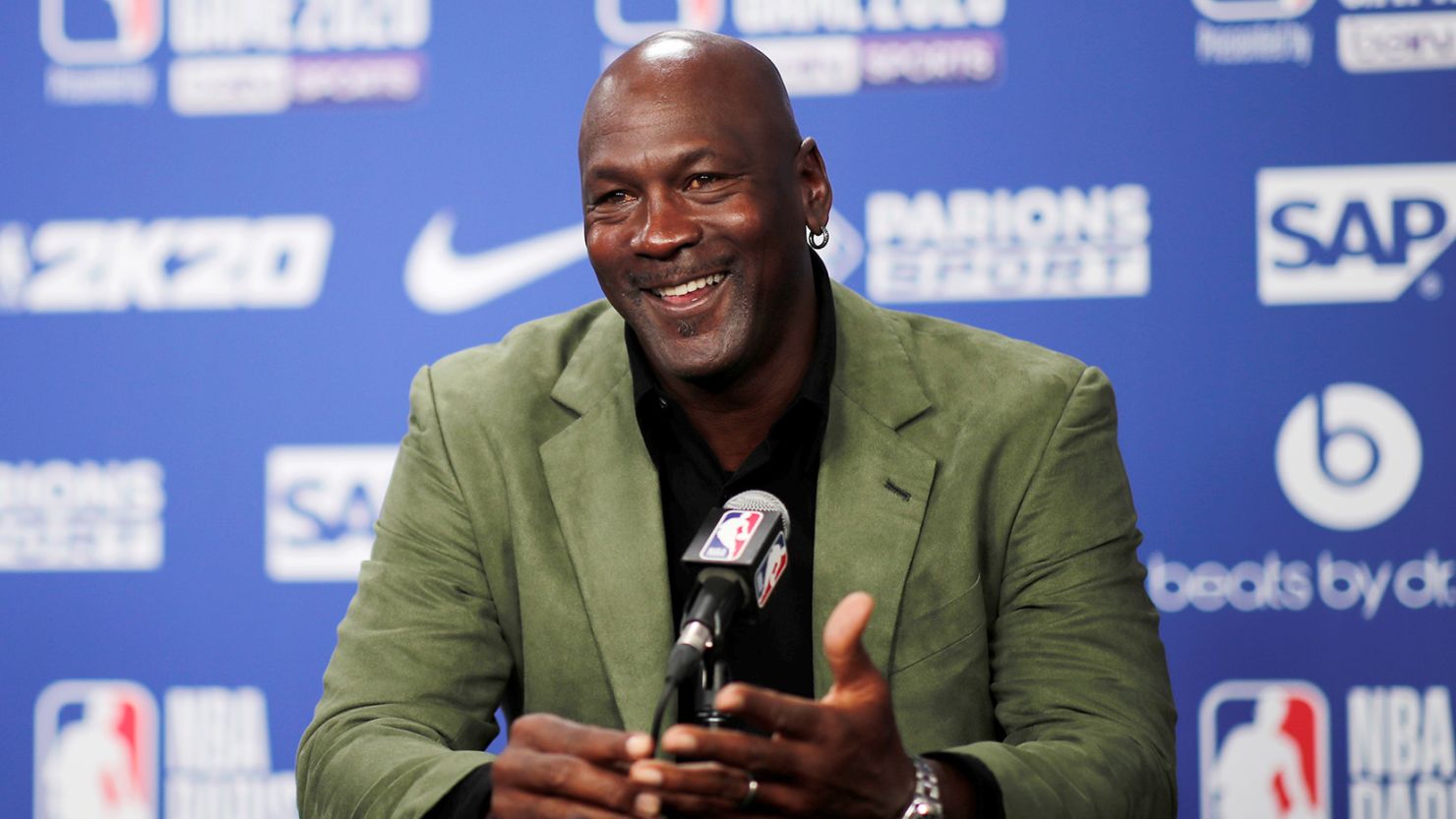
There is something almost poetic about seeing Michael Jordan, a man synonymous with hardwood dominance, light up at the mention of roaring engines and racetracks. Not as a celebrity guest, not as a passing investor, but as someone deeply rooted in the sport’s soul. NASCAR, for him, is not a detour. It is a return.
Long before championships, global fame, and the mythology of greatness, there was a boy watching his father fix cars in the driveway. No mechanics. No service centers. Just instinct, grit, and a love for machines. That early exposure quietly planted a seed.
It was not just about cars. It was about connection.
Family road trips became rituals. Early mornings. Packed vehicles. The hum of anticipation. The destinations Darlington, Charlotte, Rockingham were not just racetracks; they were memory factories. For Jordan, NASCAR was never introduced. It was inherited.
“My father just dragged us along,” he recalls, but the tone betrays something deeper, gratitude disguised as nostalgia.
What began as family bonding soon evolved into fascination. Watching legends like Richard Petty and Cale Yarborough, Jordan absorbed the rhythm of competition long before he defined it on a basketball court. The roar of engines, the precision of movement, the split second decisions, it all resonated with something already inside him.
YOU CAN ALSO READ: The Mindset of Millions – Teri Ijeoma on Investing, Strategy, and Financial Empowerment
That something, he admits, is a kind of lifelong condition.
“I’m cursed,” he says with a laugh, cursed with a competitive gene that refuses to dim.
It is the same force that turned him into a global icon, and now, it fuels his presence in NASCAR. Whether it is racing strategy or something as trivial as getting ready before his wife, everything becomes a contest. Not out of ego, but instinct. A constant need to measure, to improve, to win.
And win quickly.
When Denny Hamlin approached him about entering the sport as a team owner, Jordan did not hesitate. But patience was never his strength. While others spoke of phases and long term development, he was already thinking about victory lanes.
“I want to win. I want to win fast,” he insisted.
Yet NASCAR, unlike basketball, demanded a different rhythm. It required understanding not just of speed, but of systems. Drafting. Strategy. Reaction time at nearly 200 miles per hour. This was not a simple sport of left turns, as critics often reduce it to. It was a high stakes chess match played at dangerous speeds.
That complexity drew him in even more.
What keeps him there, however, is something far more personal.
When Jordan watches a race, he does not see it through the lens of fame or ownership. He sees it through his father’s eyes. Every lap echoes with memory. Every pit stop carries the weight of those childhood Saturdays.
And in those moments, the billionaire icon becomes something simpler, a son remembering.
But nostalgia alone does not sustain Michael Jordan. Transformation does.
His entry into NASCAR has not been quiet. In fact, it has been disruptive. Just as he once reshaped basketball culture, he is now challenging the structures of stock car racing. His involvement in legal battles and advocacy for fair compensation signals a deeper mission, to rebalance a system he believes undervalues the very people who make the sport possible.
“I don’t care if I lose,” he says of the fight. “If I wake people up, I win.”
It is a striking declaration from someone who built a career on dominance. Yet it reveals an evolution. Winning, for Jordan, is no longer confined to scoreboards. It is about impact.
Still, the fire remains unmistakable.
Trackside, observers describe him as giddy, a word rarely associated with the man who once intimidated entire arenas. But here, in the pit lane, surrounded by engines and energy, he is animated, almost childlike. It is not regression. It is rediscovery.
NASCAR has given him something basketball eventually could not, a different kind of burden.
In the NBA, Jordan carried expectations that bordered on myth. Every performance, every appearance, every decision was scrutinized against an impossible standard. That weight, he admits, became exhausting.
Here, the spotlight is shared. The stakes are high, but the identity is different. He is not the show, at least not entirely. And in that space, he finds a renewed sense of freedom.
Yet even in this new chapter, traces of the old longing remain.
Ask him if he misses basketball, and there is no hesitation.
“100%,” he says.
Not a fraction. Not a fleeting thought. A full, undeniable pull. The game never leaves him. It simply finds new expressions, through racing, through competition, through anything that allows him to chase excellence.
Interestingly, Jordan rejects the idea of a singular greatest of all time. For someone so often placed at the center of that debate, his perspective is almost philosophical. Greatness, he suggests, is not absolute. It evolves, builds, and borrows from those who came before.
In NASCAR, that evolution is still unfolding.
YOU CAN ALSO READ: Nigeria’s Dangote Refinery Signals New Era of Regional Fuel Self-Sufficiency
The sport, long perceived through a narrow cultural lens, is beginning to shift. Jordan recognizes the stigma, particularly around diversity and accessibility. But he also sees opportunity. By winning, by showing up, by investing both passion and influence, he is helping redraw the boundaries of who belongs in the sport.
Change, he believes, will come through connection, especially with younger, more diverse audiences.
And perhaps that is where this story finds its deepest resonance.
Michael Jordan is not simply participating in NASCAR. He is translating it, bridging generations, cultures, and expectations. He is turning personal history into public momentum.
Because in the end, whether on a court or a track, his mission remains unchanged.
Win. Evolve. And leave the game better than he found it.