Sterling Bank Plc has intensified efforts to address Nigeria’s estimated $42 billion financing gap for women-led businesses, leveraging its OneWoman initiative to expand access to capital, skills, and strategic networks in a bid to unlock broader economic growth.
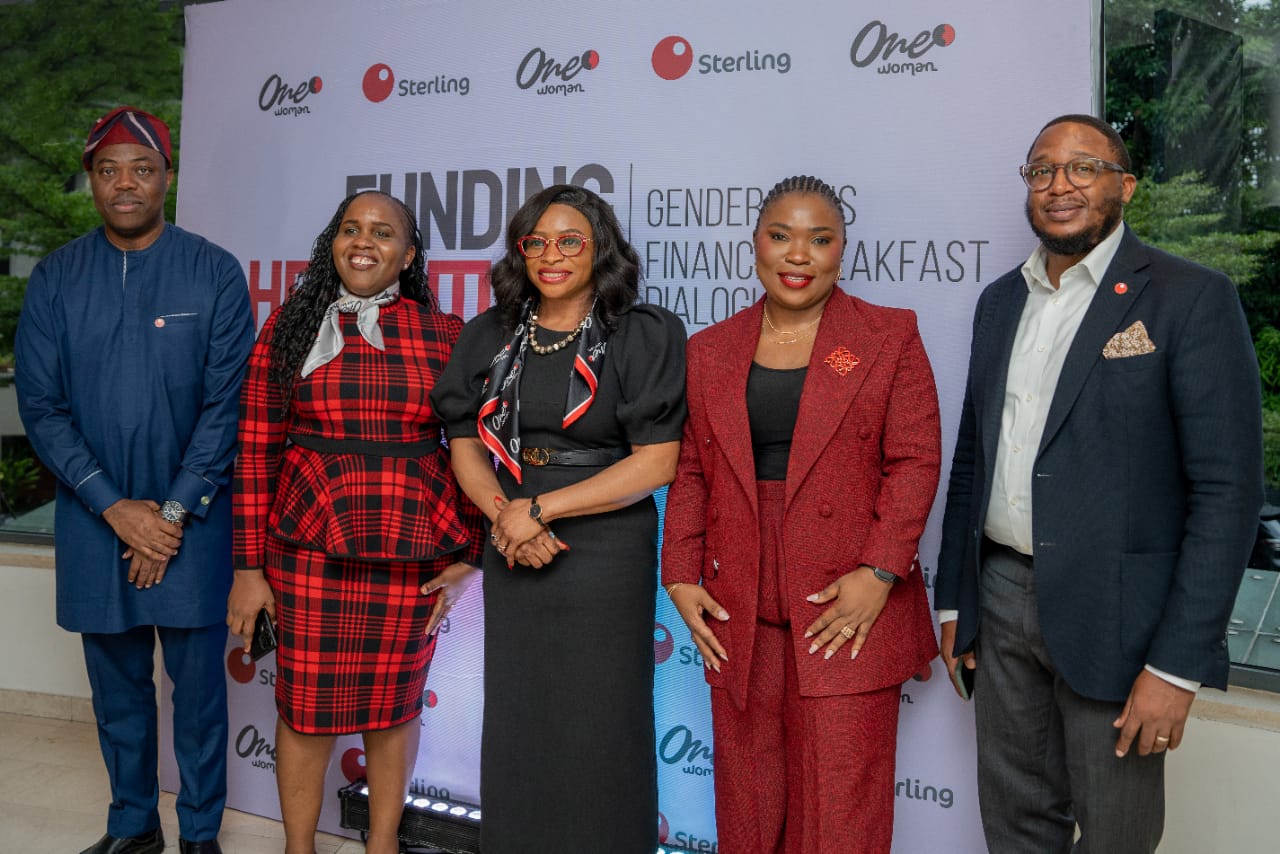
The bank convened key stakeholders at the Funding Her Future Breakfast Dialogue held on March 31 in Ikoyi, Lagos, bringing together entrepreneurs, development finance institutions, and ecosystem partners to tackle persistent barriers limiting women’s access to finance.
Discussions at the forum focused on building more inclusive and effective financing pathways, with emphasis extending beyond funding to business readiness, institutional collaboration, and long-term resilience for women-led enterprises.
Speaking at the event, Managing Director and Chief Executive Officer, Abubakar Suleiman, said the dialogue was designed to move beyond conversations toward measurable outcomes.
He noted that the initiative represents a convergence of finance, enterprise, and inclusion, driven by a central question of how to scale access to meaningful and sustainable financing for women entrepreneurs.
According to him, Sterling Bank’s strategy has consistently focused on supporting high-potential individuals and sectors, a philosophy that informed the creation of the OneWoman platform. The initiative is structured around three core pillars: capital, capacity, and community, reflecting the bank’s position that funding alone is insufficient for sustainable growth.
“Women-led businesses require the right support systems, networks, and ecosystem to scale with confidence,” he said.
The dialogue featured panel sessions with representatives from funding institutions, women-focused organisations, and entrepreneurs, offering practical insights into financing opportunities and the broader support structures required for growth.
Ezinne Nwokafor, Head of the OneWoman Initiative, highlighted the urgency of coordinated action, citing data from the International Finance Corporation which estimates a $42 billion annual financing gap for women entrepreneurs in Nigeria.