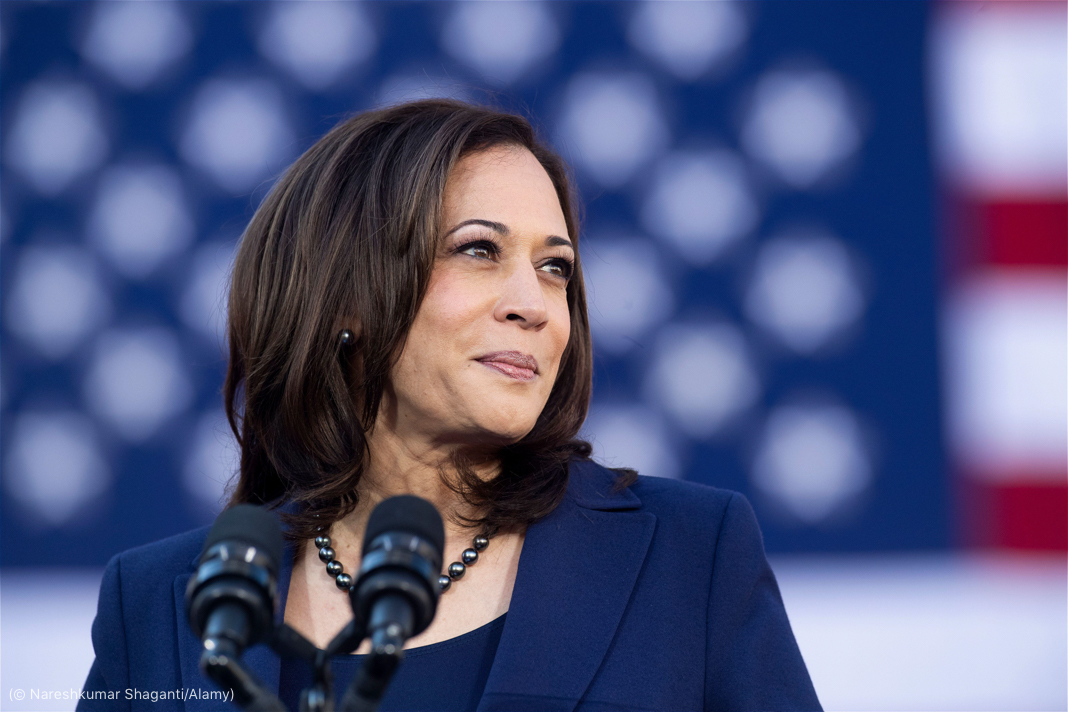
In a wide-ranging and deeply reflective conversation, former Vice President Kamala Harris offered a forceful meditation on leadership, global instability, democracy, and the evolving responsibilities of the United States on the world stage, while also touching on voting rights, technology, and her own political future.
Speaking in dialogue with Rev. Al Sharpton, Harris framed her perspective on American power through the lens of relationships, arguing that foreign policy is ultimately sustained not only by military strength but by trust, consistency, and shared values. She warned that recent shifts in U.S. posture under Donald Trump have damaged global confidence in American leadership, particularly among allies who rely on stability and long term commitment.
She argued that alliances formed after World War II remain central to global order and said the erosion of those relationships weakens both American influence and security. Comparing diplomacy to personal relationships, she stressed that credibility depends on follow through and mutual respect, adding that unpredictability in leadership undermines trust on the global stage. She pointed to strained relationships with NATO allies and shifting geopolitical tensions as examples of what she described as a broader loss of reliability.
YOU CAN ASO READ: How Monique Rodriguez Built a Global Beauty Brand After Life Changing Loss
Harris also highlighted the role of “soft power,” describing it as the cultural and moral influence the United States wields when it stands for international norms such as human rights and sovereignty. She expressed concern that retreating from global engagement creates openings for rival powers to expand their influence, particularly in regions such as Africa and the Indo Pacific.
Reflecting on her time in office, she recalled meeting more than 150 world leaders and emphasized that the strength of international relationships often extends beyond governments to the people themselves. She recounted a conversation with former German Chancellor Angela Merkel, who expressed concern about democratic erosion and voting rights in the United States, underscoring how closely global partners watch American civic stability.
Turning to domestic issues, Harris criticized economic policies that she said have failed to deliver affordability for working families. She argued that despite campaign promises to reduce costs, everyday expenses such as food, housing, and healthcare have continued to rise, placing strain on households across the country. She contrasted this with what she described as policy priorities that benefit wealthy elites rather than ordinary citizens.
She also addressed the broader impact of war and global conflict on American taxpayers, noting that military engagements and international instability ultimately translate into domestic economic pressure. Cuts to social safety nets, including food assistance and healthcare support, were cited as evidence of misplaced priorities in governance.
A significant portion of the conversation focused on voting rights and what she described as ongoing efforts to restrict access to the ballot. Harris warned that changes to voter identification laws, redistricting efforts, and administrative restrictions risk disproportionately affecting marginalized communities. She referenced historical parallels such as poll taxes and literacy tests, arguing that modern policies can create similar barriers under different names.
She also raised concerns about proposed legislation that would require stricter documentation to register to vote, noting that millions of Americans may lack immediate access to required identification documents. According to Harris, such measures could effectively function as modern barriers to participation in democracy.
Harris encouraged civic engagement at the grassroots level, urging voters to regularly check registration status, confirm polling locations, and remain alert to administrative changes that could affect access to elections. She emphasized that participation must be active and continuous, not occasional.
On political strategy and civic motivation, she suggested that voters should feel empowered not only by civic duty but by expectations of accountability from elected leaders. She described this as a form of political reciprocity, where participation is tied to tangible outcomes in governance.
The discussion also turned to technology and social media, where Harris raised concerns about the impact of digital platforms on mental health, particularly among young people. She noted increasing evidence of harm linked to excessive social media use and referenced state level efforts to restrict or regulate access for minors.
YOU CAN ASO READ: From Pulpit to Policy: Alex Otti Redefines Role of Faith in Governance
She argued for stronger safeguards around technology, including artificial intelligence and social media platforms, while acknowledging that regulation remains politically difficult at the federal level. In her view, tech companies are unlikely to self regulate effectively due to business models driven by engagement and algorithmic amplification of fear and emotion.
Finally, Harris addressed questions about her political future, including speculation about another presidential run. She stopped short of making a formal announcement but acknowledged that she is actively considering her next steps. Reflecting on her experience as Vice President, she said she understands both the demands of the presidency and the urgency of addressing systemic inefficiencies in government.
She concluded with a broader reflection on leadership, stating that public service must be rooted in purpose beyond personal ambition. For Harris, the central question remains how to best serve the American people at a time of political division, institutional strain, and global uncertainty.