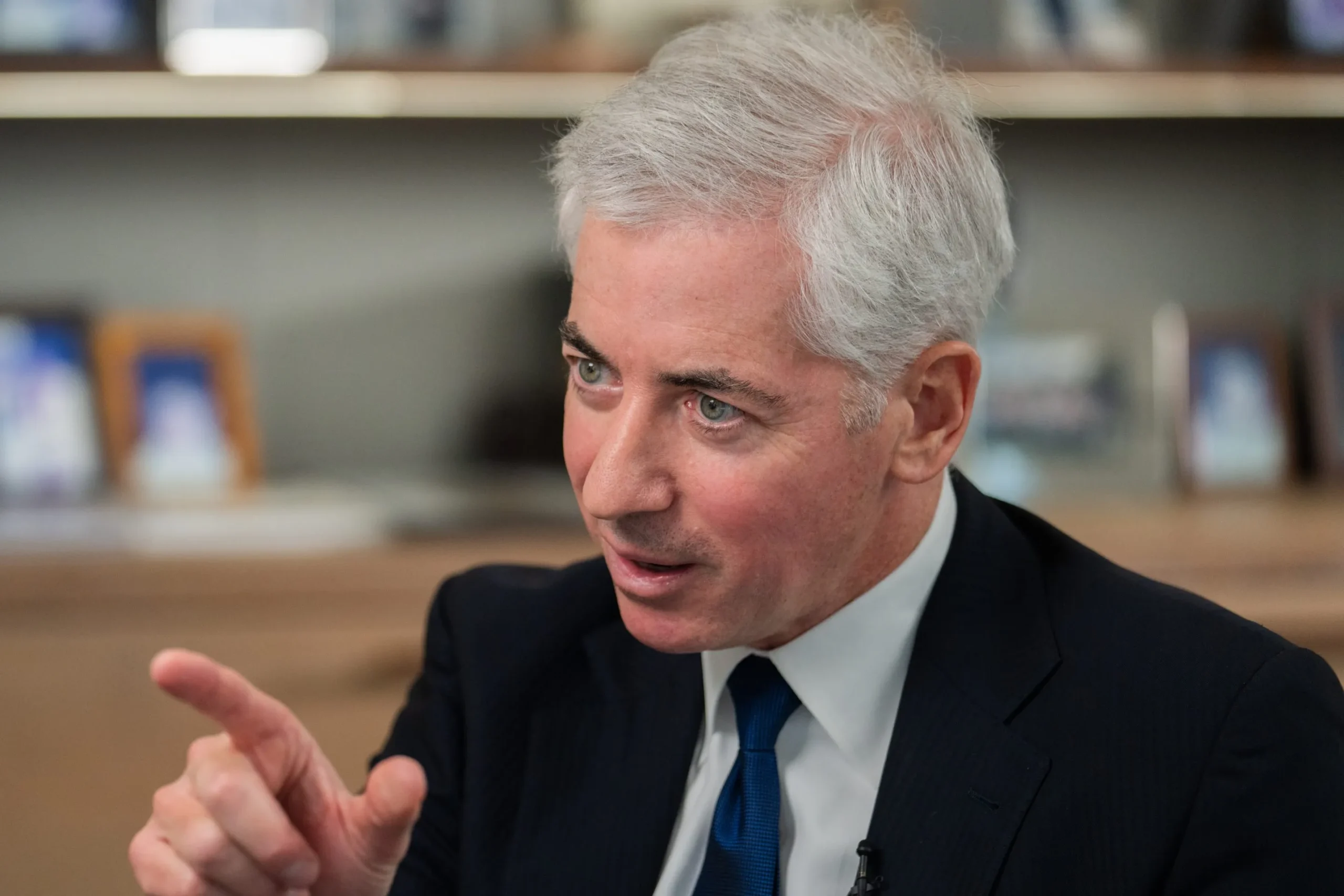
At the Milken Institute Global Conference in Beverly Hills, Bill Ackman spoke less like a hedge fund manager under pressure and more like a man describing a system already built to outlast him. Around him was the familiar turbulence of Wall Street—IPO reactions, political debate in New York, and a bold push into Universal Music Group, but Bill Ackman kept returning to a single idea: succession at Pershing Square Capital Management is no longer a question mark.
He was direct. The structure, he suggested, is already in place and no longer dependent on a single figure at the top. CIO Ryan Israel leads investing decisions, while president Ben Hakim oversees operations, forming a framework designed for continuity rather than personality-driven control. In Ackman’s framing, Pershing Square has already evolved into something closer to an institution than a founder-led fund.
That matters because Ackman is simultaneously running multiple large-scale efforts: two public equity funds, a listed asset manager, a real estate platform moving toward a Berkshire Hathaway-style model, and an active campaign around Universal Music Group. Yet he rejects the idea of fragmentation.
“They’re all part of one portfolio,” he said. “It’s all investing.”
YOU CAN ALSO READ: Alex Spiro: The High-Stakes Lawyer Trusted by Elon Musk, Jay-Z, and Hollywood’s Elite
Even Pershing Square’s recent IPO, which saw early volatility, fits into that philosophy. Ackman dismissed concerns about short-term price moves, arguing the structure was misunderstood. Retail investors received unusually large allocations, he explained, leading to temporary selling pressure as positions adjusted.
At its core, investors are buying two things: deployable cash and exposure to a compounding investment engine. “It’s like owning a royalty on compounding,” he said.
That engine is deliberately lean. The firm operates with a small team relative to its scale, which Ackman views not as fragility but resilience. Because assets sit in permanent capital structures, they are not subject to the typical hedge fund risk of investor withdrawals triggered by personnel changes.
“If something happened to me, the assets stay, the team stays,” he said. “The structure remains intact.”
Succession, in that sense, is embedded in design rather than dependency.
The discussion then turned to Universal Music Group, one of Ackman’s most closely watched initiatives. He described the company as operationally strong but structurally misaligned with public markets, arguing it has not fully transitioned from private-style governance to public-company discipline.
His proposal includes a U.S. listing, improved capital allocation, monetisation of non-core assets like Spotify holdings, and governance changes aimed at restoring investor confidence. “It needs to graduate into a proper public company,” he said.
He also addressed the rise of prediction and betting markets, calling them a mixed development. While they improve price discovery and information flow, he warned of increasing “casino-ification,” especially among younger participants exposed to speculative platforms. Still, he stopped short of a full critique, framing it as a structural shift markets will need to adapt to.
YOU CAN ALSO READ: Why Fulfilment Comes From Impact, Not Titles – Omotowa’s Powerful Message at The Platform
The conversation then moved to New York City and Mayor Zohran Mamdani. Ackman expressed concern that policies targeting major employers could weaken the city’s tax base and long-term economic strength. He cited figures like Ken Griffin as examples of capital and job creators whose presence supports broader civic infrastructure.
Despite those concerns, he made clear he is not leaving New York. “I’m more likely to fight for New York than leave it,” he said.
His broader argument extended beyond politics into economic philosophy: widespread participation in capital markets is essential for long-term prosperity. “Every American should own a piece of capitalism,” he said, arguing that equity ownership aligns citizens with compounding wealth creation.
As the discussion ended, Ackman returned to his central theme: systems over individuals. Whether in investing, corporate restructuring, or public commentary, his focus remains on structures that scale, endure, and operate independently of any single leader.
In that framing, succession at Pershing Square is not a transition event. It is already built into the machine.