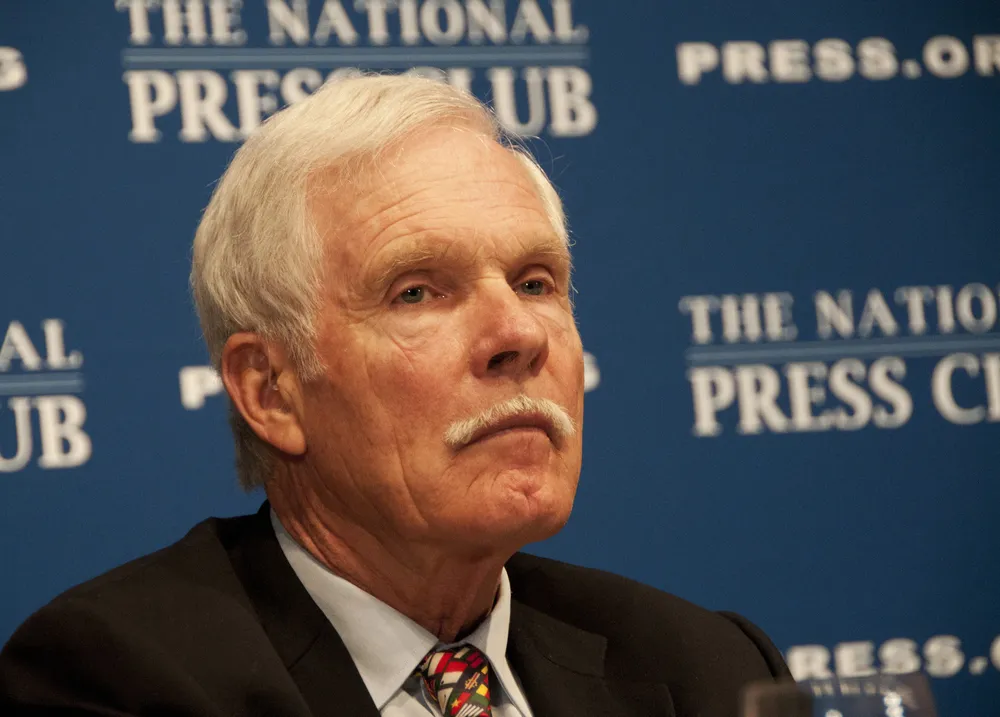
Ted Turner, the fearless media pioneer who rewired how the world experiences news by creating the first 24-hour television network, has died at 87, closing the final chapter on one of broadcasting’s most disruptive and visionary lives. According to Turner Enterprises, his death marks the passing of a figure whose instincts reshaped not just television, but global consciousness itself.
Long before the era of endless news cycles and digital overload, Turner imagined a world where information never stopped flowing. In 1980, he launched CNN, the first 24-hour, all-news television network, a radical idea at the time that would permanently alter journalism. He reportedly declared at its founding that CNN “won’t be signing off until the world ends,” a line that came to define both the ambition and audacity of his vision.
Turner believed news should not wait for time slots or print deadlines. It should move as fast as the world itself. That philosophy turned CNN into a global force and transformed television news into a continuous, real-time experience of history unfolding.
YOU CAN ALSO READ: Bill Ackman on Markets, Music, and Succession: “Everything Is One Portfolio”
Mark Thompson, chairman and CEO of CNN, called him the “presiding spirit of CNN,” describing Turner as “intensely involved and committed, intrepid, fearless, and always willing to back a hunch and trust his own judgment.” It was that instinct-driven approach that defined his career across media, sports, and philanthropy.
Turner was never confined to one industry. Beyond news, he built a sprawling media empire that included Cartoon Network and Turner Classic Movies, reshaping entertainment for global audiences. He also owned the Atlanta Braves, helping elevate the team into a national sports brand and deepening his influence in American culture far beyond the newsroom.
But Turner’s ambition extended well outside media. Known as the “Mouth of the South” for his outspoken and often brash personality, he later turned his attention to global causes. After selling much of his media empire to Time Warner, he declared he would devote “most of my time to trying to save the world.”
That mission took shape through major philanthropic commitments, including a $1 billion pledge to establish the United Nations Foundation, aimed at supporting global development and peace initiatives. He also became one of the largest private landowners in the United States, investing heavily in environmental restoration and wildlife conservation projects.
His activism even entered popular culture through the creation of the animated series Captain Planet and the Planeteers, which reflected his belief that environmental awareness should begin with younger generations.
In 1991, Time magazine named him Man of the Year, recognizing his unmatched impact on global media and public awareness. The magazine noted his defining achievement: he “turned viewers into instant witnesses to history.”
Turner’s fortune, once among the largest in America, fluctuated in later years following the Time Warner–AOL merger, but his influence remained undiminished. Even as his net worth declined, his cultural footprint expanded, and he remained a permanent reference point in discussions of modern media.
In later life, Turner revealed he was living with Lewy body dementia, gradually stepping back from public activity while remaining closely associated with CNN, which he consistently referred to as his proudest achievement.
YOU CAN ALSO READ: The Woman Behind Nigeria’s One-Stop Cancer Treatment Centre
He was married three times, including a widely publicized decade-long marriage to actress Jane Fonda, who once said she would “never love anyone like I love him.” He had five children and a life marked as much by personal intensity as professional ambition.
Tributes have poured in across the media and political world. U.S. President, Donald Trump described Turner as “one of the greats of broadcast history,” calling him a friend while also criticizing CNN’s later editorial direction, a reminder of how deeply the network he built continues to sit at the center of cultural and political debate.
Ted Turner’s legacy is not just a company or a channel. It is the idea that the world does not pause for news, and therefore news should never pause for the world. In building CNN, he did not simply create a network. He created a permanent window into history itself, one that never closes.