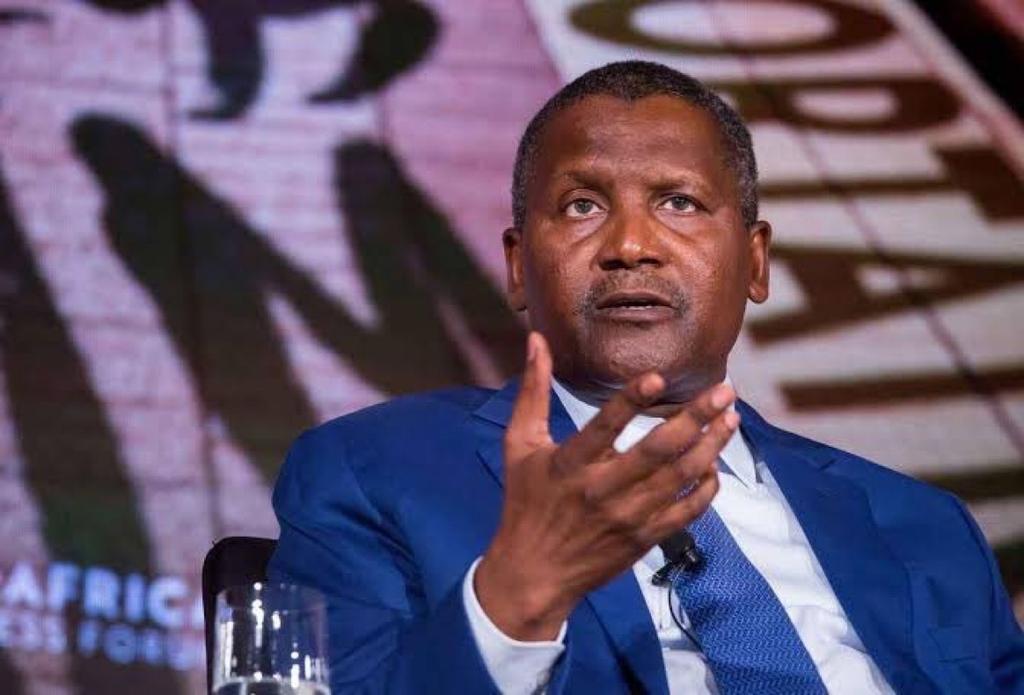
In a world grappling with economic uncertainty and the pursuit of sustainable growth, Africa’s richest man, Aliko Dangote, is charting a different course, one powered by collaboration, not competition.
Speaking at the prestigious Future Investment Initiative in Riyadh, the Dangote Group chairman championed public private partnerships (PPPs) as the cornerstone for Africa’s next phase of industrial and infrastructural transformation.
For Dangote, PPPs are not mere policy buzzwords; they are tried and tested instruments that have driven real progress across Africa. He cited Nigeria’s landmark single-train refinery project as a model example, a venture where government participation transformed vision into reality. “They believed in what we were doing and invested in the refinery,” he said, describing it as a “real PPP” built on shared trust and commitment.
Dangote explained that under Nigeria’s current administration, several of his company’s infrastructure projects operate within PPP frameworks. One such initiative involves constructing $800 million worth of roads, with cost recovery through tax credits over three to four years. “You design the road, build it, and then take it off your taxes,” he said, noting the approach has proven “very, very effective” in bridging infrastructure gaps in industrial regions.
The business magnate also revealed new cross-border partnerships, including a $2.5 billion joint venture in Ethiopia to produce 2.5 million tonnes of urea fertilizer annually. The Ethiopian government holds a 40% stake, while Dangote Group retains 60%, backed by a 10-year offtake contract and fixed gas supply agreement. “The terms make the economics work,” he noted, underscoring how equitable partnerships can spur industrial expansion across Africa.
Beyond the numbers, Dangote’s vision for PPPs is deeply rooted in inclusivity. He sees them as mechanisms to domesticate production, create jobs, and strengthen Africa’s value chains. “We are creating jobs in our own continent,” he said, adding that transforming raw materials locally multiplies opportunities across sectors, from banking to logistics, and drives broad-based prosperity.
Addressing the global energy transition, Dangote urged a pragmatic approach. While he supports sustainable energy goals, he cautioned that Africa cannot afford to abandon oil abruptly when 600 million of its people still lack electricity. “You can’t eliminate oil that quickly,” he said, explaining that oil derivatives are essential to over 6,800 everyday products, from clothing to vehicle components. For Africa, he argued, the transition must happen at its own pace, perhaps over the next 20 to 30 years.
As global investors and policymakers seek resilient growth models, Dangote’s message from Riyadh resonated with clarity and conviction: Africa’s future will be built not by aid or isolation, but through partnerships that balance public vision with private enterprise, unlocking shared prosperity across the continent.