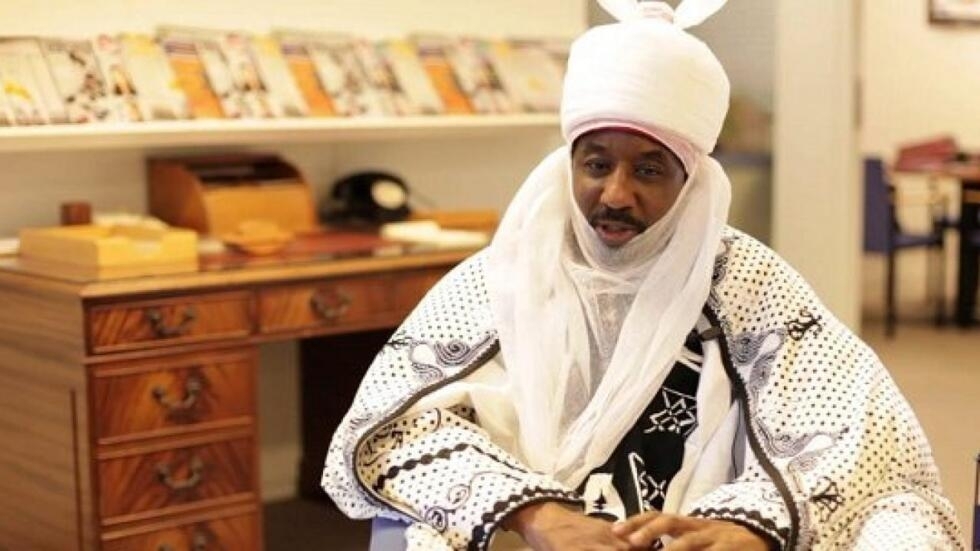
In a recent discussion on the critical role of leadership in shaping Nigeria’s economic policy, highlighting the complex interplay between monetary policy, fiscal decisions, and political realities. Drawing from his experience as the former Governor of the Central Bank of Nigeria (CBN), Sanusi Lamido Sanusi offered a candid assessment of the nation’s economic journey.
Recalling his tenure, he emphasized that the CBN’s mandate was to ensure monetary stability, while the broader responsibilities of growth, employment, and structural reforms often rested with government policymakers. “I did my best with monetary policy. The rest was left to the politicians,” he noted, referring to queries he received from the Secretary to the Government of the Federation over policy decisions.
He acknowledged the competence of recent appointments by President Tinubu, including Mr. Wale Edun and Mr. Yemi Cardoso, describing them as “some of the best minds” in Nigeria. Yet, he questioned why, despite having highly skilled individuals, economic challenges persist. Reflecting on past administrations, he observed that even during President Jonathan’s tenure, capable minds were involved, yet systemic issues remained.
A key example he cited was the controversial fuel subsidy. In 2012, the removal of the subsidy led to significant public hardship, but delaying reforms only increased long-term costs. “If the Jonathan government had removed the subsidy earlier, the short-term pain would have been far smaller than what we face today,” he explained, describing the subsidy system as a “naked hedge” that left the government overexposed to price fluctuations in petrol, exchange rates, and interest rates.
He also highlighted the political pressures of the time, noting that public opposition movements like Occupy Nigeria influenced the government to implement only a partial subsidy removal, prioritizing citizen safety amid security threats. “President Jonathan was determined to remove the subsidy, but the compromise was made to save lives,” he said.
On the Central Bank’s achievements, Sanusi stressed that its role is stability, not growth. Under his tenure, runaway inflation and exchange rate volatility were controlled, preventing a slide into hyperinflation like those seen in Zimbabwe or Venezuela. The Central Bank succeeded in creating a predictable economic environment, essential for sustainable development.
However, he noted that fiscal reforms are equally important. While tax reforms and improved revenue collection have reduced debt service ratios, he cautioned that government expenditure remains a challenge. Overspending, inflated contracts, and lack of transparency continue to undermine economic gains. “If you keep making more money and blowing it away, you undo the progress you’ve made,” he warned.
Addressing the question of why Nigerian leaders often fail to take expert advice, he attributed it not to incompetence but to a culture of surrounding leaders with “praise singers” who tell them what they want to hear. Honest advisors are often labelled as enemies, preventing critical feedback from reaching decision-makers. He urged leaders to seek out and listen to genuine counsel to ensure effective governance.
In conclusion, Sanusi Lamido Sanusi painted a picture of a nation where skilled individuals and sound policy frameworks exist, but political realities, systemic inefficiencies, and human behavior often impede progress. His insights underscore the urgent need for leadership that balances expertise, transparency, and courage in decision-making.