Korea is emerging as a pivotal center for the global artificial intelligence revolution, leveraging strategic investments, advanced technology, and industrial know-how. Leading this transformation is NVIDIA, whose innovations in accelerated computing are redefining how industries operate worldwide.
With plans to deploy 250,000 GPUs and partnerships with tech giants such as Samsung, SK Group, Hyundai, and Naver, Korea is positioning itself at the forefront of AI development. From robotic factories orchestrating other robots to digital twins streamlining production lines, the country is turning its technical talent and manufacturing expertise into a global advantage.
YOU CAN ALSO READ: Nigeria’s Growth Depends on Execution, Not Just Vision — Kola Karim
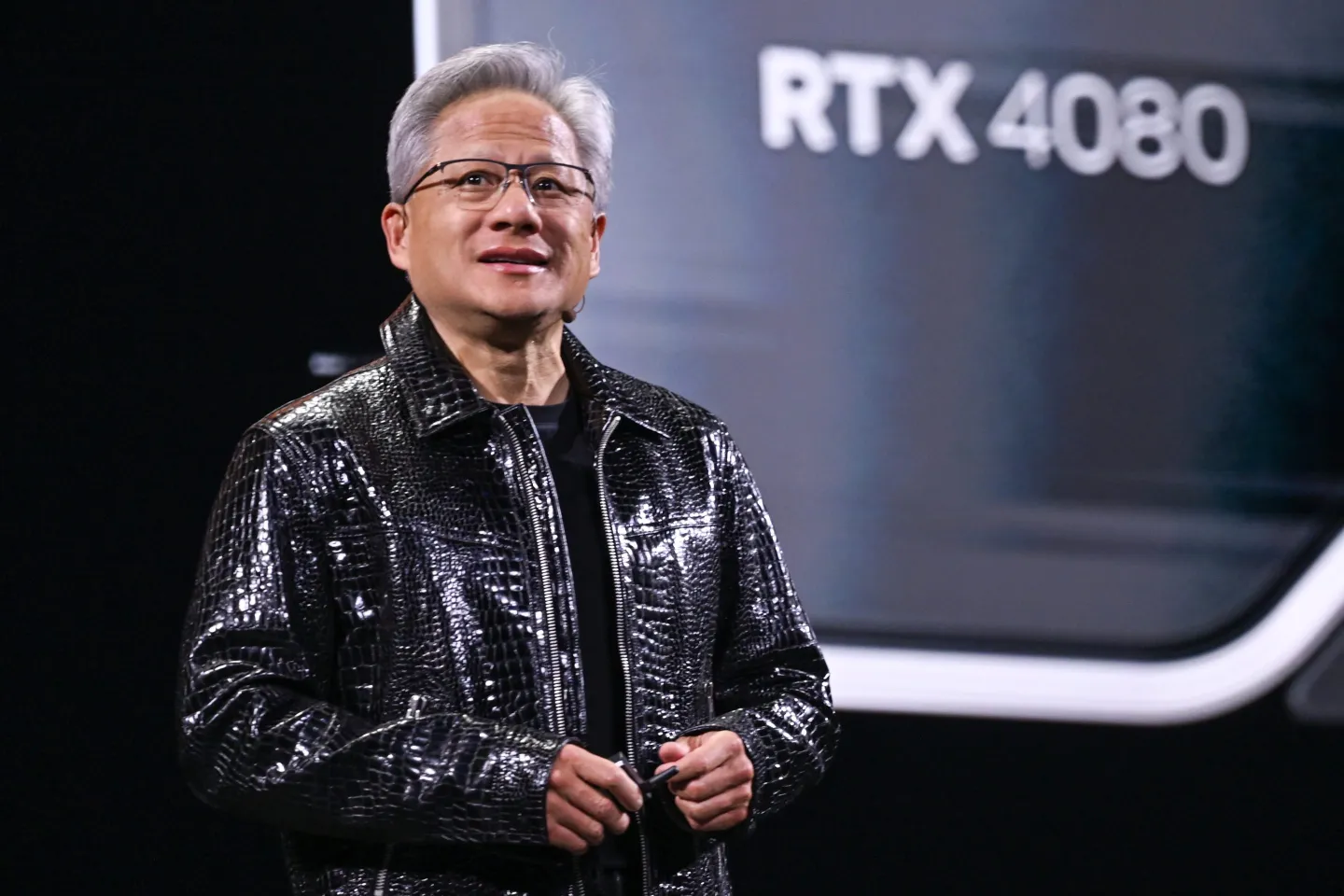
Speaking at the historic APEC summit, NVIDIA CEO, Jensen Huang praised Korea’s hospitality and the success of the event, acknowledging the organizers for uniting global leaders in a “historic APEC gathering.”
Tracing NVIDIA’s 33-year journey from its early days to pioneering accelerated computing, Huang explained how the technology solves problems conventional computers cannot handle. “Every single industry is being impacted by a platform shift we call artificial intelligence,” he said. “AI is no longer just software or a tool, it performs work, and it is transforming the world economy.”
Huang stressed that AI’s potential extends far beyond chatbots. It encompasses diverse models for language processing, robotics, chemistry, physics, and industrial applications. Unlike traditional software, AI relies on massive computational “factories” where GPUs convert energy and computation into intelligence. To demonstrate this, Huang shared a short video of real-time simulations, noting that everything shown was generated by AI algorithms and mathematics — nothing was pre-animated.
Highlighting Korea’s strengths, Huang noted the country’s rare combination of software expertise, technical knowledge, and manufacturing prowess. “NVIDIA is working globally in robotics,” he said, “from humanoid robots to industrial automation and surgical systems. Factories themselves are now robotic systems orchestrating other robots to build intelligent machines.”
The CEO unveiled a series of ambitious partnerships in Korea. Naver will host a major GPU expansion to support one of the first Korean large language models. Samsung will collaborate on AI factories and digital twins, deploying 50,000 GPUs. SK Group will expand its AI infrastructure with 50,000 GPUs and digital twin technology. Hyundai will integrate autonomous vehicle production with robotic factories, also deploying 50,000 GPUs. Together, these initiatives will add 250,000 GPUs across Korea, solidifying the nation as a global AI infrastructure hub.
YOU CAN ALSO READ: Flying High: Air Peace Announces Landmark Abuja to London Heathrow Route
Huang emphasized that hardware alone is not enough. Fostering Korea’s AI ecosystem requires collaboration with universities, startups, and government agencies to cultivate innovation and talent. “This is the beginning of a new journey,” he said. “For 30 years, Korea has been part of NVIDIA’s story. Now, together, we embark on the next chapter of the AI revolution.”
As industries worldwide accelerate AI adoption, Korea is poised to play a leading role, blending technical expertise, industrial capacity, and innovation to shape the next era of artificial intelligence.