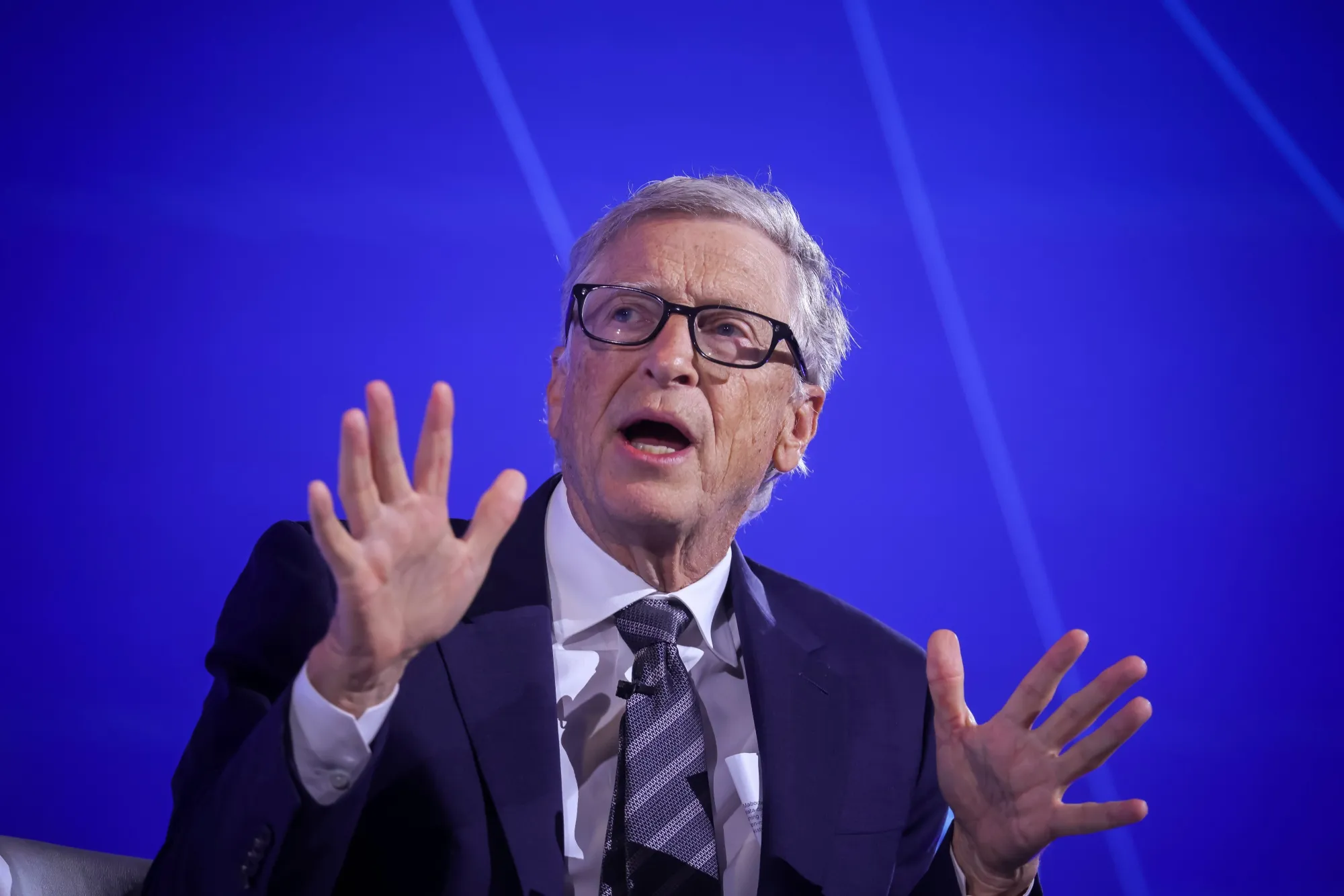
When Bill Gates speaks, the world listens, not just because he co-founded Microsoft, but because his words often forecast the shape of the technological future. In his latest reflections, Gates paints a clear-eyed, nuanced picture of where humanity stands today on the edge of both opportunity and disruption, fueled by artificial intelligence, climate change imperatives, and shifting economic paradigms.
“We need to define what a bubble means,” Gates begins, drawing a careful distinction between speculative frenzy and transformative innovation. “If by bubble you mean something like tulips in the Netherlands, where people later looked back and said, ‘What the heck? There was nothing there, they were just tulips,’ then no, that’s not where we are. But if you mean something like the internet bubble, where something very profound eventually happened, the world changed dramatically, some companies succeeded, and many others fell behind after burning capital, then absolutely, that’s what we’re in.”
YOU CAN ALSO READ: Nigeria’s Growth Depends on Execution, Not Just Vision — Kola Karim
To Gates, the current AI surge is not a hollow craze but an inevitable revolution, one that will reshape economies, redefine industries, and, yes, bankrupt a few along the way. “AI is the biggest technical advance of my lifetime,” he says. “The economic value is enormous, we’re talking about intelligence that can give medical advice, act as a tutor, or help design new drugs.”
Like the early internet, the AI race is an all-in game. “Some companies will be glad they invested heavily,” he predicts. “Others will regret it. But if you want to be a tech company, you don’t get to opt out of this race.”
Yet, beneath the optimism lies pragmatism. Gates acknowledges the public’s growing anxiety over AI’s energy footprint and its looming disruption of jobs. “We need to locate things like next-generation, terawatt-scale nuclear reactors in places where it’s clear that local electricity bills won’t go up because of them,” he says, underscoring the delicate balance between technological ambition and social responsibility.
As for employment, he doesn’t sugarcoat it: “AI will have an impact on the job market. It’s not visible in large numbers yet, but it’s coming over the next several years. And it’s only honest to speak frankly about that.”
Gates, a self-proclaimed capitalist, is equally candid about government intervention in technology and industry. While he sees merit in the U.S. government’s industrial policy, particularly its involvement in critical sectors like chips and rare earth materials, he warns that unpredictability could be the system’s undoing. “Government works best when it’s predictable,” he explains. “If you’re building a factory, you need to know what tariffs and rules will look like 20 years from now. The government shouldn’t change its industrial policy every year or every day.”
He points to the current ambiguity: “If the government starts owning part of some companies, will it favor those over others with better technology? That’s unclear right now.”
On climate change, Gates remains steadfast but with a more pragmatic tone than some of his earlier stances. “There’s enough innovation here to avoid super-bad outcomes,” he asserts, “but we won’t achieve the best goals, the 1.5°C target, or even 2°C in full.”
His argument is not about giving up but about widening the lens. “We have to frame our actions in terms of overall human welfare, not treat every decision as solely for climate,” he insists. With shrinking global aid budgets, Gates believes policymakers must prioritize interventions that save the most lives and improve well-being, even if they don’t perfectly align with climate goals.
The Paris Agreement, he maintains, was still a pivotal moment: “It got countries to commit and recognize this is a mutual problem. But the ambitious goal of staying below 1.5°C turned out not to be realistic.”
Asked whether corporate net-zero pledges were a mistake, Gates is unequivocal: “Not at all. Those commitments helped lower future emissions because corporations acted as early customers for new technologies. That demand drives costs down, when clean options become cheaper than dirty ones, market forces do the rest.”
He continues to champion innovation in areas like nuclear fusion, clean cement, and carbon capture, urging corporations to remain early adopters.
YOU CAN ALSO READ: Flying High: Air Peace Announces Landmark Abuja to London Heathrow Route
Critics may accuse Gates of “moving the goalposts,” but his response is characteristically measured. “If you view climate as apocalyptic or as a non-problem, my memo won’t make sense to you,” he says. “My position is that climate is extremely important but must be considered within the broader goal of improving human welfare. I didn’t pick this stance for popularity, I think it’s the intellectually right, nuanced view.”
In a world captivated by extremes, from AI utopianism to climate alarmism, Bill Gates continues to inhabit the middle ground: rational, data-driven, but deeply aware of the human context. For him, the story of this era is not one of bubbles waiting to burst, but of revolutions unfolding, messy, unpredictable, yet ultimately transformative.
“Some companies will fall behind,” he concedes. “But the world? It will move forward.”