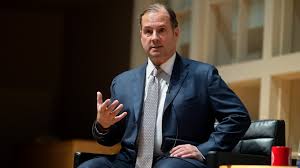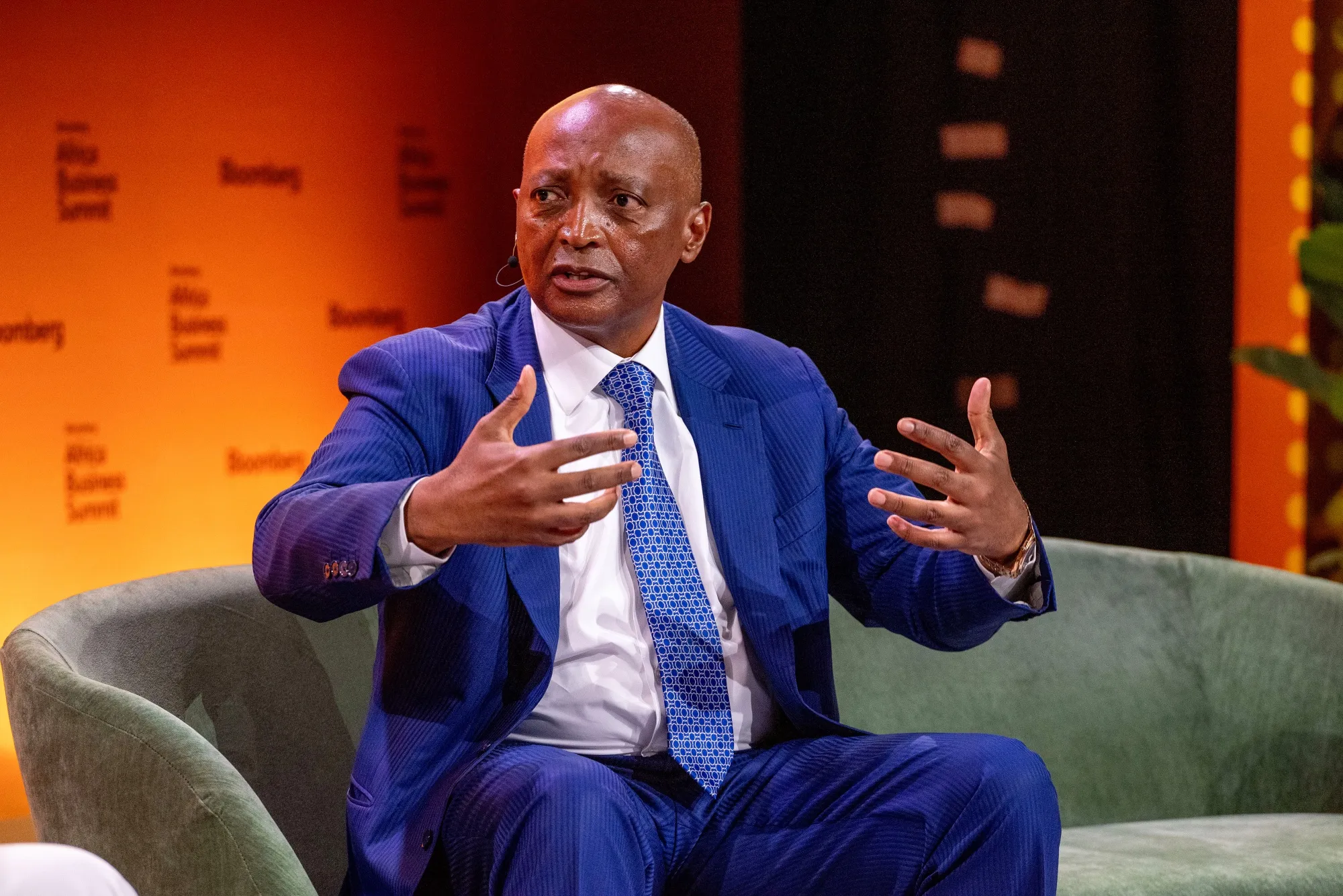
Patrice Motsepe moved through the Bloomberg Africa Business Summit in Johannesburg with the quiet confidence of someone long accustomed to balancing ambition with responsibility. As founder and executive chairman of African Rainbow Minerals (ARM), he spoke with the ease of a man who has made peace with the long game in business, in society, and in Africa’s unfolding economic story.
From the moment he sat on stage, Motsepe anchored the conversation in a simple truth: Africa’s promise lies not only in its resources but in its people. Entrepreneurs in Lagos, Kinshasa, Cairo, Morocco, Nairobi and Johannesburg, most of them leading small or growing ventures, are to him the continent’s greatest signal of progress. Their ingenuity, innovation and resilience, he said, are the real foundation on which Africa’s investment future must be built.
YOU CAN ALSO READ: Serena Williams on Life Beyond Tennis: Reinvention, Investing, and Building Empires
Motsepe has investments that span financial services, mining, telecommunications, renewable energy and agriculture. Yet he resisted attempts to reduce his success to sectors. His philosophy is clear: strong companies are about leadership, governance, competitiveness and the specific economic environments in which they operate. This disciplined approach has guided ARM’s steady expansion across Africa and beyond, and underpins the group’s long-term partnerships, including its presence in 58 countries through Sanlam’s alliance with Allianz.
He spoke openly about the performance of various businesses, from Time Bank, now serving more than 12 million clients and recently expanded into the Philippines, to ARM’s extensive mining portfolio. Mining remains a pillar of his empire, with around 50,000 people employed in manganese, iron ore and platinum group metals. Harmony Gold, another part of the group, mirrors that scale and is benefiting from strong gold prices. Yet Motsepe pointed out that short-term booms do not define strategy. While gold has delivered excellent returns in recent years, copper, essential to electrification and the global green transition, is where the future lies. He confirmed that ARM is exploring a major project in Papua New Guinea that could eventually require up to $5 billion in investment, a testament to the long-term view that guides his decisions.
He also highlighted the need for geographic diversification. ARM’s ventures in Australia and Canada reflect his understanding that while Africa holds rich mineral prospects, global competition requires companies to test themselves against international standards and opportunities.
When the discussion shifted to South Africa’s economic climate, Motsepe’s tone sharpened. He celebrated the country’s world-class CEOs, vibrant private sector and academic excellence, but he was frank about its obstacles. Unemployment, he said, remains the single biggest challenge, especially for young people. The private sector must be the engine of growth, supported by clear, consistent and investor-friendly policy. He was equally forthright about past governance failures, especially at Eskom, noting that loadshedding should never have happened. Meritocracy, integrity and accountability, he insisted, must be non-negotiable.
Crime, too, weighs heavily on him. The damage it does to South Africa’s global reputation is something he has seen firsthand in conversations with investors in Silicon Valley and the Middle East. Perception matters, he said, not because South Africa is uniquely unsafe, but because even isolated incidents can shape global sentiment. Restoring confidence requires action, not slogans.
His vision for South Africa’s relationship with global partners is rooted in pragmatism. The United States, he emphasized, remains a crucial economic ally, employing hundreds of thousands of South Africans through American companies. He believes political tensions will ease after the U.S. elections and expects stronger ties across Europe, Asia and the Americas.
In the midst of all this, Motsepe’s other life as president of the Confederation of African Football emerged with surprising candour. He joked that taking on CAF might have been one of the most unintelligent decisions of his life, but the humour belied a deeper motivation. Football, he said, is one of the continent’s most powerful tools for engaging young people, fostering unity and embedding values such as merit, discipline and transparency. Under his leadership, CAF has transitioned from heavy debt to profitability, secured stronger sponsorships and delivered tournaments with significant economic impact, including Côte d’Ivoire’s recent championship, which injected an estimated 1.5 billion into the economy.
YOU CAN ALSO READ: “Africans Can Build Together”: How Tenny Tolofari’s XSITE Capital Is Challenging a Global Stereotype
His long-term goal is ambitious: $1 billion dedicated to football development across all 54 African countries. Not to earn profit, but to build infrastructure, training systems and opportunities that can uplift future generations.
By the end of the summit, one theme stood out in Motsepe’s narrative: Africa’s future will be shaped by those prepared to think beyond immediate gains. Whether investing in copper, building digital banks, transforming football governance or advocating for safer cities, Motsepe approaches each challenge with the same conviction that with discipline, long-term commitment and a belief in Africa’s people, the continent’s next chapter can be brighter than any that came before.