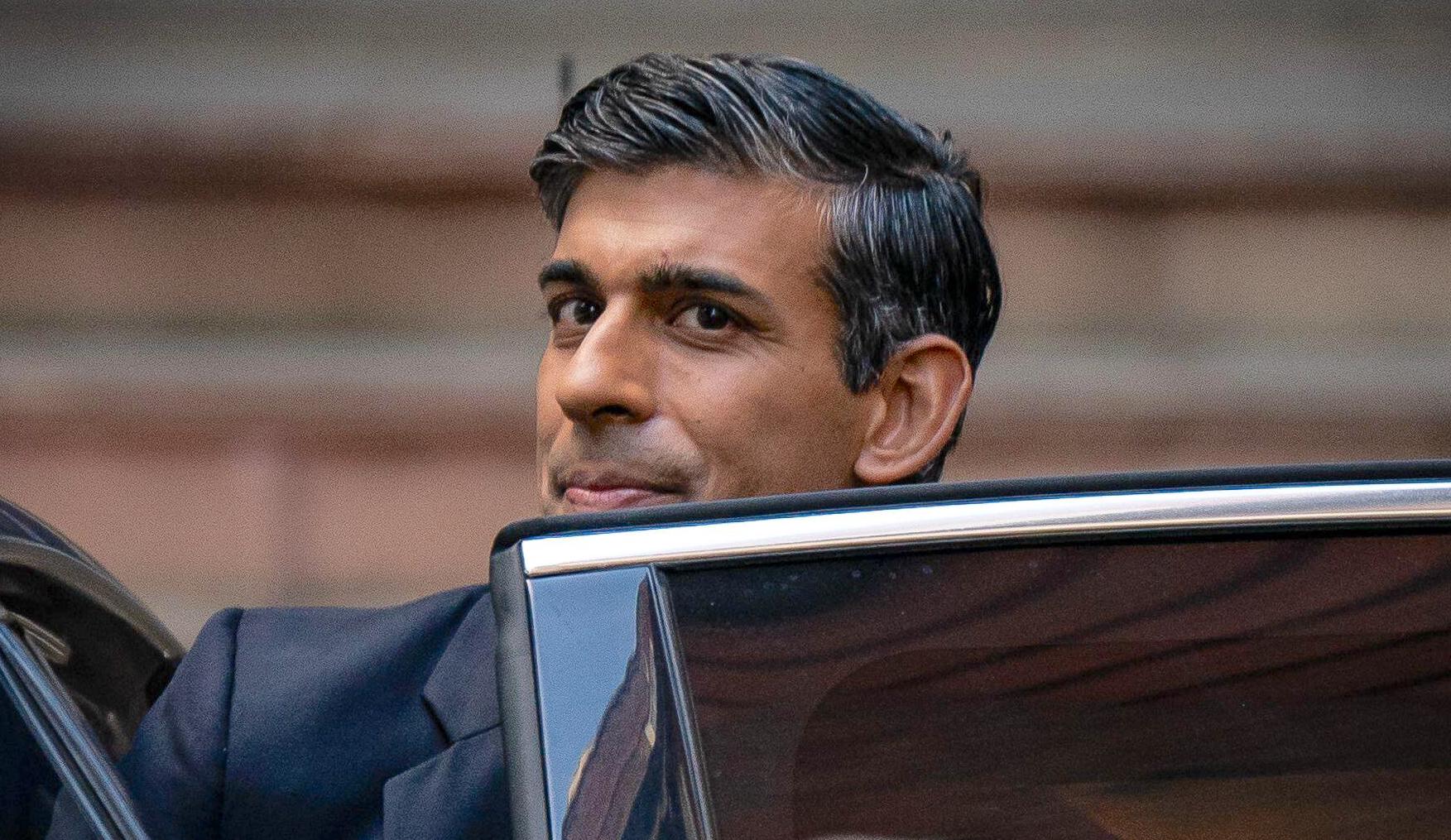
At the Bloomberg New Economy Forum, former UK Prime Minister Rishi Sunak stepped onto the stage not only as a political leader but as someone deeply rooted in technology. With a background shaped partly at Stanford University and an advisory role to companies like Anthropic and Microsoft, Sunak brought a unique insider’s perspective to one of the world’s most urgent conversations: the rise of artificial intelligence and its implications for global leadership.
The discussion opened with a wide angle look at the idea of a global AI race, often framed as a rivalry between the United States and China, with Europe positioned mainly as a regulatory force. But Sunak immediately reframed the narrative. The question of winning the race, he argued, is not only about building the most advanced systems or reaching technological singularity first. It is about which nation can adopt and spread AI across its society the fastest.
YOU CAN ALSO READ: Strive Masiyiwa’s Cassava Technologies Unveils AI Platform to Transform Africa’s Digital Future
He pointed to history to make his case. The printing press was invented in Germany, yet it was the United Kingdom and the Netherlands that reaped the economic gains. During the Second Industrial Revolution, Britain pioneered major innovations, but the United States became the chief commercial beneficiary. The same pattern, he said, is likely to shape the AI era. A country does not need to invent a technology to gain the most from it.
This formed one of Sunak’s central arguments. Nations that build the right infrastructure of diffusion, which includes training workers, educating small businesses, preparing public institutions, and building public trust, will be the ones that thrive.
Alongside his optimism, Sunak emphasized that AI also arrives during a fragile geopolitical moment. The unipolar world order has faded, major powers are engaged in intense competition, and technology sits at the center of that rivalry. It is, he said, both the most dangerous and the most transformational period of our lifetime.
As Prime Minister, Sunak established the AI Safety Summit in 2023 at Bletchley Park. It was the first gathering of its kind, bringing together governments, companies, and researchers to coordinate global safety frameworks. The summit has since evolved into an annual international event, with later editions hosted in South Korea and France, and India preparing the next one. Although the summit’s name has changed from Safety to Action to Impact, Sunak believes its purpose remains intact. Leaders now have a dedicated place to gather and reflect on the direction of AI.
On the matter of safety, Sunak was clear that governments cannot rely solely on companies to regulate themselves. He described the creation of the UK’s AI Safety Institute as a deliberate move to give governments the technical capability to independently evaluate risks from advanced systems, especially those involving cyber, biological, chemical, or other forms of misuse. Fortunately, he said, major labs such as OpenAI, Anthropic, and Google have so far voluntarily allowed access for pre deployment testing and red teaming exercises. Still, he acknowledged that uncertainty remains, especially as some firms consider moving toward more closed source models.
The conversation eventually shifted from institutions to individuals, particularly the next generation preparing to enter a rapidly changing job market. With both speakers being parents of teenagers, the question felt personal. How do you prepare young people for careers in a world where companies are increasingly automating entry level roles?
Sunak’s answer blended realism with long term vision. Beyond basic AI literacy, which is becoming essential across almost every field, he believes human skills will remain critical. These include reasoning, communication, empathy, and relationship management. Many of the highest ranked skills on platforms like LinkedIn still reflect human interaction rather than technological expertise.
He also predicted a new kind of workplace. Employees at all levels, from graduates to senior leaders, will eventually need to know how to manage a team of AI agents just as they manage human colleagues. They will need to divide tasks, evaluate quality, and oversee autonomous workflows. This will become an important professional skill that defines the future of work.
YOU CAN ALSO READ: “Presence, Not Provision”: Bunmi Adeniran Urges Society to Redefine What Makes a Good Man
As the conversation drew to a close, Sunak expressed optimism about the world that today’s children will inherit. The challenge, he said, is not simply learning how AI works but staying adaptable, curious, and open to continual growth.
The session ended on a reflective note as the audience prepared for the next panel. It was clear that while AI is reshaping the map of global power, it is also reshaping families, careers, classrooms, and the meaning of work itself.
And if Rishi Sunak’s message resonated, it was this. The nations and individuals who learn quickly, adapt effectively, and remain eager to grow will be the ones who lead in the age of artificial intelligence.