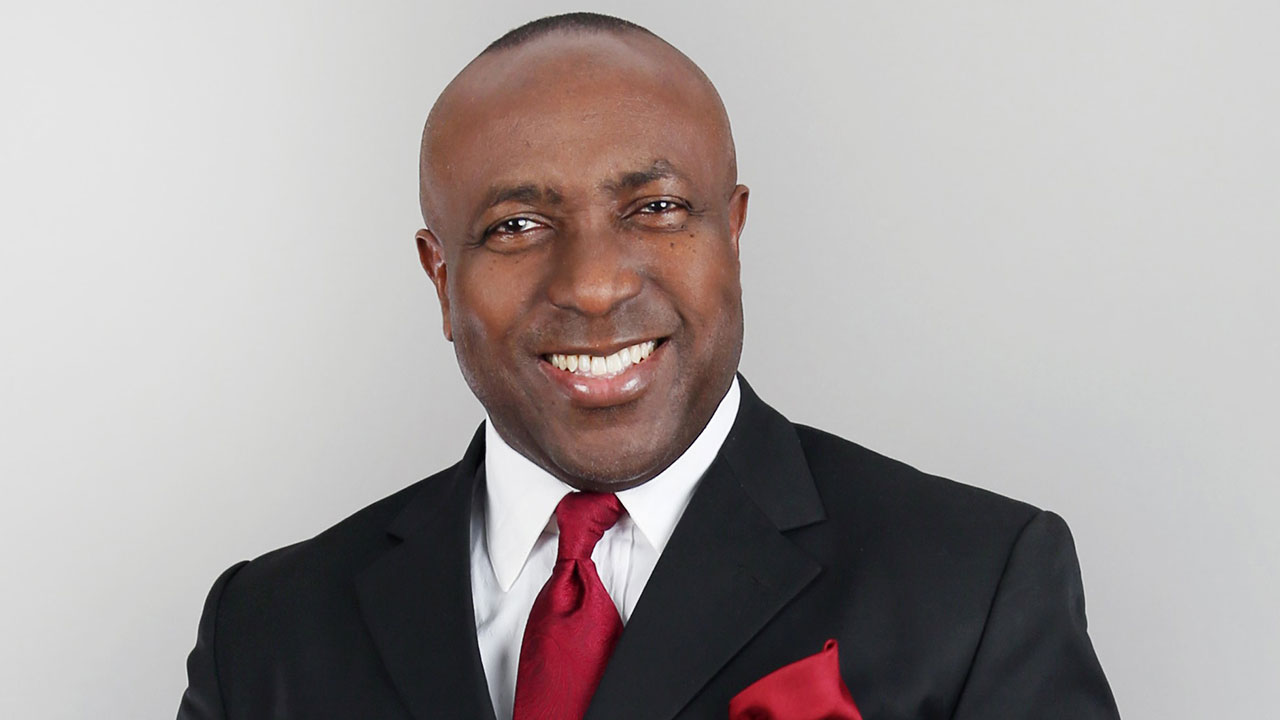
Wesley Ogude, Lead Wealth Consultant and Group CEO of the Springwells Group of Companies, a Canadian private equity group with operations across Canada, the United States, and Nigeria, approaches the subject of money with a depth shaped by experience on both ends of the financial spectrum. His journey from Queen’s University to becoming the first Black Finance Director in half a century at Canada’s largest integrated logistics firm gave him a front-row view of how wealth is truly built and preserved.
Despite a successful corporate career, Ogude admits that his understanding of money was incomplete for many years. His turning point came when he discovered that money behaves like a game, one with rules, strategies, scoreboards, and winners. The problem, he observed, is that most people are actively participating in the game without ever learning how it works.
YOU CAN ALSO READ: Beyond the Hustle: Fate Foundation Charts Path for Policymakers to Unlock Nigeria’s $1 Trillion Economy
This perspective formed the core of his conversation on the Wealth on Your Terms podcast with Toby Adikaya, where he dissected the reasons why hardworking individuals often struggle financially. He highlighted that while people spend years mastering their professions, very few invest in learning the structure and psychology of wealth.
From Ogude’s analysis, the first reality many fail to grasp is the deliberate secrecy surrounding wealth creation. He compares the financial world to corporate environments where vital information is compartmentalized and access is granted only to those within certain circles. Similarly, the most important rules of wealth often circulate only among those who already possess it.
Another insight he emphasizes is the collaborative nature of wealth. Ogude observed that although he thrived professionally, he did not step into true wealth until he learned to build and rely on a team. Income, he argues, is the reward for individual effort; wealth, on the other hand, is the outcome of collective talent, systems, and well-designed structures.
Measurement forms another pillar of his philosophy. Ogude points out that institutions, banks, and investors make decisions based on net worth—not on job titles or academic credentials. Tracking one’s financial position is the only way to know if progress is real or imagined.
His stance on the limits of employment is uncompromising: no one, he insists, becomes wealthy purely from a salary. Even the highest-paid executives reach their financial peak through equity, assets, and ownership—not wages. According to him, sustainable wealth is built by converting income into businesses, real estate, commodities, and paper assets—avenues through which nations and wealthy families have created prosperity for generations.
Ogude’s commitment to multigenerational wealth shapes much of his work. He warns that without intentional planning, families inevitably force their children to restart from scratch. He points to long-standing families such as the Rockefellers, Rogers Communications, and Enterprise Rent-A-Car—examples of wealth preserved through structured systems, trusts, and leadership continuity.
One of the most transformative tools in this space, he explains, is the Family Business Office (FBO). These private management hubs help families maintain, protect, and grow their estates. Beyond investment oversight, they guide succession planning, beneficiary training, governance, and tax management. While traditionally reserved for ultra-wealthy families, Springwells extends similar structures to families with more modest but emerging wealth.
He also underscores the limitations of relying solely on a will. Wills, he notes, expose estates to probate challenges and delays, while trusts create smoother transitions, protect privacy, and allow families to work together across generations.
A recurring concern in his work is what he calls “entropy”, the gradual collapse of wealth when the principles that created it are not passed down. Research showing that most inherited wealth disappears by the second generation underscores his point: money without mindset, discipline, and structure cannot last.
YOU CAN ALSO READ: ‘This Is Africa’s Decade of Unprecedented Opportunity’ – Rand Merchant Bank’s CEO, Emrie Brown
Among the five forms of capital he teaches, the first is values-based capital. Whether rooted in faith or ethics, these principles guard wealth against the corrosive forces of greed, selfishness, and pride. Without them, Ogude warns, even the most impressive financial achievements can unravel.
His message offers a mix of caution and empowerment. While the mechanics of wealth may have been hidden for generations, he believes that anyone willing to learn the rules, assemble the right team, track their progress, and convert income into solid assets can rewrite their financial story.
In Ogude’s view, wealth begins with awareness. Once the rules become clear, the path becomes accessible—and the possibility of building wealth that survives across generations becomes real.
The material presented in this publication is drawn entirely from insights originally shared by Tobi Adekeye through his platforms, Wealth on Your Terms and the High Income to Wealth podcast. The ideas, interpretations, perspectives, and commentary featured here represent the intellectual work and broadcast content of Tobi Adekeye and his media channels.