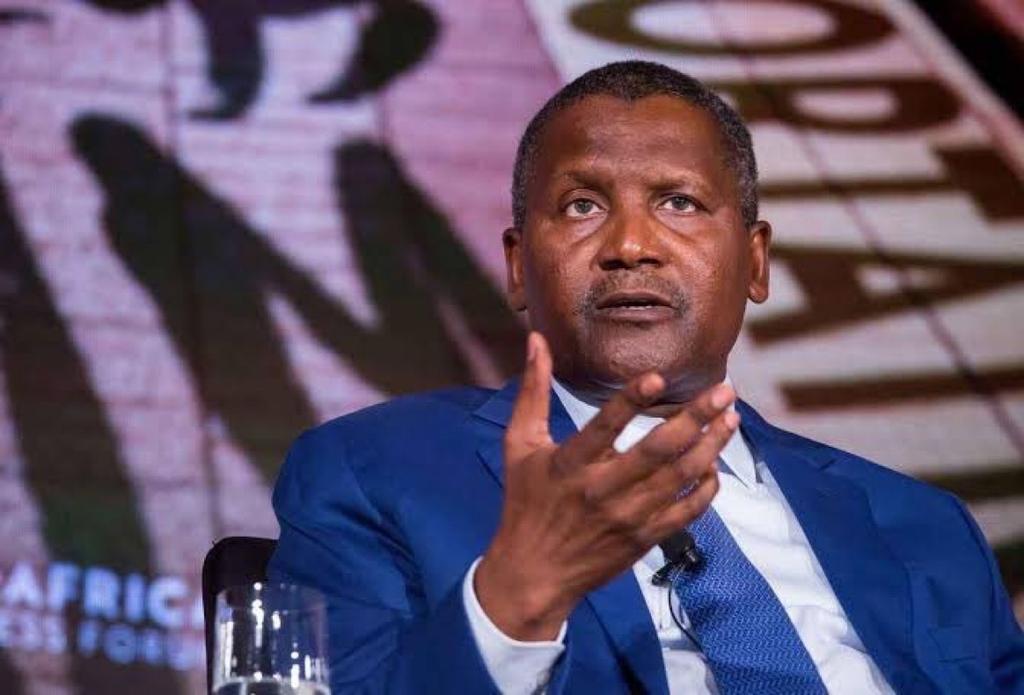
When people hear the name Aliko Dangote, they think of dominance, cement, wealth, power, stability. His name is shorthand for African success, the image every entrepreneur hopes their journey will one day reflect. But long before he became Africa’s richest man, Dangote was something few people associate with him today: a man who failed, repeatedly, and sometimes spectacularly.
Success has a way of erasing the scars that shaped it. Dangote is now seen as the empire builder who turned cement into gold and transformed simple commodities into billion dollar industries. Yet behind the skyscrapers of his influence are ventures that collapsed, investments that vanished, and bets that went terribly wrong. This is not a criticism. It is a reality check. Because even giants stumble. And in Dangote’s case, those stumbles built the instincts that made him unstoppable.
YOU CAN ALSO READ: ‘Champions Don’t Retire, They Transform’ – Maria Sharapova
Born in 1957 into a wealthy trading family in Kano, Dangote understood commerce early. But it was not his background that distinguished him. It was his intuition. He recognized something most entrepreneurs miss: controlling essential resources is the surest path to long term power.
In 1977, armed with a ₦500,000 loan that was about $3,000 at the time from his uncle Sanusi Dantata, he began importing rice, sugar and cement. Nigeria’s oil powered economy was booming, cities were expanding, and demand was soaring. His timing was precise. But the real transformation came when he stopped importing and began producing, a decision that laid the foundation for the industrial empire that would reshape Africa’s business landscape.
While the Dangote Group grew into a powerhouse of cement, sugar, flour and refined commodities, the journey was marked with costly missteps that rarely appear in the success narrative. In the early 2000s, as Nigeria’s telecom revolution swept across the country, Dangote tried to enter the market. He paid the required $20 million license fee, hoping to compete alongside MTN, Glo and Airtel. But internal disagreements, infrastructure challenges and rising costs overwhelmed the project. He withdrew, and the telecom sector went on to become one of Africa’s most profitable industries without him. It remains one of his biggest missed opportunities.
Before cement transformed his fortune, he invested heavily in Nigeria’s textile industry, trying to revive a sector already struggling to survive. Chronic power outages, smuggling and cheaper imports from Asia crippled operations. The factories closed quietly, and to cushion the financial hit he reportedly sold Liberty Merchant Bank. It was a painful retreat for a man whose image is now tied to invincibility.
Dangote Flour Mills was another difficult chapter. Established in 1999, it grew quickly and was listed on the Nigerian Stock Exchange in 2008. But by the mid 2010s, competition intensified and the business began to weaken. Dangote sold a controlling stake to South Africa’s Tiger Brands for nearly $200 million, but the acquisition became a disaster. Tiger Brands lost more than $120 million and exited Nigeria entirely. Dangote later repurchased the struggling company at a fraction of the price.
Agriculture also taught him hard lessons. In 2016, he launched a massive tomato processing plant in Kano aimed at reducing Nigeria’s dependence on imported tomato paste. But local farmers could not supply enough tomatoes, logistics broke down, pests ravaged fields and electricity failures crippled operations. The ₦4 billion factory shut down within months. It reopened years later only after major restructuring and significant financial losses.
His ventures into fertilizer production faced similar struggles long before the current mega plant became a success. Policy instability, poor infrastructure and market issues derailed early attempts in the 2000s. Dangote has openly acknowledged that the first fertilizer projects collapsed completely. It took more than a decade before conditions aligned.
He also attempted to start an airline, but regulatory bottlenecks, inadequate aviation infrastructure and an unprepared market stopped the project before it could begin. His early ambition to invest in luxury holiday resorts failed as well because Nigeria’s tourism environment simply was not ready for such a venture.
Each collapse carried a price tag that would have crippled many entrepreneurs. But for Dangote, these losses became instruction manuals. Failure sharpened his sense of timing, taught him the importance of policy alignment and pushed him to build vertically integrated businesses where he could control every critical step, from production to distribution.
This mindset explains how he bounced back from failures such as Dangote Flour Mills, turning a difficult experience into an opportunity to buy low, restructure and rebuild value. It also explains his patience with agriculture and manufacturing. He retreats when the system is broken, returns when the environment improves and resumes building with deeper insight.
The same resilience drives the Dangote Refinery, one of Africa’s most ambitious industrial projects. It has faced delays, cost overruns, regulatory complexities and intense public scrutiny. But Dangote’s relationship with failure has taught him persistence. He has learned that transformative ventures rarely follow smooth timelines.
YOU CAN ALSO READ: Entrepreneurs, Your Real Enemies Are Fear, Comfort – Dr. Moji Davids
Today, while many companies struggle with currency instability, import restrictions, shifting government policies and volatile markets, Dangote thrives because he builds self contained ecosystems, industries designed to survive external shocks. His success is not built on flawless decisions but on the ability to rebuild smarter every time something breaks.
It is easy to idolize his achievements and overlook the bruises beneath them. But the more compelling truth is that Dangote is not the man who always wins. He is the man who refuses to stay defeated. His rise is a story of repeated falls, calculated resilience and mastery over failure.
Behind the billion dollar empire lies a powerful lesson: giants do not grow because the path is smooth. They grow because every stumble strengthens their next step.