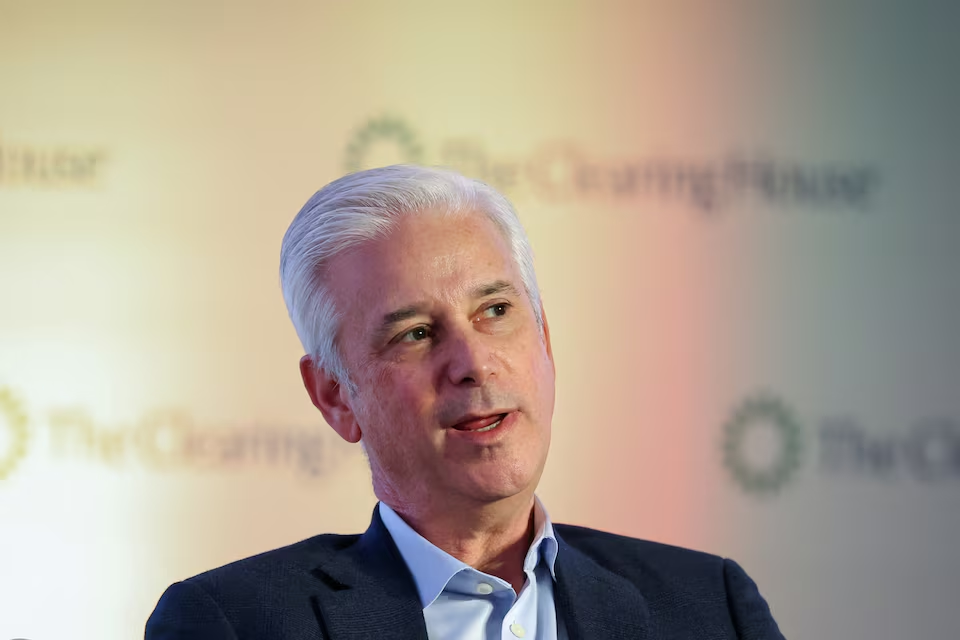
Charlie Scharf, Group CEO of Wells Fargo, spoke candidly this week about one of the most pressing topics facing global business: how artificial intelligence is reshaping the workforce. Addressing industry leaders and stakeholders, Scharf acknowledged that AI will not just enhance efficiency but fundamentally alter what work looks like and how organizations deploy talent in the years ahead.
YOU CAN ALSO READ: Prince of Commerce: How Samuel Adedoyin Built an Empire and Gave Back
“Even pre-artificial intelligence, we do expect to have fewer people as we go into next year,” Scharf said, highlighting that workforce reductions are a reality for many industries. But his message went beyond numbers and headcount. Scharf stressed that the key challenge for companies will be adapting employees to new roles, providing retraining opportunities, and ensuring that human talent complements AI technology rather than competing with it.
For Wells Fargo, these changes are already beginning to take shape. Scharf noted that AI is being deployed to streamline operations, improve customer experiences, and handle routine tasks. “The potential is enormous,” he said, “but it also means that organizations must think carefully about how to integrate AI without leaving employees behind.”
Scharf’s perspective reflects a broader shift in the corporate world. Across sectors, AI is transforming jobs, automating repetitive tasks, and creating new roles that require technical expertise, emotional intelligence, and creativity. Leaders like Scharf recognize that the success of AI adoption is not measured solely by productivity gains, but by how organizations manage the human side of the transition.
YOU CAN ALSO READ: From the U.S. to the Middle East: Trump Jr, Malik on Peace, Investment, and Strategic Priorities
At the same time, Scharf acknowledged the opportunity AI presents: a chance for workers to engage in more meaningful, strategic, and creative work. By removing routine burdens, employees can focus on higher-value contributions, problem-solving, and decision-making tasks that AI cannot replace.
Scharf’s message is clear: workforce transformation is inevitable, but it is also manageable. Companies that proactively invest in reskilling, communication, and inclusive planning will not only survive the AI revolution but thrive in it. The conversation he sparked at this week’s event serves as a blueprint for organizations around the world navigating the delicate balance between technology and talent.
In his words, AI does not eliminate the workforce. It changes it. Leaders who recognize the human side of innovation will be the ones shaping the future of work.