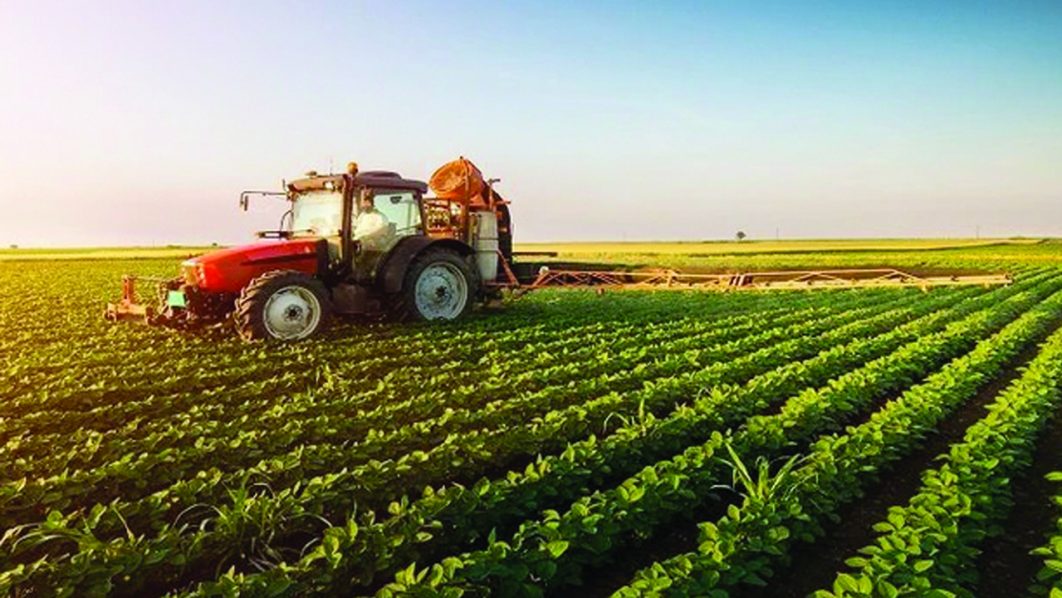
Nigeria’s agricultural sector is ending 2025 on a note of steady growth and renewed confidence, driven by higher output, easing prices for key staples, and rising private-sector investment. The outlook, reinforced by findings from the 2025 Agricultural Performance Survey, suggests a sector that is gradually transitioning from subsistence to scale, even as structural challenges persist.
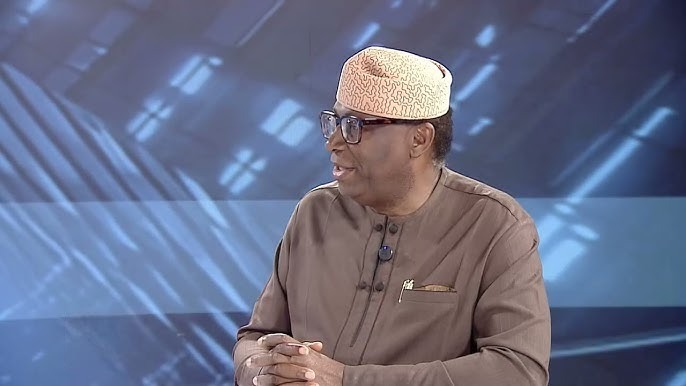
Speaking on the state of the economy and the forces shaping agriculture, energy, and finance, Vice President, Corporate & Government Relations, Olam International, Ade Adefeko said the progress recorded this year reflects a more deliberate and business-focused approach to agriculture.
“We are beginning to see agriculture treated less as an intervention and more as an enterprise,” Adefeko said. “That shift is critical. When agriculture is run as a business, productivity improves, investment follows, and outcomes become more sustainable.”
YOU CAN ALSO READ: AI, Digital Commerce, and Productivity Will Define Nigeria’s Future – Bismarck Rewane
According to the survey, agriculture grew by 3.79 percent in the third quarter of 2025, with nominal growth of about 24.35 percent. Adefeko described the performance as evidence of a sector on recovery footing, noting that Nigeria is gradually moving away from heavy reliance on rain-fed farming.
“Technology adoption, better planning, and intentional policy thinking are changing the narrative,” he said. “We are seeing stronger output across staples such as cassava, cocoa, yam, and other food crops. Nigeria is becoming increasingly food secure, even though full food sovereignty will take time.”
He added that the pace of progress is also changing. “For years, growth was slow and incremental. What we are beginning to see now is a transition from arithmetic growth to geometric growth, driven by strategy, investment, and scale.”
Adefeko pointed to private-sector investment as one of the strongest signals of confidence in the agricultural value chain. He cited Olam Agri’s recent $45 million investment in a soyabean processing and crushing facility as an example of how capital is flowing into value-added agriculture.
“Investments like this don’t happen in isolation,” he said. “They are supported by improving macroeconomic stability, clearer monetary signals from the Central Bank, and better alignment between fiscal and monetary policy. For the first time in a long while, these policies are pulling in the same direction.”
While acknowledging that challenges remain, Adefeko described the current environment as one of cautious optimism. He stressed, however, that Nigeria must strengthen its strategic food reserves to protect against shocks.
“Most serious economies hold food reserves that can cover 18 to 24 months,” he said. “Nigeria is still in the range of three to six months. That gap needs to be addressed if we want long-term resilience.”
On food inflation, Adefeko said persistent price pressures are largely driven by weaknesses beyond the farm gate. “The real problem is not just production; it’s storage, logistics, and post-harvest losses,” he explained. “Too much value is lost between the farm and the market.”
He noted that favourable rainfall and minimal drought in 2025 supported higher yields, but warned that without integrated value chains, gains would remain fragile. “What Nigeria needs is a true farm-to-fork system, where production, processing, storage, and distribution are properly linked. Fragmentation is expensive, and consumers ultimately pay the price.”
Addressing the issue of wheat, Adefeko was blunt about Nigeria’s limitations. “We are a tropical country. Wheat thrives in temperate regions,” he said. “With consumption between 4.5 and 6 million metric tonnes and local production at about 500,000 tonnes, imports will remain unavoidable for a long time.”
Rather than pursuing self-sufficiency at all costs, he argued, Nigeria should focus on competitiveness. “You win by leaning into your comparative advantage, not by forcing what nature did not design you for.”
Beyond agriculture, Adefeko described developments in the oil and gas sector as another stabilising factor in 2025. He said the commencement of operations at the Dangote Refinery has significantly improved energy security.
“Energy security underpins everything,” he said. “You cannot have food security without energy security, and without both, national security is weakened.”
For the first time in years, Nigeria experienced a relatively stable festive season without fuel shortages. Adefeko attributed this to improved sector coordination and early policy decisions. He noted that oil production has recovered from about 850,000–900,000 barrels per day in previous years to between 1.2 and 1.5 million barrels per day when condensates are included.
“There has also been renewed activity upstream,” he said, pointing to rising rig counts as a sign of improving confidence and exploration momentum. He added that the easing of previously pledged oil revenues is gradually restoring fiscal flexibility.
On gas and foreign investment, Adefeko said deals such as the $750 million financing agreement between Afreximbank and Seplat Energy underscore renewed investor interest. He attributed this to reforms introduced under the Petroleum Industry Act, which has brought greater clarity and liberalisation to the sector.
As the banking sector approaches the March 31 recapitalisation deadline, Adefeko expressed confidence in the process, citing improved exchange-rate stability over the past several months. He said transparent FX trading platforms have strengthened price discovery and investor trust.
YOU CAN ALSO READ: Africa’s Future Depends on Accuracy, Future Mindedness and Responsibility, Otabil Says
“Transparency is not cheap, but credibility is priceless,” he said. “When investors can see real-time data and trust the system, capital flows more easily.”
Turning to fiscal policy, Adefeko said Nigeria’s perennial challenge is not the size of the budget but its execution. “Budget performance has always been the weak link,” he said. “Delayed funding and fragmented disbursements undermine impact.”
He also called for more conservative oil price benchmarks, suggesting a range of $45 to $50 per barrel. “It is better to be conservative and post a surplus than to be optimistic and run deficits,” he said.
Despite the risks, Adefeko said Nigeria enters 2026 in a stronger position than in previous years. “For the first time in a long while, fiscal and monetary policies are aligned,” he said. “Challenges remain, but Nigeria is no longer standing still. There is measurable progress, and that matters.”