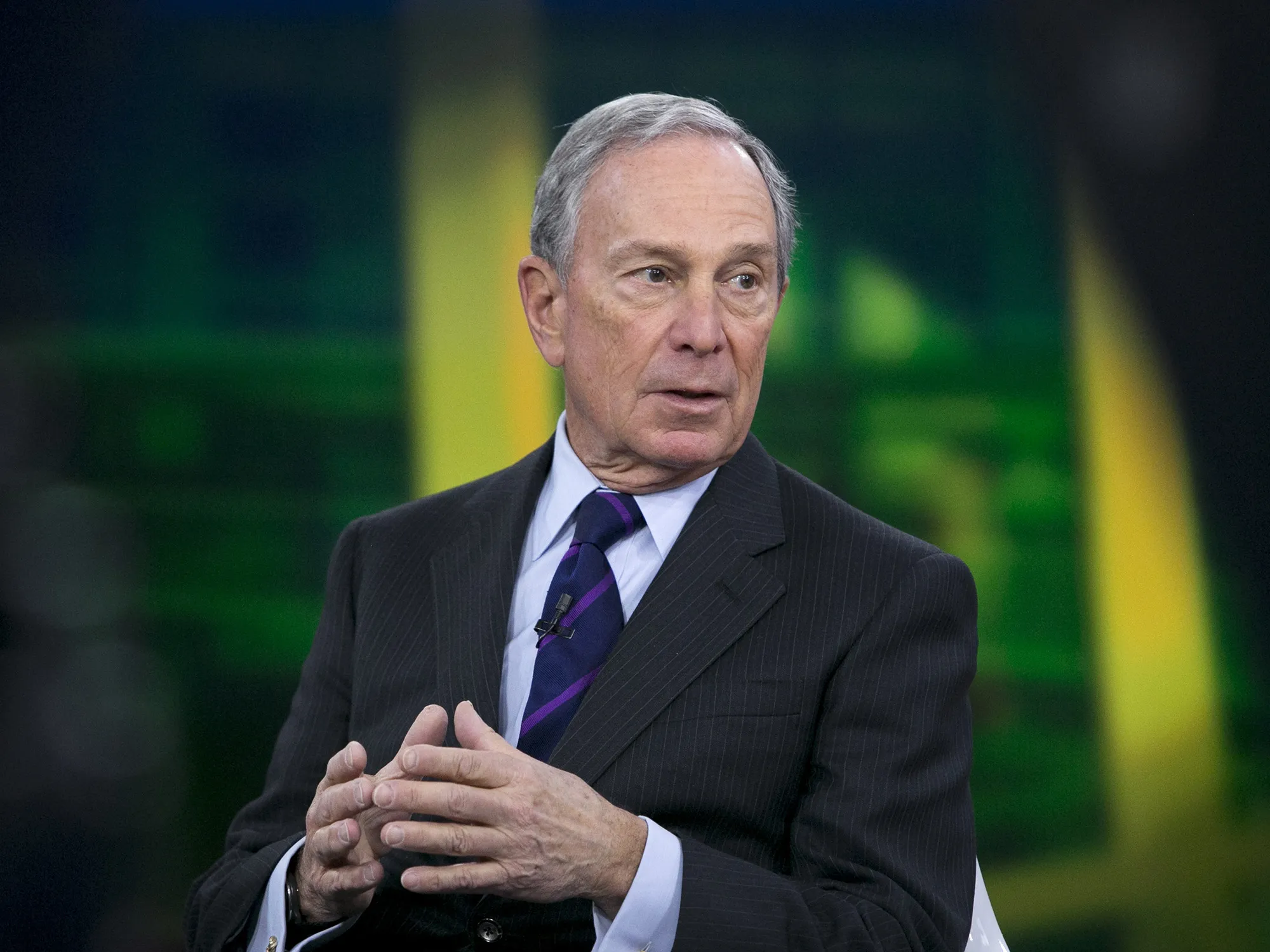
Michael Bloomberg, founder of Bloomberg LP and three-term mayor of New York City, welcomed Nicolai Tangen, CEO of the Norwegian Sovereign Wealth Fund, to his New York headquarters for an extensive conversation on entrepreneurship, public service, leadership, and philanthropy.
Bloomberg opened by addressing the common perception of his offices as being dominated by journalists and anchors. He explained that while editorial teams operate independently, maintaining journalistic credibility requires a strict separation from ownership. “Strong journalism depends on independence,” he noted.
Reflecting on his early life, Bloomberg recounted growing up in a modest Massachusetts household. His father, a bookkeeper, earned $6,000 in his best year. As a Boy Scout and average student, Bloomberg joked that he always aimed to remain in the top half of his class. After college, he attended Harvard Business School, an opportunity he describes with lasting gratitude.
YOU CAN ALSO READ: Nigeria’s Macroeconomic Signals Are Turning Positive – CardinalStone
In 1966, as graduation approached, Bloomberg anticipated being drafted into the Vietnam War. Troubled by the treatment of returning soldiers, he volunteered to serve as a commissioned officer. A month before graduation, however, he was disqualified due to flat feet, leaving him without a career plan. A friend advised him to “go to Wall Street,” and Bloomberg ultimately chose the firm where he felt most comfortable, prioritizing people and experience over salary, a lesson that shaped his professional approach.
At Salomon Brothers, he observed a gap in financial trading. While traders had access to prices, they lacked integrated tools to analyze data, draw graphs, run calculations, and communicate efficiently. After being laid off, Bloomberg invested his severance in addressing this need. He hired an engineer, built proprietary systems, and later shifted focus to software when personal computers emerged. His company succeeded by delivering a comprehensive platform, emphasizing usefulness, integration, and accessibility, long before competitors caught up.
Bloomberg stressed that innovation is most effective when combined with observation, preparation, and persistence. While customer feedback is valuable, he said, users often cannot envision the potential of new technology. His philosophy is to continuously enhance functionality without raising prices and let usefulness drive adoption.
On leadership, Bloomberg champions a culture of hard work balanced with sustainability. “Outworking others does not mean burnout,” he explained. He encourages risk-taking, rewards effort, and supports employees through failure. At 83, he remains deeply engaged, arriving early, maintaining routine, and personally connecting with employees to foster respect and loyalty, a culture that underpins Bloomberg LP’s low turnover.
Bloomberg also reflected on his public service as New York City mayor. Motivated by declining education outcomes, he pursued data-driven policies and capable teams, willing to use political capital to achieve results. Under his tenure, life expectancy rose by three years, test scores improved, and achievement gaps narrowed. He draws parallels between running a city and a company, emphasizing accountability, clarity, and credibility as key drivers of change.
Philanthropy, Bloomberg explained, has long been central to his values. Encouraged by family conversations about responsibility, he committed to giving away the majority of his wealth, focusing on measurable impact across education, public health, climate action, gun safety, and disease prevention. Memorable moments include meeting children receiving eyeglasses for the first time, an affirmation of the tangible difference thoughtful philanthropy can make.
YOU CAN ALSO READ: Governing the Unequal State: Nigeria’s Most Dangerous Challenge in 2026
A lifelong learner, Bloomberg continues to study Spanish for intellectual challenge, underscoring his belief that curiosity and education sustain sharp thinking. He does not plan to retire but is building continuity through capable successors, aiming to strengthen institutions beyond his personal involvement.
Asked about legacy, Bloomberg said he hopes to be remembered not for wealth or titles but for caring about people and contributing to institutions and causes that improve lives. He credits his upbringing, the Boy Scouts, and cultural institutions for shaping his values and continues to support them in return.
His closing message is simple: meaningful impact is possible at any scale. Whether through time, effort, or resources, everyone has the capacity to contribute and the fulfillment that comes from doing so.