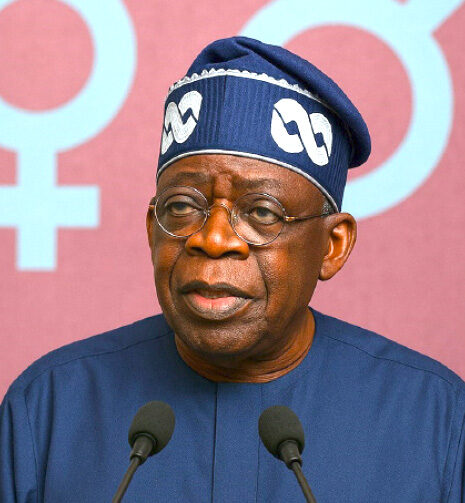
President Bola Ahmed Tinubu has reaffirmed Nigeria’s commitment to climate-aligned growth, declaring green finance a central pillar of the country’s economic transformation and long-term energy transition strategy.
Speaking at the Abu Dhabi Sustainability Week summit, the President outlined a bold plan to mobilize global capital for climate resilience, unveiling a National Climate Change Fund targeting a $2 billion capitalisation. According to him, the fund is designed to support projects that cut emissions, strengthen infrastructure, and position Nigeria as a competitive destination for sustainable investment.
At the heart of this strategy is Nigeria’s Climate Investment Platform, which President Tinubu said aims to mobilize an initial $500 million for climate-resilient infrastructure. He emphasised that the platform reflects his administration’s resolve to move beyond commitments and deliver bankable projects that attract long-term private capital.
YOU CAN ALSO READ: Meta Appoints Former Trump Aide Dina Powell McCormick as President and Vice Chair
He pointed to the strong performance of Nigeria’s green bond programme as evidence that global investors are responding positively to the country’s direction. A 50 billion naira sovereign green bond issued in 2025 attracted subscriptions of 91 billion naira, while Lagos State’s green bond was oversubscribed by nearly 98 percent. These results, he said, demonstrate growing confidence in Nigeria’s climate finance framework and reform agenda.
Beyond domestic policy, the President highlighted Nigeria’s focus on strategic international partnerships. He announced the signing of a Comprehensive Economic Partnership Agreement between Nigeria and the United Arab Emirates, aimed at expanding trade and investment across renewable energy, aviation, logistics, agriculture, digital trade, and climate-smart infrastructure.
President Tinubu acknowledged the scale of Nigeria’s environmental challenges, including gas flaring and methane emissions, but stressed that his administration is confronting them through the Energy Transition Plan. The plan targets net-zero emissions by 2060 while ensuring universal access to reliable and affordable energy, a balance he described as critical for inclusive growth.
Looking ahead, the President revealed that Nigeria is seeking to unlock between $25 billion and $30 billion annually in climate finance. To support this ambition, his administration has introduced a Climate and Green Industrialisation Investment Playbook, designed to help investors navigate manufacturing policies, incentives, and the regulatory environment.
YOU CAN ALSO READ: From Pharmacies to Platforms: The Growth Story of Remedial Health
These initiatives build on earlier foundations, including the Nigeria Sovereign Investment Authority’s $500 million Distributed Renewable Energy Fund launched in March 2025 to catalyse local financing and accelerate renewable energy deployment.
According to President Tinubu, recent reforms are already delivering results. Non-oil exports have grown by 21 percent, while investment commitments now exceed $50 billion across key sectors of the economy. He added that Nigeria is prioritising technology partnerships to modernise its power grid, deploy artificial intelligence for efficiency, and advance pilot projects in electric mobility and green industrialisation.
Through these measures, President Tinubu said Nigeria is sending a clear message to global investors that the country is open for business, committed to reform, and prepared to lead Africa’s green industrial future.