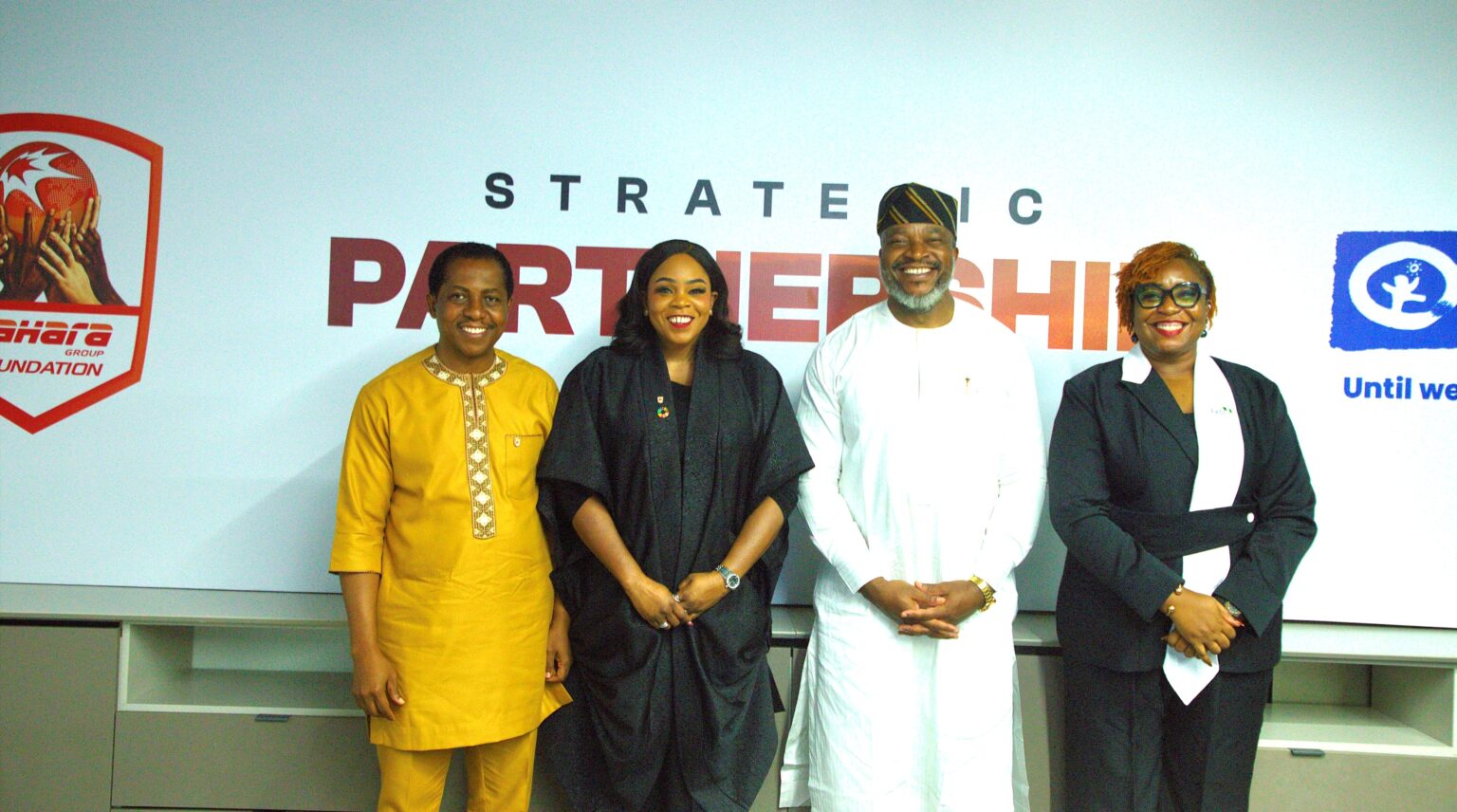
Sahara Group Foundation has entered into a strategic partnership with Plan International Nigeria, marking another significant step in its long-term commitment to sustainable development, inclusive growth, and community empowerment across Nigeria.
The collaboration, formalised through a Memorandum of Understanding, is anchored on expanding the Sahara Go Recycling initiative, a flagship waste-to-wealth programme designed to transform environmental challenges into economic opportunities at the grassroots. By combining Sahara Group Foundation’s experience in sustainable enterprise development with Plan International Nigeria’s expertise in child rights, gender inclusion, and community development, the partnership positions environmental action as a tool for social and economic transformation.
YOU CAN ALSO READ: Elon Musk Nears $800 Billion After XAI Raises $20 Billion in Funding
At the heart of the collaboration is a shared belief that sustainability must deliver tangible value to people and communities. Speaking at the signing ceremony, the Director of Sahara Group Foundation, Chidilim Menakaya, described the initiative as a deliberate intersection of climate responsibility and human development. She noted that Sahara Go Recycling was created not simply as an environmental intervention, but as a platform to restore dignity, unlock livelihoods, and build resilience within underserved communities. According to her, the partnership strengthens this vision by embedding inclusion, skills development, and long-term economic participation into climate action.
Plan International Nigeria echoed this perspective, emphasising the broader social impact of the initiative. The organisation’s Country Director, Dr. Charles Usie, highlighted that when environmental programmes are intentionally structured to generate income and skills, they create stronger foundations for girls and young people to thrive. He noted that the partnership ensures climate action translates into real opportunities, enabling young people, particularly girls, to contribute meaningfully to their families and communities while building more secure futures.
YOU CAN ALSO READ: Microsoft’s Africa AI Push Signals a New Playbook for Global Leadership
Reinforcing this commitment to inclusion, Plan International Nigeria’s Director of Philanthropy and Resource Mobilisation, Sheila Ojei, explained that the programme places gender equity at its core. With a target that at least 60 percent of beneficiaries will be adolescent girls, the initiative integrates safeguarding, accountability, and community ownership into how environmental and economic opportunities are delivered.
From a corporate perspective, Sahara Group views the partnership as a reflection of its broader sustainability philosophy. According to the company’s Head of Corporate Communications, Bethel Obioma, Sahara Group’s approach to sustainability prioritises people alongside infrastructure and systems. He noted that by aligning Sahara Go Recycling with development expertise, the initiative demonstrates how private sector leadership can drive environmental solutions that also improve livelihoods, strengthen communities, and support national development priorities.
Sahara Go Recycling is one of four flagship programmes of Sahara Group Foundation and has become a practical model for linking environmental stewardship with enterprise development. By converting recyclable waste into economic value, the initiative promotes cleaner communities while creating inclusive income-generating opportunities, particularly for women and young people.
YOU CAN ALSO READ: Microsoft’s Africa AI Push Signals a New Playbook for Global Leadership
The partnership with Plan International Nigeria builds on Sahara Group Foundation’s growing track record of deploying scalable, community-led solutions that connect environmental action with social protection, skills acquisition, and economic empowerment. Both organisations believe the collaboration will unlock new pathways for sustainable development by ensuring that climate responsibility delivers measurable social impact.
Collectively, the initiative supports Nigeria’s progress across several Sustainable Development Goals, including responsible consumption and production, sustainable cities, climate action, decent work, reduced inequalities, gender equality, quality education, and partnerships for development. More importantly, it reinforces how strategic partnerships between the private sector and development organisations can contribute meaningfully to national growth, resilience, and shared prosperity.