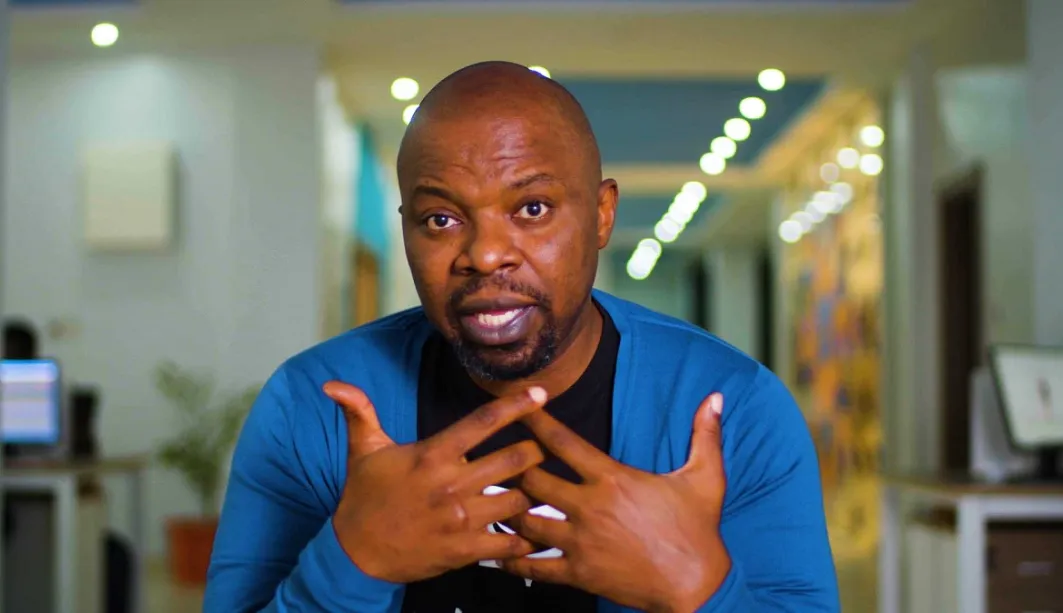
At a recent fireside chat hosted by MVA Open University in Lagos, Nigerian tech visionary and education entrepreneur Sim Shagaya delivered a powerful message to Nigerians: information is not just knowledge; it is currency, and how we consume it determines our personal and national future.
“Information is power. It is currency,” Shagaya stated emphatically. “The biggest problem with many people today is that they consume the wrong information too much. There is nothing wrong with watching funny skits. We all love them. There is nothing wrong with music either. Life is stressful and sometimes you just want to laugh. But you also have to deliberately look for information.”
The event, streamed live and hosted at MVA Open University’s Yaba Centre, brought together entrepreneurs, investors, policymakers, and students to discuss Nigeria’s economic reforms and opportunities. Shagaya, founder of Ulesson and Chancellor of MVA Open University, stressed that everyday content, whether on social media, YouTube, or television, acts as mental software. “You are literally installing software in your mind. So you have to be very intentional about what you consume and how much time you spend consuming it,” he said.
YOU CAN ALSO READ: Nigeria Ranks Among Top Five Global Beneficiaries of World Bank Procurement
Drawing on a grassroots survey across six local governments in southern Nigeria, Shagaya highlighted the real issues facing citizens. “We asked a simple question: what are your problems? Across all areas, two issues consistently came up: bad political leadership and the absence of electricity. These are real, tangible constraints on people’s lives and livelihoods,” he explained, noting that understanding the problems citizens face is crucial for targeted policy and reform.
On Nigeria’s economic landscape, Shagaya provided a unique perspective, framing reforms in tiers. Tier one reforms, he said, are immediate and often painful, such as fuel subsidy removal and the elimination of parallel exchange rates. “These caused significant pain,” he said. Tier two reforms, by contrast, include long-term initiatives like decentralization of electricity generation, resolving bottlenecks in the energy sector, insurance reforms, and tax reforms. “These are not as painful but are very exciting,” he emphasized, highlighting the importance of energy reforms as a driver of national growth.
Shagaya drew parallels to other emerging economies, explaining that short-term discomfort is a natural part of transformational change. “I approach this as a student of history. Countries like India and Brazil went through similar reforms. The process is painful, but it lays the foundation for long-term opportunity,” he said.
Transparency and reliable data are also critical, Shagaya argued. Using the Nigerian National Petroleum Corporation (NNPC) as an example, he illustrated how better information changes market perception and strengthens governance. “Just a few years ago, nobody used to know NNPC’s revenues. But now, recent numbers were 45 trillion naira, over 30 billion dollars. This is just one example. Government transparency is essential for understanding the size of the economy and building investor confidence.”
Turning to investment and sectoral growth, Shagaya identified energy, infrastructure, technology, healthcare, and education as key areas for the next five years. “Energy, specifically power, is my top pick. Infrastructure is growing rapidly, with roads, ports, and airports expanding. Tech is a global story, and healthcare and education are increasingly intertwined with technology,” he said.
He also addressed the challenge of youth employment and the need to leverage Nigeria’s demographic advantage. “With five million young people entering the workforce every year, we have the potential to serve the global market from Nigeria, much like India or the Philippines. If the youth are skilled and empowered, we can reduce reliance on foreign portfolio investment and retain wealth in the country,” he said.
Shagaya’s emphasis on deliberate learning extended to financial literacy and personal wealth-building. He urged young Nigerians to focus on information, small investments, compounding, and deferred consumption, particularly in an environment where borrowing remains costly due to monetary policy. “Credit is limited now, but information is free. Deliberate investment in knowledge and skills is the best hedge against economic uncertainty,” he said.
YOU CAN ALSO READ: Why Tara Fela Durotoye Stepped Back to Build Something Bigger Than Herself
By the end of the decade, Shagaya suggested, the success of Nigeria’s reforms will be measurable in tangible ways: economic growth, inflation control, poverty reduction, improved access to electricity, accountable governance, and security. “These are the benchmarks for evaluating reform success. Without them, all discussions about a one trillion dollar economy are just slogans,” he cautioned.
For Shagaya, the message is clear: intentional consumption of knowledge, informed engagement with policy, and strategic investment in skills are the foundations for both personal success and national prosperity. With his dual perspective as a tech entrepreneur and education innovator, Shagaya continues to offer a roadmap for Nigeria’s economic transformation, one informed citizen at a time.