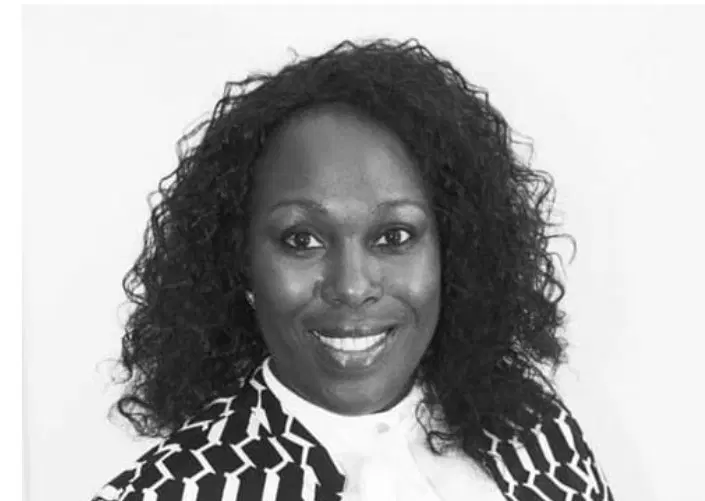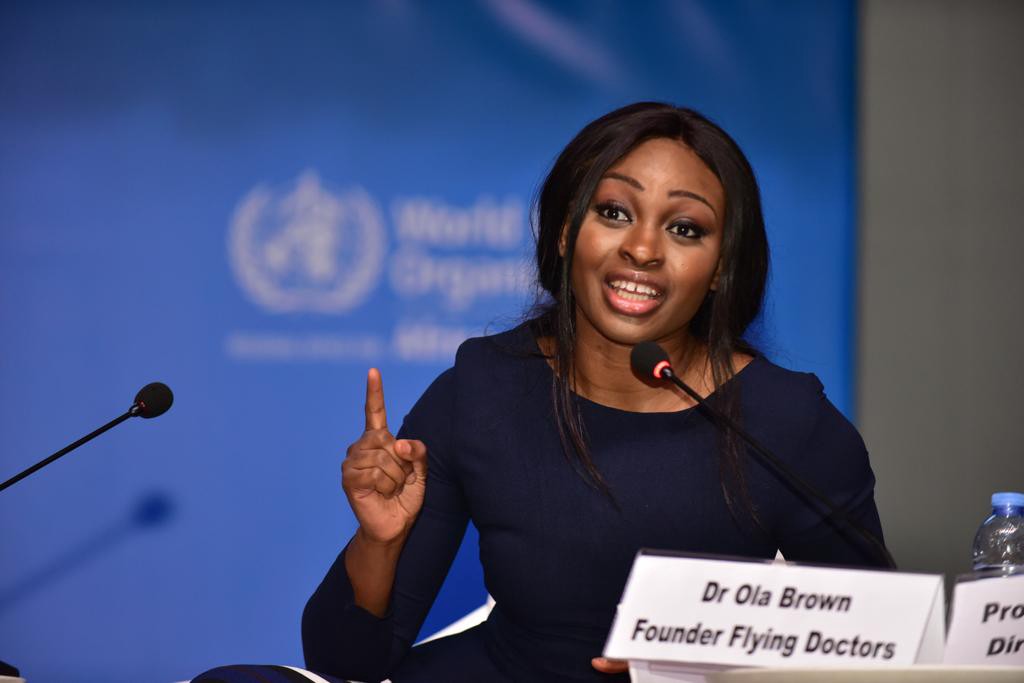
Inflation has moved beyond a temporary economic shock and become a defining feature of the global system, according to Dr. Ola Brown, Founder and General Partner at HealthCap Africa, who has released her 2026 Global Economic Outlook, a wide-ranging assessment of markets, technology, geopolitics, and investment behavior in a world undergoing profound structural change.
Brown argues that the post-pandemic era has permanently altered the cost of living, the nature of risk, and the way capital flows across economies. “We are in a new, more expensive world,” she said. “Inflation is no longer a phase; it is a condition.”
YOU CAN ALSO READ: ‘Mindset, Not Economy, Determines Business Success’ – Tony Robbins
A medical doctor by training, Brown holds a master’s degree in finance and economic policy and is completing a PhD in finance. She founded HealthCap Africa, a pan-African investment firm focused on early-stage healthcare and fintech companies across Nigeria, Kenya, Egypt, and South Africa. Since launching her first fund in 2015, Brown has emerged as one of Africa’s most influential voices in private markets. Under her leadership, HealthCap Africa has built a portfolio of nearly 20 companies, generating over 1,000 direct jobs and more than 12,000 indirect jobs across the continent.
Brown’s outlook highlights a fundamental shift in global capital markets, with private markets now eclipsing public exchanges as the primary home for many of the world’s most valuable companies. Firms such as OpenAI, SpaceX, and Databricks are remaining private far longer than in previous decades, disrupting traditional exit timelines and challenging long-held assumptions around liquidity and valuation. According to Brown, private markets are increasingly performing the role once played by public markets, but without the same transparency or daily price discovery, increasing the risk of mispricing.
She describes the current investment climate as one defined by caution rather than excess. Where the early 2020s were marked by aggressive risk-taking and speculative growth, today’s investors are prioritizing capital preservation. This shift is evident across fixed income, private equity, and venture capital, with investors focusing more on asset quality and downside protection than on outsized returns. Even the pioneers of private equity have expanded aggressively into private credit, responding to demand for predictable income and safer structures.
Artificial intelligence occupies a central place in Brown’s analysis. She views AI as one of the most transformative technologies in history, with the potential to reshape industries ranging from healthcare to manufacturing. In healthcare alone, AI is already improving diagnostics, accelerating drug discovery, and enhancing surgical outcomes. However, Brown warns that the pace of capital deployment into AI has outstripped valuation discipline. AI startups attracted nearly half of global venture capital funding last year, with private AI companies trading at significant premiums to non-AI peers, raising concerns about overheating and mispricing.
Beyond markets and technology, Brown points to a broader geopolitical realignment. Central banks, particularly in China, India, and parts of Eastern Europe, have accelerated their accumulation of gold, seeking assets that cannot be frozen, seized, or politically constrained. At the same time, global cooperation is fragmenting, with countries increasingly bypassing multilateral institutions in favor of bilateral and unilateral arrangements. Brown argues that this shift toward security-driven decision-making is inherently inflationary, as nations trade efficiency and cost advantages for perceived safety and control.
YOU CAN ALSO READ: Africa Makes Case for Capital as Leaders Push Investment Over Aid at Global Forum
Despite global uncertainty, Brown remains optimistic about Africa’s long-term prospects. She notes that while recent economic reforms in countries such as Nigeria, Kenya, and Egypt have been painful, they are laying the groundwork for future stability. South Africa’s strong performance in public listings in 2025, led by major fintech offerings, reinforced the continent’s underlying resilience. With the world’s fastest-growing population and four countries Nigeria, Kenya, Egypt, and South Africa accounting for roughly 60 percent of Africa’s consumer market, the continent remains a compelling destination for long-term investment.
In closing, Brown emphasizes that while many macroeconomic forces lie beyond individual control, culture remains a decisive factor in shaping outcomes. The way societies reward merit, discourage poor behavior, and allocate opportunity will determine which institutions and economies thrive in an increasingly uncertain world. As investors and policymakers recalibrate for a higher-inflation, more fragmented global economy, Brown’s 2026 outlook serves as both a warning and a call for disciplined, long-term thinking grounded in structural reality.