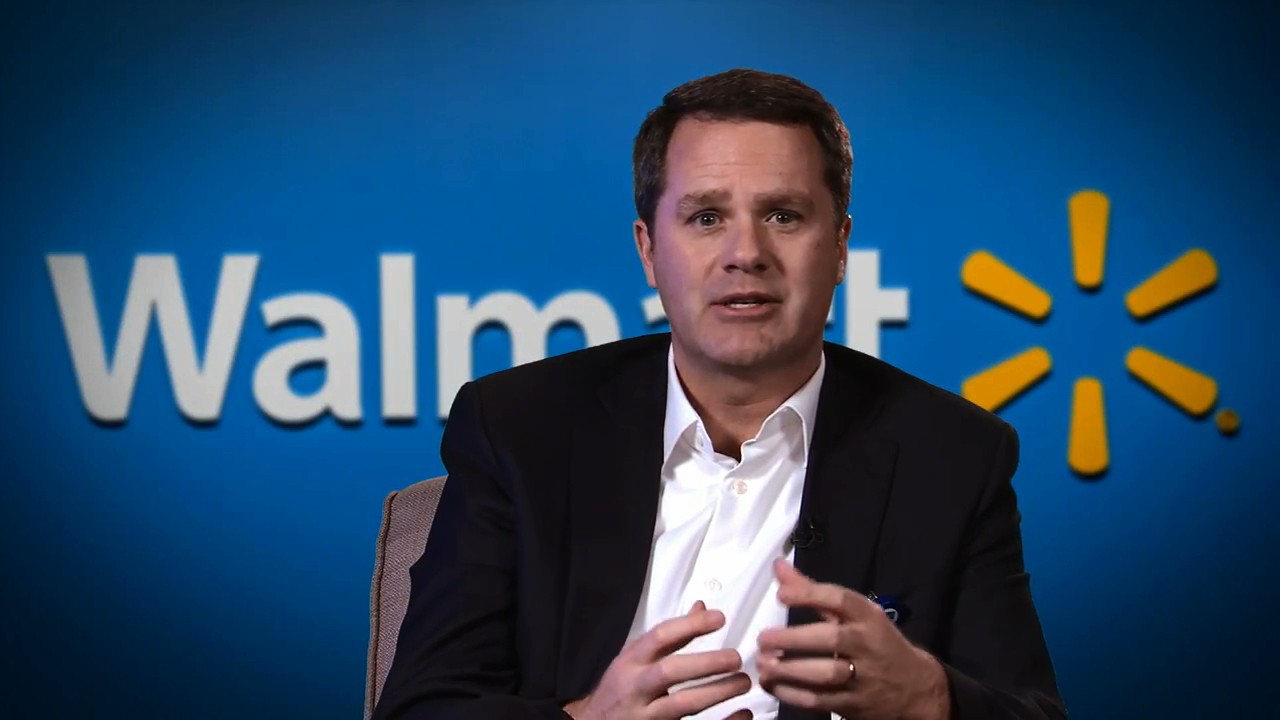
On a winter day in Bentonville, Arkansas, Doug McMillon sat in the office once occupied by Sam Walton and reflected on a 12-year journey that reshaped the trajectory of the world’s largest retailer. It was his final week as chief executive, yet there was no dramatic farewell tour and no sweeping declaration of legacy. Instead, there was a board meeting scheduled for the following week and the steady composure of a leader who had spent decades inside the company he helped transform.
McMillon had taken over in February 2014 at a moment of uncertainty. Walmart’s U.S. business had been posting uneven results, comparable sales were under pressure, and the rise of Amazon had fueled widespread predictions that traditional retail was nearing its end. Many analysts had argued that Walmart would struggle to compete in a digital economy defined by speed, data, and technological innovation.
He remembered hearing those doubts repeatedly. Yet he often said that being underestimated worked in Walmart’s favor. Coming from Arkansas, the company had long been accustomed to skepticism. In his view, it performed best when positioned as the challenger rather than the giant.
When he stepped into the CEO role, his instinct was not to begin with technology but with people. He traveled across the United States, visiting stores with a yellow pad in hand, asking associates what needed fixing. The responses were practical and unfiltered. Wages had fallen behind. Scheduling lacked predictability. Inventory was stuck in back rooms. Everyday low price discipline had weakened.
YOU CAN ALSO READ: “Build Ecosystems, Not Just Companies”: Iyin Aboyeji Inspires Entrepreneurs at EnterpriseCEO Xchange
Those conversations shaped his early agenda. Before making bold digital bets, he committed billions of dollars to raising associate pay, improving training, and strengthening store operations. The market reacted sharply in 2015, and the company’s stock price suffered as earnings declined. Yet McMillon believed the investment restored morale and credibility. He viewed it not simply as a financial adjustment but as a statement of respect to the workforce.
He later reflected that without stabilizing the stores, there would have been no foundation for riskier transformations.
With the core business steadier, he turned his focus to ecommerce. In 2016, Walmart acquired Jet.com for $3.3 billion, a move that surprised industry observers. The startup was unprofitable and culturally distant from Bentonville’s traditional retail DNA. Yet McMillon saw in it the digital expertise and entrepreneurial energy Walmart needed to accelerate its online capabilities.
He had spent years studying global trends, observing how digital penetration was reshaping entire product categories and watching online grocery models evolve overseas. He believed food retail remained a largely untapped ecommerce opportunity in the United States and that Walmart’s vast network of stores positioned it to lead in grocery pickup and delivery.
The integration of Jet was not seamless. Cultural tensions emerged between established teams and new digital hires. Losses mounted as the company scaled its online operations. But supported by a long-term oriented board and the Walton family, McMillon stayed the course, accepting short-term pain for strategic gain.
The digital ambition extended internationally. In 2018, Walmart invested $16 billion in Flipkart, securing a major stake in India’s fast-growing ecommerce market. The move underscored Walmart’s commitment to competing globally in the digital arena.
If ecommerce defined the strategic shift of McMillon’s tenure, the Covid-19 pandemic defined its moral test. Early reports from Walmart stores in Wuhan, China, signaled the scale of what was unfolding. Decision-making accelerated dramatically. Leadership meetings became daily and sometimes hourly as executives navigated safety protocols, supply shortages, and unprecedented surges in demand.
Walmart installed protective barriers, secured hundreds of millions of masks, and kept stores open as essential hubs for communities. The company leaned on guiding principles shaped during Hurricane Katrina years earlier. They prioritized safety, maintained access to essential goods, and supported communities first. Financial metrics could be addressed later.
McMillon later described that period as a powerful demonstration of Walmart’s culture. Associates made swift decisions on the ground, empowered by clarity of purpose rather than fear of quarterly results.
Throughout his tenure, he reinforced a version of capitalism rooted in long-term thinking. Environmental initiatives such as Project Gigaton aimed to reduce emissions across the supply chain by working with suppliers to cut carbon output. He framed these efforts as operational common sense rather than political positioning. Efficient packaging reduced waste and saved money. Cleaner supply chains reduced risk. Healthy communities supported sustainable business growth.
He argued that companies seeking to endure for decades could not focus solely on immediate returns. Strong communities and a stable planet were essential foundations for lasting profitability.
McMillon’s own story inside Walmart began long before the CEO title. As a teenager in Bentonville, he worked summer jobs in Walmart warehouses, drawn initially by higher hourly wages compared to other local employers. He was struck by the enthusiasm of employees who spoke passionately about profit sharing and the company’s mission.
After earning his MBA, he joined Walmart’s merchant training program and progressed through roles in merchandising, Sam’s Club, and international operations. Along the way, he absorbed lessons from leaders including Sam Walton and successive CEOs, shaping a leadership philosophy grounded in humility, teamwork, and service.
He did not describe himself as naturally inclined toward risk. Yet he acknowledged that growth demanded change and change required bold decisions. Not every bet succeeded. He admitted to acquisition and talent missteps and acknowledged that Walmart had yet to fully solve the healthcare business model despite years of effort.
YOU CAN ALSO READ: Championship Mindset: The Business Evolution of Magic Johnson
As he stepped down at 59, McMillon expressed confidence that the next chapter would be defined by artificial intelligence and deeper digital integration. He believed the company’s future required strong technical acumen and said his successor was well positioned to lead that transformation.
For his own future, he envisioned a blend of board service, philanthropy, and time without a rigid plan. After decades defined by structured schedules and strategic roadmaps, he welcomed the idea of months without a fixed agenda.
By the time he left the office once occupied by Sam Walton, Walmart stood far removed from the retailer many had predicted would falter in the face of ecommerce. It had become a hybrid powerhouse, combining physical scale with digital ambition, strengthened by investments in people and sharpened by crisis.
Doug McMillon’s tenure had unfolded through uncertainty, disruption, and reinvention. In the end, it was defined by a willingness to listen, invest deeply, and think beyond the quarter, a philosophy that carried Walmart from doubt into renewed confidence in a rapidly evolving retail landscape.