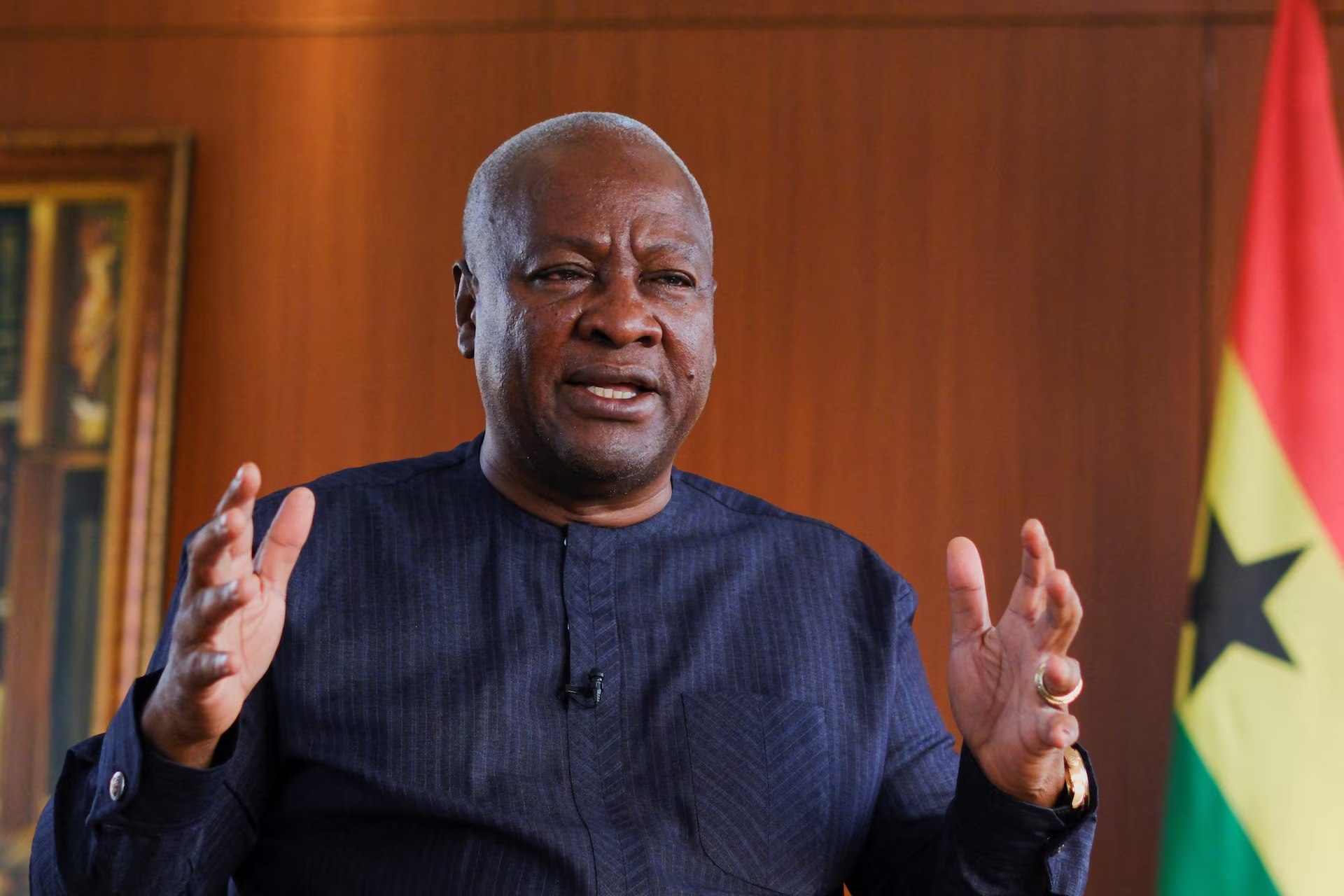
President John Dramani Mahama has commissioned the second phase expansion of the B5 Plus steel manufacturing facility, describing the investment as a milestone in Ghana’s industrial transformation. The expansion reflects the government’s strategy to move the economy from dependence on raw material exports toward value added production and stronger domestic manufacturing capacity.
Steel production is a critical indicator of industrial growth. As economies develop, per capita steel consumption rises alongside urbanization, infrastructure expansion, and industrial activity. Ghana’s annual demand for steel exceeds 1.2 million metric tons, driven by construction, energy infrastructure, mining, and manufacturing. Historically, much of this demand has been met through imports, placing pressure on foreign exchange reserves and exposing the economy to global price volatility. The expanded capacity of B5 Plus aims to substitute a portion of those imports with domestically produced steel, strengthening supply chains and improving trade balance performance.
Reducing import dependence by 20 to 30 percent annually could save hundreds of millions of dollars in foreign exchange. These savings can be redirected toward development priorities and economic stability. The president emphasized that industrial sovereignty is achieved when nations possess the capacity to produce essential goods and value additions at home.
YOU CAN ALSO READ: How Tosin Eniolorunda Built Moniepoint into a Fintech Powerhouse
Ghana’s strategic advantages position it as a regional industrial hub. Political stability, membership in the African Continental Free Trade Area Secretariat, deepwater ports in Tema and Takoradi, and expanding energy infrastructure create favorable conditions for investment. The continental trade agreement, covering 1.4 billion people and a combined GDP exceeding $3 trillion, is gradually enabling intra-African commerce. Steel manufactured in Ghana can serve construction and manufacturing markets across West Africa, integrating regional value chains and reducing reliance on imports from outside the continent.
Raw material security remains central to industrial growth. Ghana generates significant volumes of scrap metal through construction activity, vehicle imports, and industrial processes. New policies restricting the export of non-ferrous scrap ensure that local processors have priority access to materials, enabling domestic value addition. Officials project that processed metal exports could rise by $250 to $300 million annually under the policy, while creating thousands of jobs and expanding tax revenues through value added and corporate taxation.
The Ghana Revenue Authority’s performance was highlighted during the event. Tax collections exceeding 300 million cedis demonstrate growing compliance and the maturation of the industrial ecosystem. Projections indicate revenues could surpass 500 million cedis in the near future, reflecting the contribution of manufacturing to public finances.
Industrial expansion aligns with broader infrastructure initiatives under the government’s Big Push program. Investments in roads, railways, energy networks, and industrial parks require substantial quantities of iron and steel. Africa’s infrastructure deficit is estimated at over $100 billion annually, with West Africa facing persistent gaps. A robust steel industry in Ghana supports domestic projects and positions the country as a regional supplier, transforming infrastructure spending into industrial opportunity.
The 24 hour economy initiative complements these efforts. Recent legislation establishing the 24 Hour Economy Authority enables energy intensive industries such as steel manufacturing to operate beyond traditional hours. Continuous production improves efficiency, reduces energy wastage, and enhances competitiveness. The 2026 national budget allocates 110 million cedis to operationalize the initiative, signaling commitment to industrial modernization and extended employment opportunities.
Fiscal reforms also aim to support business growth. The government abolished the COVID 19 health recovery levy and reduced the effective VAT rate from 21.9 percent to 20 percent. Digital tax monitoring systems are being deployed to improve transparency and reduce compliance burdens. Predictable tax policies lower uncertainty and encourage investment by minimizing operational friction.
The mining sector remains a major consumer of steel for equipment and infrastructure. Ghana’s reserves of gold, bauxite, manganese, and lithium create opportunities for integrated industrial ecosystems linking mining and manufacturing. Local content policies encourage domestic participation in value chains, ensuring that mineral wealth contributes to broader economic development.
The B5 Plus expansion generates employment and skills development opportunities. Direct factory jobs, technical positions, logistics roles, and vocational training programs strengthen human capital. Industrialization requires a workforce of metallurgists, engineers, and technicians capable of driving technological progress and productivity.
As host of the African Continental Free Trade Area Secretariat, Ghana carries responsibility for demonstrating the benefits of regional integration. Trade agreements must translate into practical outcomes factories exporting goods, businesses expanding markets, and consumers benefiting from competitive prices. The B5 Plus facility embodies this vision of value chain integration and regional economic cooperation.
YOU CAN ALSO READ: Audacity Without Results Is Empty, Says Ibukun Awosika
Industrial transformation is a gradual process requiring consistent policy, private sector confidence, and long term investment. The president commended the leadership and workforce of B5 Plus for advancing Ghana’s industrial ambitions and acknowledged the traditional authorities of La Pleu for welcoming development in their community. Industrial projects generate employment and stimulate local economic activity, contributing to shared prosperity.
Addressing land disputes surrounding the expansion site, the president urged swift resolution to enable continued investment. Stable property rights and collaborative problem solving are essential for development. Industrial growth must proceed in harmony with community interests and legal frameworks.
The commissioning of the second phase expansion marks a significant step in Ghana’s journey toward industrialization. By strengthening domestic manufacturing capacity, reducing import dependence, and fostering regional trade, the country aims to build a more resilient and diversified economy.
The president’s declaration of commissioning underscored a clear message: Ghana’s industrial future is being built through investment, innovation, and value creation.