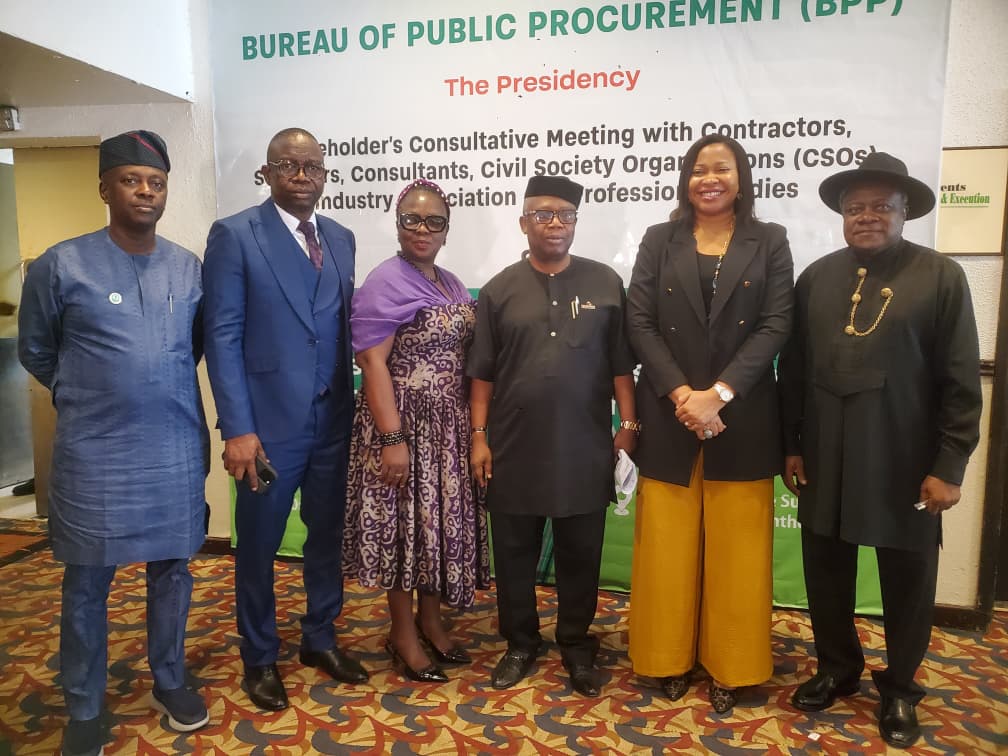
In a defining moment for Nigeria’s governance reform journey, policymakers, regulators, development partners, contractors and civil society leaders gathered in Lagos for a landmark consultative meeting on the Methodology for Assessing Procurement Systems (MAPS). The engagement signaled more than another policy dialogue. It marked a decisive step toward building a procurement system capable of driving economic growth, restoring public trust and delivering measurable value for money.
At the centre of the discussions was a clear mission: to provide a comprehensive overview of Nigeria’s MAPS assessment process, to openly examine systemic challenges and reform opportunities within public procurement and to harvest practical insights that will shape the country’s forthcoming National Procurement Strategy.
Public procurement in Nigeria is not a peripheral administrative function. It is one of the most powerful instruments of governance, influencing infrastructure delivery, healthcare provision, education systems and industrial growth. Every road constructed, every hospital equipped and every school renovated flows through procurement decisions. When those systems function efficiently, development thrives. When they fail, public confidence erodes.
YOU CAN ALSO READ: Building Beyond Borders: How Óscar Pierre Built Glovo Into a Global Delivery Force
Chairman of the Senate Committee on Public Procurement, Olajide Ipinsagba, framed procurement not as a transactional exchange but as a strategic discipline rooted in rigorous needs assessment and outcome-driven performance. “Procurement is a strategic discipline that begins long before any contract is signed and must be judged by outcomes that deliver value to citizens,” he stated. He emphasized that durability of infrastructure and reliability of public services are the true measures of procurement success. “A road that collapses within months is not merely an engineering failure, it is a procurement failure. True value for money lies in performance and public satisfaction.”
He reaffirmed the National Assembly’s readiness to strengthen the legislative framework guiding procurement reform. The MAPS assessment, he noted, offers Nigeria an opportunity to remove structural barriers, expand access to public contracts, stimulate indigenous enterprise and deepen economic resilience. Local content policy, he argued, must remain a priority so that Nigerian products and contractors can compete and thrive. Collective partnerships and joint ventures, he added, strengthen market positioning and build national industry.
To advance reform, he proposed a joint working team between the Bureau of Public Procurement and the National Assembly with a mandate to pursue targeted amendments by 2027. A comprehensive contractor database categorising competence and specialisation would enhance transparency and efficiency, while support mechanisms could ease access to financing and capacity development. Compliance reviews, he clarified, are safeguards rather than punitive measures: tools designed to uphold integrity and public confidence.
Lagos State positioned itself as a demonstration ground for reform. Director General, Lagos State Public Procurement Agency, Fatai Idowu Onafowote described MAPS as a globally recognised diagnostic process that benchmarks procurement performance against international standards. “MAPS is a globally recognised diagnostic tool that benchmarks procurement performance and helps Nigeria align with international standards of transparency and efficiency,” he explained.
Lagos has embedded technology at the heart of its procurement transformation. More than 150 Ministries, Departments and Agencies are now onboarded onto an e-procurement platform that replaces manual processes with digital efficiency. Automated systems enhance planning accuracy, strengthen audit trails and enable real-time monitoring. Through Open Contracting Data Standards, procurement information is machine readable and publicly accessible, improving transparency and reducing discretion-driven inefficiencies. Vendor registration has been streamlined through digital databases so that only compliant and competent suppliers engage with government. The state’s Procurement Planning Clinic further ensures that budgets align with verified needs before funds are committed, fostering disciplined and smarter public spending.
National Team Lead for FCDO PACE, Chioma Emilia Itodo, positioned MAPS as a transformative global standard updated in 2018 by international development institutions. “Public procurement under MAPS is a transformative global standard that strengthens sustainability, stimulates innovation and enhances institutional credibility,” she noted. Public procurement, she explained, accounts for trillions of dollars in global government expenditure and underpins essential services. “When procurement systems function effectively, they convert public resources into development outcomes that improve lives and build trust in governance.”
MAPS operates through a structured framework of four strategic pillars and fourteen core indicators supported by detailed sub-indicators and implementation guidance. Its methodology includes country analysis, structured assessment, validation of findings and actionable recommendations. Reports that meet required standards receive a Seal of Approval following quality assurance review. In Nigeria, MAPS implementation is supported through collaboration between the Bureau of Public Procurement and international partners under the Partnership for Agile Governance and Climate Engagement.
Participants also underscored the importance of sustainable procurement practices that extend beyond cost considerations to environmental responsibility, lifecycle value, ethical supply chains and social inclusion. Digital transformation and automation were identified as critical levers for reducing human discretion, enhancing transparency and creating reliable audit trails. Increased participation by Original Equipment Manufacturers was highlighted as a means of strengthening product authenticity, improving after-sales support and reducing lifecycle costs.
YOU CAN ALSO READ: The Human Side of Business: Wale Ayilara on Lessons from Crisis and Strategic Growth
The consultative meeting demonstrated that procurement reform is a shared responsibility. Legislators, regulators, contractors, professional bodies and civil society organisations all have a role in strengthening the system. As Nigeria advances toward its National Procurement Strategy, insights from the engagement will help shape a roadmap that expands opportunities for local enterprise, reinforces governance and ensures public expenditure delivers durable, high-quality outcomes.
Procurement may appear technical, but its impact is profoundly human. It determines whether roads endure, hospitals function, schools operate effectively and communities receive services that enhance quality of life. In Lagos, stakeholders moved beyond dialogue to lay the foundation for a procurement system designed to convert public resources into lasting national progress.