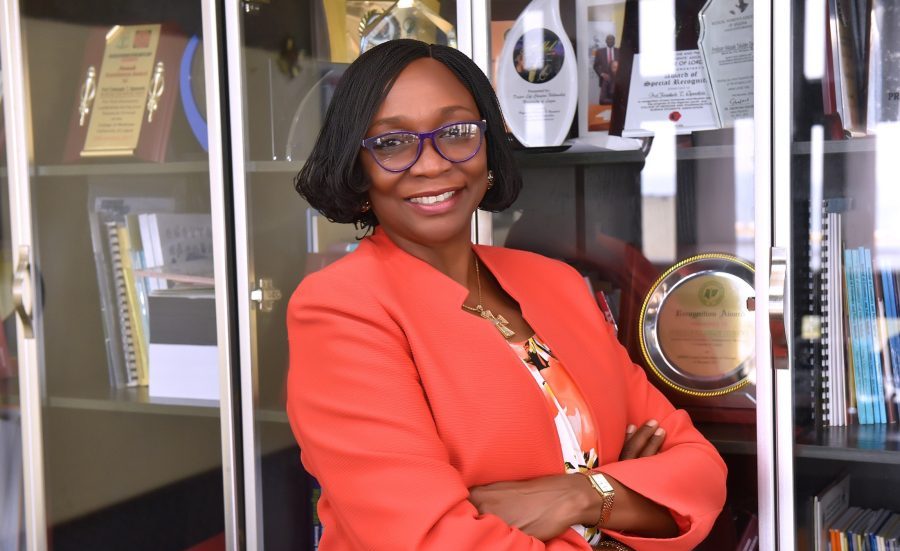
Universities are vital institutions that shape national development, train leaders, and drive knowledge creation. Yet, in federally structured systems like Nigeria’s, maintaining autonomy, securing adequate funding, and ensuring effective governance remain ongoing challenges. Professor Folasade Ogunsola, the 13th Vice Chancellor of the University of Lagos and the first woman to hold the position, has navigated these challenges with strategic vision and steadfast leadership.
Ogunsola’s journey from medical microbiologist to university leader underscores the power of problem-solving and operational management. Early in her career, she managed large-scale research studies requiring complex coordination across clinics, hospitals, and data centers. Through these experiences, she developed a deep understanding of institutional processes, finances, and governance structures skills that would later define her leadership as Vice Chancellor.
YOU CAN ALSO READ: SHIFT Conference Sparks New Thinking on Leadership, Mindset and National Transformation
Her scientific training profoundly shapes her approach to executive decision-making. Ogunsola emphasizes evidence-based management, seeking factual information and long-term outcomes rather than relying on emotions. She explains that superior arguments and verifiable data guide her decisions, ensuring fairness, transparency, and institutional integrity. Empathy, she notes, is not a substitute for rule-based governance, but rather a complement to a system that must function efficiently for all stakeholders.
Assuming office in November 2022, Ogunsola inherited a demoralized university facing economic pressures, staff strikes, and stagnant funding. Academics felt undervalued, students were paying fees unchanged for decades, and resignations were frequent. In response, she prioritized re-engagement, operational efficiency, and strategic financial planning. By carefully evaluating expenditures and working within government frameworks, Ogunsola implemented fee structures and internal resource allocations that ensured sustainability without compromising educational quality.
Autonomy remains a critical concern under Nigeria’s federal oversight. While the University of Lagos is legally autonomous, decision-making is constrained by governing councils, Ministry of Education policies, and bureaucratic processes. Ogunsola highlights the tension between academic independence and external control, noting that delays in staff recruitment and adjunct payment issues illustrate the limits of autonomy under fiscal and political pressures.
YOU CAN ALSO READ: The Power of Starting Late: Temilola Adepetun’s Path to Building SKLD
Despite these challenges, she maintains that meritocracy remains a cornerstone of the university system, essential for sustaining excellence and credibility.
Throughout her tenure, Ogunsola’s leadership reflects resilience, foresight, and moral responsibility. She balances institutional obligations with personal integrity, striving to create equitable opportunities and ensure that the University of Lagos continues to generate knowledge, produce skilled leaders, and serve as a model of institutional survival in challenging times. Her story demonstrates that visionary leadership, grounded in evidence and fairness, can strengthen universities and inspire confidence in academic institutions across Nigeria.