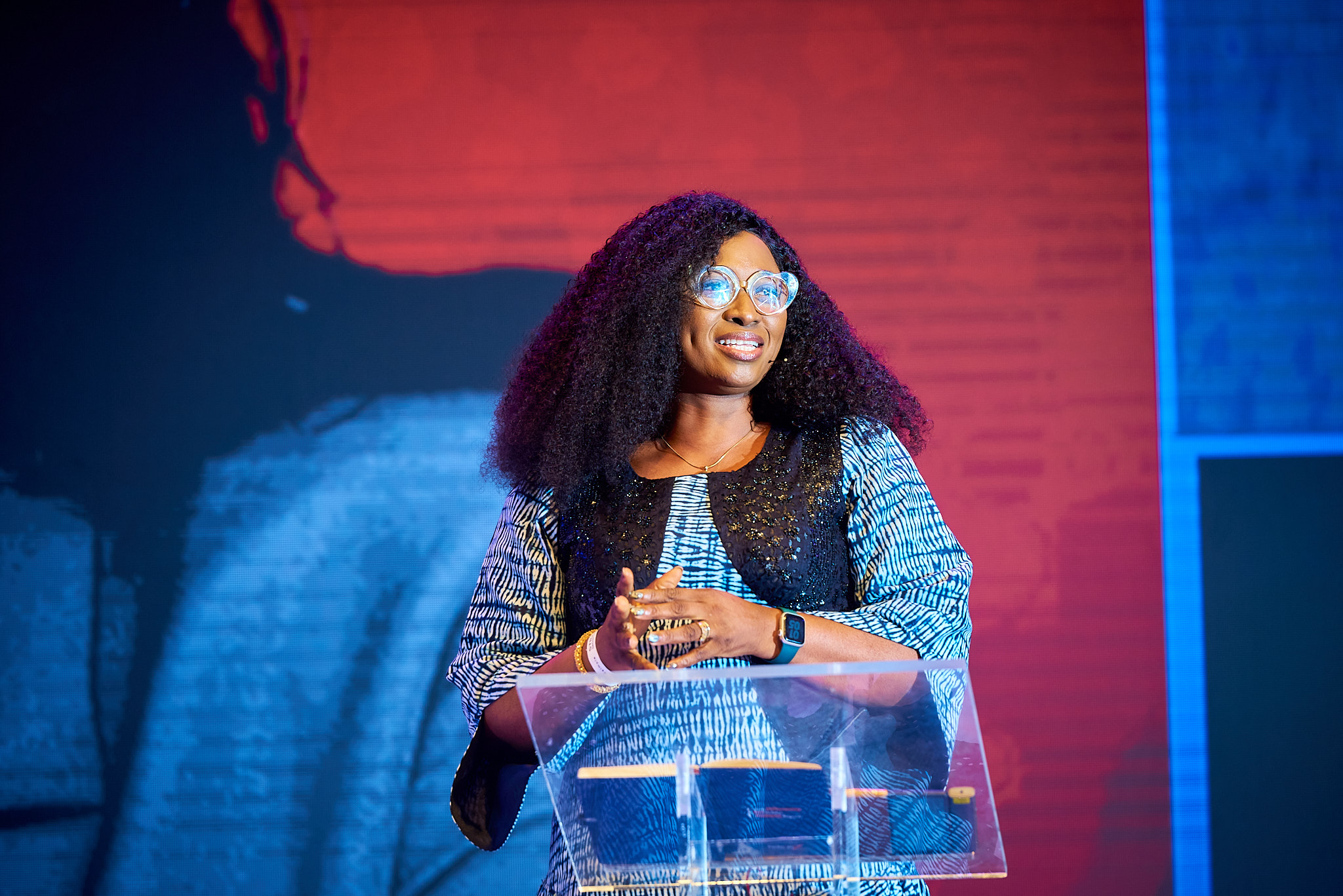
The applause began before he even reached the podium.
Inside a hall filled with young professionals, students, and aspiring creators, anticipation hung in the air as the master of ceremonies introduced the keynote speaker, a man often described as the “Golden Boy of African Media.”
For more than two decades, Chude Jideonwo has built a reputation as one of Africa’s most influential storytellers. His career spans advertising, public relations, television, radio, print, and digital media, shaping narratives that have influenced social movements, public conversations, and even national elections across the continent.
Yet when he finally began to speak, the celebrated media entrepreneur did not start with his achievements.
Instead, he began with a confession.
“I started my career at 15,” Jideonwo told the audience with a smile. “But here’s the irony: even though I knew I was an outlier, I didn’t believe myself. I doubted my own vision.”
YOU CAN ALSO READ: From Legal Career to Culinary Influence: The Inspiring Story of Chef Ify
That moment of honesty set the tone for what became an electrifying keynote, part memoir, part masterclass, and part rallying cry for a generation navigating a radically transformed world of work.
To understand Jideonwo’s message, one must first understand the world he entered when his career began.“When I started,” he recalled, “there were fewer than ten television stations in the whole of Nigeria that I could work in.”
Today, the number has grown into the hundreds. Entire industries, from fintech to digital media, have emerged where none previously existed. “Never play with democracy, capitalism, and technology,” he said. “Those three forces change everything.” Back then, success depended on access to a handful of powerful gatekeepers, editors, producers, and publishers who determined who got a chance and who did not.
Jideonwo himself experienced those barriers firsthand. After writing a novel at just 14 and publishing his first book at 15, he had to physically walk into radio and television stations to promote it.
“I would sometimes lie to the security guards about appointments I didn’t have,” he admitted with a laugh. “Just so I could meet the producers and show them my book.”
Eventually, two of those producers took a chance on the determined teenager and offered him a job.
Looking back now, he says the game would be completely different today.
“Today, I wouldn’t need to walk into a radio station,” he said. “I would post about the book online, create shareable content, tag people, and reach the audience directly. That’s the attention economy.” If there was one central idea in Jideonwo’s address, it was that young Africans today are living in a moment of extraordinary transformation.
“This is not the economy of your father,” he told the audience. “This is not the workplace of your mother.”
Artificial intelligence, digital platforms, and remote work are dismantling traditional career pathways while simultaneously creating entirely new ones. “AI can now do in 30 seconds what we spent four years studying,” he said. “And remote work means your competitor may be in Nairobi, Toronto, or Ibadan, working in boxers and a singlet.”
In this new world, jobs that barely existed a decade ago, podcasters, YouTubers, crypto analysts, content creators, and cybersecurity specialists, have become viable career paths.
“When my show started in 2020, podcasting wasn’t even a serious industry here,” he noted. “Now it’s everywhere.”
The transformation, he said, is structural rather than temporary hype.
“A young woman in Enugu can make $20,000 a month selling her art online,” he said. “A fashion designer in Kano can sell to customers in New York without a visa, without an agent, without a middleman.”
He paused before delivering the line that would echo throughout the hall.
“You are living in one of the most seismic changes in human history and you’re sitting right in the middle of it.”
For decades, success often depended on waiting, waiting for approval, waiting for recognition, waiting for the right opportunity.
According to Jideonwo, that era is over.
“In the past, gatekeepers built gates,” he said. “They decided who was ready, who was serious, who was too loud or too small.”
Today, however, those gates have been replaced by something far more democratic.
“The gatekeepers don’t own the gates anymore,” he declared. “The internet does.”
The result is a world where individuals can build careers, brands, and businesses without institutional permission.
And that shift has led him to one powerful conclusion.
“Overtaking is now allowed,” he said.
The phrase became the defining refrain of the speech.
“You don’t need permission to build the career or the business you’re capable of building,” he continued. “If you wait for permission, you might wait forever.”
Throughout the keynote, Jideonwo shared lessons drawn from his own journey and from observing the changing global economy. He urged young people to begin with self-awareness, stressing that power begins with understanding who you are.
“The most important question is not ‘What job will make me happy?’” he said. “The first question is ‘Who am I really?’”
He also challenged the long-held belief that education only happens within the walls of a classroom.
“The old rule that you must go to school to be educated is already a lie,” he said bluntly, pointing to the vast digital platforms now available for learning, from online courses to podcasts and creative communities.
“The future belongs to the curious,” he added.
Equally important, he emphasized the value of genuine relationships. “Don’t network, it’s a scam,” he said, drawing laughter from the audience.
Instead, he encouraged young professionals to build meaningful relationships with people who genuinely believe in their potential. “Stop looking for mentors,” he said. “Start finding champions.”
Finally, he urged the audience to act. “Creativity is not theory,” he said. “Creativity is motion.” In the digital era, he noted, personal platforms have become powerful tools for opportunity.
YOU CAN ALSO READ: AI Will Soon Become as Essential as Electricity, Says Open AI’s CEO, Sam Altman
“Your social media page is now your CV,” he said. “Your Instagram, your WhatsApp, your Telegram, those can become your portfolio.”
As the keynote drew to a close, Jideonwo returned to the theme that had shaped his entire message, the danger of waiting for validation. “When I was 15, I didn’t know the world would change this much,” he reflected. He looked across the room, addressing a generation born into a digital world that older generations had to learn to navigate.
“You don’t have to beg to be seen anymore,” he said. “You can show up online and the world will see you.”
Then he delivered his final charge. “You don’t have to quit your job,” he said. “But you have to quit playing small.”
Moments later, the room erupted in applause, with many rising to their feet.
For a generation often accused of having a short attention span, the response told a different story. Many had spent the entire session taking notes.
They had listened carefully. And perhaps, as Jideonwo hoped, they were ready to move faster than the gates that once held others back. Because, as he reminded them one final time, “Overtaking is now allowed.”