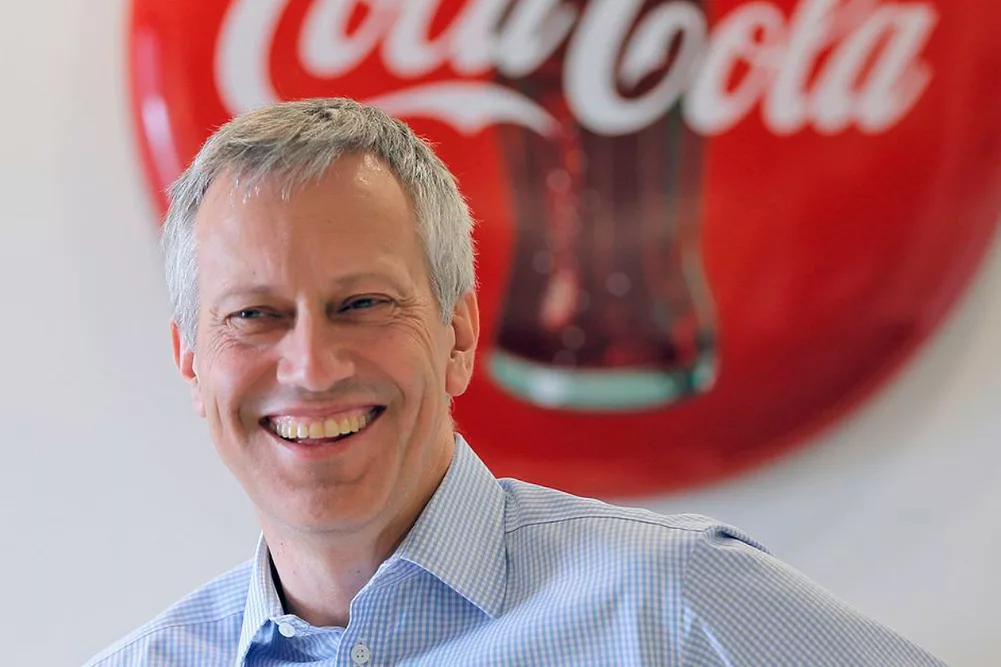
As James Quincey prepared to transition from Chief Executive Officer to Chairman of The Coca-Cola Company, he reflected on one of the most complex leadership challenges in modern business: how to evolve a 100 plus year old global icon without losing what made it timeless.
At the heart of his philosophy was a deceptively simple idea. Great leadership is as much about deciding what not to change as it is about driving innovation.
For Coca Cola, that meant fiercely protecting the essence of its flagship brand. The product’s identity, its red and white color, distinctive script, taste, and iconic bottle, had remained largely unchanged for generations. In an era defined by constant disruption, Quincey saw this consistency not as a limitation, but as a strategic advantage.
YOU CAN ALSO READ: Why Human Judgment Still Wins in an Age of Infinite AI Output
The challenge, he explained, was balancing authenticity with relevance.
While the product stayed the same, the way Coca Cola engaged the world evolved continuously. From early couponing campaigns in the 19th century to radio, television, and now digital platforms, the brand adapted to each generation without altering its core identity. It was this duality, consistency in product and evolution in connection, that kept Coca Cola culturally relevant across decades and continents.
Yet preserving a legacy brand was only part of the equation.
Quincey also oversaw a transformation that turned Coca Cola into a diversified beverage powerhouse. Beyond its flagship soda, the company expanded into juices, teas, sports drinks, and other categories, building a portfolio of more than 30 billion dollar brands. This shift reflected a deeper understanding of changing consumer preferences and the fragmentation of modern markets.
Rather than relying on instinct alone, Quincey emphasized the importance of data. While narratives around declining soda consumption, especially among younger generations, were widespread, the broader beverage industry continued to grow steadily. In emerging markets, rising incomes were unlocking new demand, reinforcing Coca Cola’s long term growth strategy.
Perception, he noted, can be misleading. The data tells a more complete story.
That same balance between global consistency and local relevance defined Coca Cola’s international strategy. While the product remained identical worldwide, its marketing adapted to local cultures. In some countries, Coca Cola was positioned around family meals. In others, it reflected social gatherings and street culture. By tapping into universal human values such as connection and shared experiences, the brand felt both global and deeply personal.
Beyond growth, Quincey confronted another defining issue of modern leadership, sustainability.
For a company operating at Coca Cola’s scale, packaging waste and environmental impact could not be ignored. Quincey approached the issue pragmatically, framing it as both a moral and economic challenge. Materials such as plastic, glass, and aluminum were not inherently wasteful. They were valuable resources that could be reused. The real challenge lay in collection systems.
In developed markets, recycling depended on structured municipal systems. In emerging economies, informal networks often achieved even higher recovery rates, driven by economic incentives. The solution, Quincey believed, was systemic change, bringing together governments, businesses, and communities to build a circular economy.
Sustainability, he argued, could not be a side project. It had to be built into the system.
On climate, his perspective was equally grounded. He reduced the issue to two primary drivers, agricultural inputs and energy use. Progress would depend on improving efficiency, reducing emissions in farming, and transitioning to cleaner energy sources.
As he reflected on leadership, Quincey offered a candid view of the CEO role. It was not simply a larger version of previous positions. Instead, it required navigating expectations from boards, investors, regulators, and the public.
You think you are at the top of the pyramid, he said, but you quickly realize you are at the bottom of an inverted one.
This reality made focus essential. Rather than chasing every opportunity, Quincey prioritized a small number of decisions that truly mattered. He believed the ability to filter signal from noise was one of the most critical skills for any leader.
Communication was equally important. In large organizations, repetition was not redundancy but necessity. Messages had to be reinforced consistently before they took hold. Often, what resonated most was not what leaders said, but what they did. Even small signals, like shifting from formal suits to a more relaxed dress code, helped communicate cultural change.
When asked what sustained him through years of leadership, Quincey pointed to purpose. Taking over at a time when Coca Cola’s growth had slowed, he saw an opportunity to revive the company from within. Under his leadership, growth accelerated and performance improved, proving that internal transformation was the real battleground.
YOU CAN ALSO READ: From Setback to CEO: How Jamie Dimon Turned Adversity into Triumph
Looking ahead, his focus shifted to ensuring a successful leadership transition. For Quincey, success was not just about results during his tenure, but about leaving behind a company capable of sustaining momentum.
His advice to the next generation of leaders was direct. Choose work that motivates you, build a reputation for impact, and be intentional about how you invest your time. Careers are shaped not just by opportunities, but by the choices individuals make along the way.
In a world defined by constant change, his leadership offers a clear lesson. Enduring success is not about chasing every trend, but about mastering the balance between stability and evolution.
And perhaps most importantly, knowing when to act and when not to.