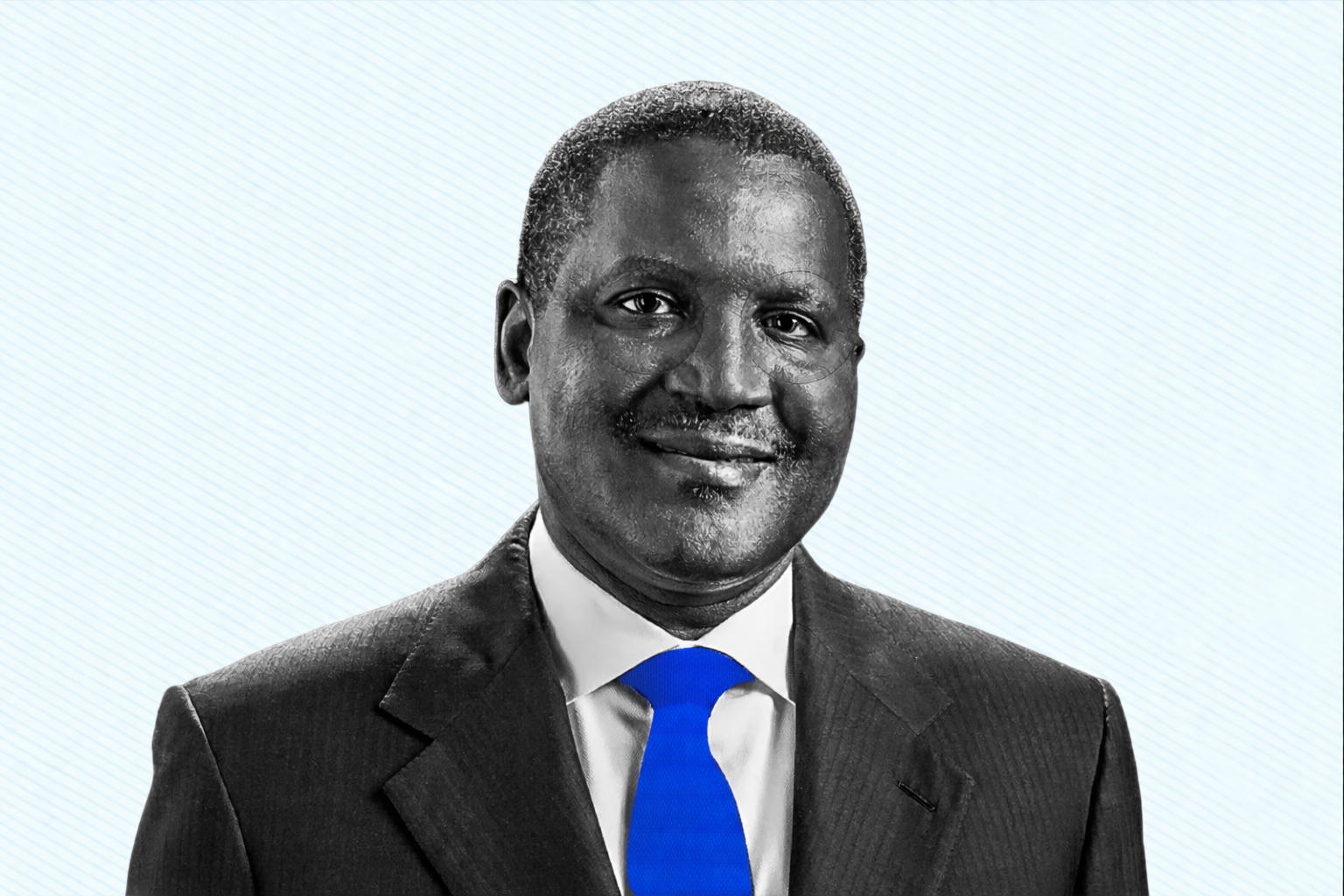
There are leaders who build companies, and there are those who build continents. Aliko Dangote belongs unmistakably to the latter, a man whose life’s work has been defined by a singular, audacious pursuit: transforming African ambition into enduring industrial might.
On an evening charged with purpose and prestige, the room rose not merely to welcome a business magnate, but to acknowledge a legacy in motion. Introduced with a flourish that captured both myth and reality, Dangote was described as a man who has spent a lifetime turning African ambition into African industry, creating value, opportunity, and impact at scale. It was an introduction that felt less like praise and more like fact.
Taking the stage with characteristic humility, Dangote’s address unfolded as both tribute and blueprint, an intimate acknowledgment of partnerships and a sweeping declaration of intent.
YOU CAN ALSO READ: Sterling Bank Targets $42bn Financing Gap for Women-Led Businesses
At the heart of his message was gratitude, directed not only at dignitaries and long-time allies like Obafemi Hamzat and Niyi Adebayo, but also at the vast ecosystem quietly fueling the group’s ascent. From banking giants such as Zenith Bank, Access Bank, United Bank for Africa, and First Bank of Nigeria, to institutional partners like Africa Finance Corporation, the Dangote story, he made clear, is a collective enterprise.
Yet if partnerships form the backbone, distributors are the lifeblood. Addressing them as the very heartbeat of the organization, Dangote reframed commerce as collaboration, where strategy meets execution in markets, communities, and construction sites across Africa.
Under the bold Vision 2030, Dangote Group is charting a course toward becoming a 100 billion dollar enterprise, an ambition rooted not in speculation, but in scale, infrastructure, and relentless expansion. Central to this vision is Dangote Cement, projected to reach 90 million metric tons in production capacity by 2030, placing it significantly ahead of entire national outputs, including that of Saudi Arabia.
The group’s refinery ambitions are equally monumental. Plans are already underway to expand capacity from 650,000 to 1.4 million barrels per day, an industrial leap that would position the refinery among the largest in the world. In agriculture, the fertilizer business is scaling from 3 million to 12 million metric tons annually, a move set to make Dangote the largest urea producer globally, while the polypropylene segment advances toward top five global status.
Across borders, the blueprint continues to unfold with fertilizer complexes in Ethiopia, storage infrastructure in Namibia, sugar integration in Ghana, and pipeline networks spanning southern and eastern Africa. Each investment forms part of a broader vision of an Africa that produces, refines, and sustains itself.
For Dangote, industrialization is only part of the story. True transformation lies in people. Through the Aliko Dangote Foundation, a one trillion naira education endowment has been launched, committing one hundred billion naira annually over the next decade to empower more than 1.3 million Nigerian students, with a focus on STEM, technical education, and girls’ inclusion. It is a reminder that the factories of tomorrow depend on the minds being shaped today.
Perhaps nowhere is the immediacy of his impact more evident than in Nigeria’s energy landscape. Recent strides in domestic fuel supply, delivering tens of millions of liters daily, signal not just operational success but systemic relief in a country long burdened by scarcity. With the introduction of thousands of CNG powered tankers on the horizon, efficiency gains are expected to ripple across the economy.
This aligns with the broader economic ambitions of Bola Ahmed Tinubu, whose vision of a one trillion dollar Nigerian economy by 2030 finds a formidable ally in Dangote’s industrial drive.
YOU CAN ALSO READ: The Mindset of Millions – Teri Ijeoma on Investing, Strategy, and Financial Empowerment
If there is a single thread binding his address, it is belief, unyielding, expansive, and unapologetically African. Africa’s future, he insists, will be built by Africans who refuse to accept limits, who dream big, work hard, and never stop believing in what is possible.
As the applause settled and the evening gave way to celebration, one truth lingered. This is not a story nearing its conclusion. It is one accelerating toward something far greater. For Aliko Dangote, the factories rising across the continent are not endpoints, they are beginnings, foundations of an Africa reimagined, rebuilt, and reclaimed.