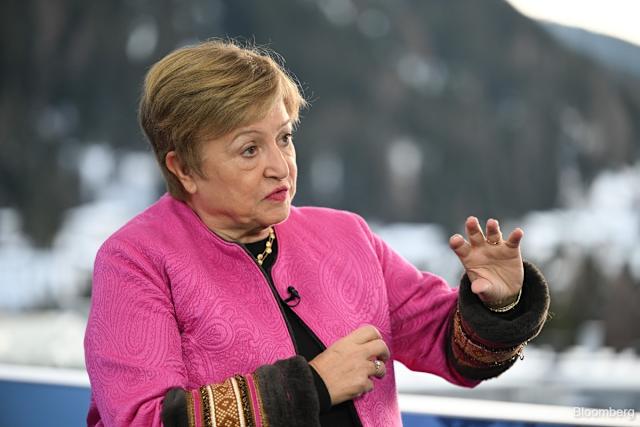
The resilience of the global economy is once again under severe strain as a new wave of disruption from the war in the Middle East reverberates across energy markets, trade routes, and financial systems, according to IMF Managing Director, Kristalina Georgieva. Speaking ahead of the IMF Spring Meetings, she described the crisis as a “large, global, and asymmetric supply shock” with far reaching consequences for inflation, growth, and economic stability.
Georgieva expressed deep concern for populations affected by the conflict, noting that the humanitarian toll is matched by growing economic hardship worldwide. She warned that the disruption to global energy flows, cutting oil supply by an estimated 13 percent and liquefied natural gas by about 20 percent, has triggered widespread price increases, supply bottlenecks, and renewed uncertainty across interconnected economies.
YOU CAN ALSO READ: Bimbo Ashiru Named APSS Deputy Regional Chair for West Africa
Oil markets have reacted sharply, with Brent crude rising from around 72 dollars per barrel before hostilities to peaks near 120 dollars, before partially retreating. However, Georgieva stressed that prices remain significantly elevated, with many countries still paying steep premiums for energy access. She also highlighted the disproportionate burden on vulnerable economies, particularly small island states and import dependent developing nations at the end of fragile global supply chains.
The IMF chief outlined three main transmission channels through which the shock is spreading. First, higher energy and input costs are feeding directly into inflation and weakening consumer demand. Second, inflation expectations are shifting upward in key advanced economies, raising the risk of more persistent price pressures, even though long term expectations remain anchored. Third, financial conditions have tightened, with widening emerging market spreads, equity volatility, and currency adjustments, though some easing has recently been observed.
Georgieva cautioned that while global markets have weathered similar shocks before, including in the 1970s and earlier this decade, the current environment is uniquely complex due to simultaneous supply disruptions and geopolitical fragmentation. She noted that energy systems are gradually becoming less carbon and oil intensive, but dependence on fossil fuels remains a key vulnerability.
Looking ahead, the IMF expects a slowdown in global growth, even under optimistic scenarios. Infrastructure damage, disrupted logistics routes such as the Red Sea corridor, weakened investor confidence, and potential long term supply losses are all expected to weigh on economic performance. She cited examples such as major energy facilities facing prolonged shutdowns and global shipping routes operating well below normal levels.
The impact, she noted, will vary sharply across countries. Energy exporters may benefit from higher prices, while import dependent economies face mounting fiscal and external pressures. However, even some exporters are experiencing disruptions due to supply chain instability and regional spillovers.
Georgieva urged policymakers to avoid actions that could worsen global conditions, warning against export restrictions and price controls that distort markets. Instead, she called for targeted and temporary support for vulnerable populations, careful monetary policy calibration to manage inflation expectations, and disciplined fiscal strategies to preserve long term stability.
She emphasized that central banks may need to remain vigilant if inflation expectations become unanchored, while governments with fiscal space should avoid broad based stimulus that could conflict with monetary policy. At the same time, she warned of rising global debt burdens and increasing interest costs, underscoring the need for renewed fiscal consolidation efforts once the shock stabilizes.
YOU CAN ALSO READ: ‘Leadership Must Be About Service, Not Self Interest’ – Kamala Harris
On financial stability, she highlighted risks from highly accommodative conditions and the growing influence of non bank financial intermediaries, stressing the importance of strong regulation and supervision to prevent sudden reversals.
Despite the turbulence, Georgieva underscored a message of resilience and preparedness. She argued that strong institutions, sound policy frameworks, and international coordination remain the most effective defenses against external shocks. The IMF, she affirmed, stands ready to support countries through financing, policy guidance, and coordinated response mechanisms.
She concluded with a call for global solidarity and peace, warning that conflict continues to extract a heavy toll not only on human lives but also on the shared economic future of nations.