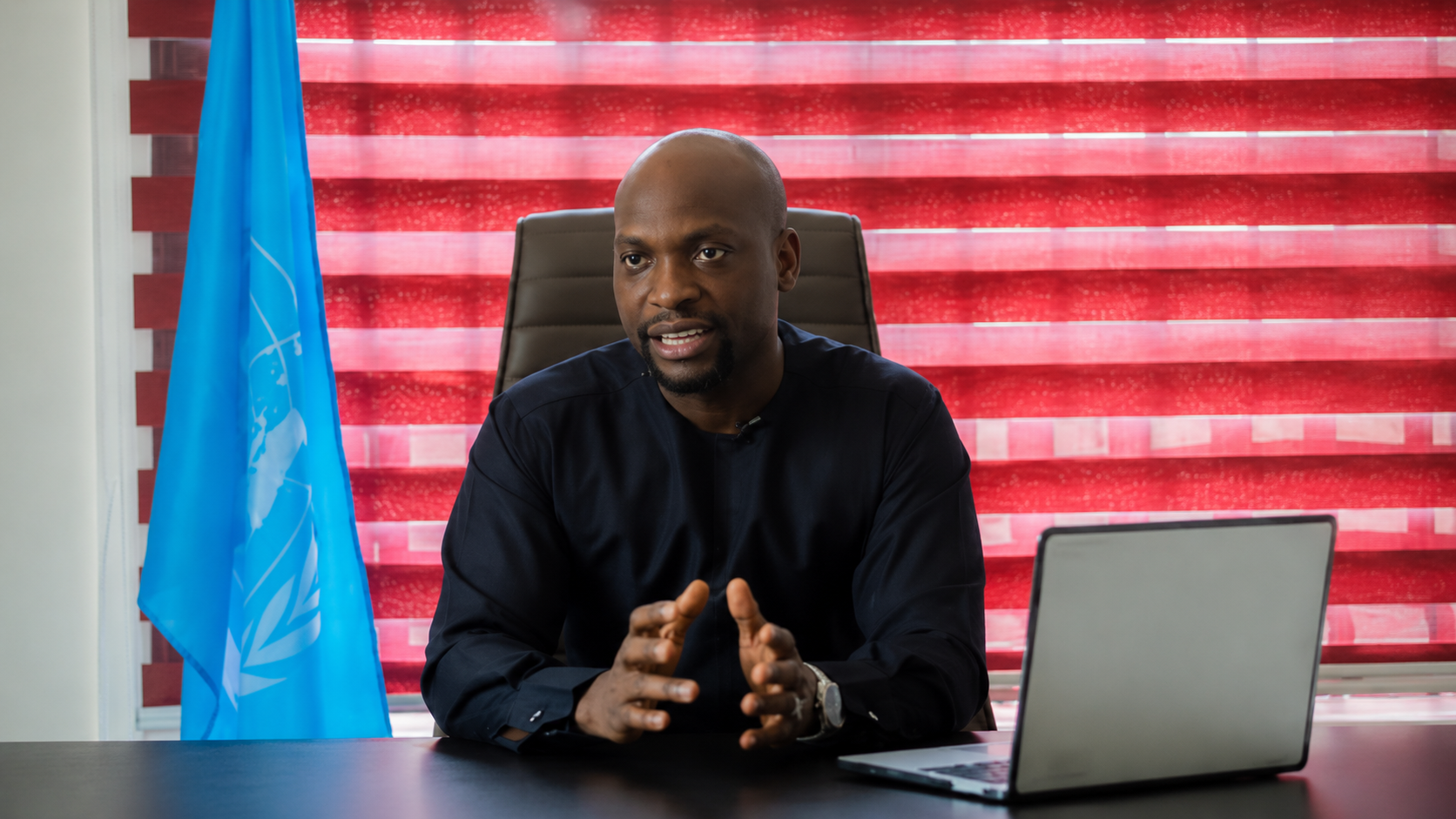
From selling boiled groundnuts as a curious child in Calabar to building one of Nigeria’s emerging forces in solar manufacturing, Nzan Ogbe’s journey reflects a rare kind of entrepreneurial discipline. It is a story shaped by early resourcefulness, refined through years of experimentation, and ultimately anchored in a long-term belief that Africa must build the systems it depends on.
Today, Ogbe serves as Chairman of Levene Energy Group, a company operating at the intersection of energy infrastructure, manufacturing, and large-scale renewable deployment. What began as trading activities in oil and gas has evolved into a diversified energy portfolio that now includes solar manufacturing, infrastructure investment, and cross-border energy expansion across West Africa.
YOU CAN ALSO READ: The Bold Career Shift That Redefined Temilola Adepetun’s Life at 40
His transition into renewable energy was not accidental. It emerged from exposure to structural inefficiencies in Nigeria’s energy market and the realization that energy costs were silently eroding productivity across industries, institutions, and households. Rather than view this as a limitation, Ogbe saw it as a scalable opportunity to localize production and rethink energy access from the ground up.
That conviction eventually led to the establishment of one of Nigeria’s few solar panel manufacturing facilities, a 100 megawatt production plant in Lagos designed to meet international quality standards while serving local and regional demand. In a market heavily reliant on imports, this shift represented more than business expansion. It represented industrial intent.
Beyond manufacturing, Ogbe has also been involved in significant energy infrastructure transactions, including a $64 million deal involving Axxela. This reflects a broader strategy that goes beyond production into ownership, distribution, and long-term energy systems development across Africa.
In this episode of The Builders, Ogbe opens up about the evolution of his entrepreneurial journey and the decisions that shaped it. He traces his path from early trading ventures in groundnuts and cars to steel imports, oil trading, and eventually large-scale energy investments. Each phase, he explains, contributed to a deeper understanding of risk, structure, and scale.
A recurring theme in his reflections is the importance of structure. Early in his career, decisions were fast and intuitive. Over time, experience introduced discipline, leading him to establish governance systems, formal boards, and risk management frameworks within his companies. For him, structure was not a constraint but a necessary foundation for scale.
He also speaks candidly about failure, mentorship, and capital. In his view, Nigeria’s entrepreneurial challenge is not a lack of ideas but a lack of systems that convert ideas into sustainable businesses. Access to funding, policy alignment, and predictable regulation remain critical gaps that determine whether local industries can compete with global players.
Ogbe’s entry into solar was also shaped by a practical realization during a major infrastructure project in Lagos, where supply chain delays significantly increased costs. That experience reinforced his belief that local manufacturing could reduce inefficiencies and create competitive advantage even in markets dominated by China and Europe.
His perspective on policy is equally direct. He highlights structural contradictions that discourage local production, including import duty disparities that favor finished goods over locally assembled components. For him, this is one of the key barriers preventing industrial scale in Nigeria’s renewable energy sector.
Despite these challenges, Ogbe remains focused on expansion. His company is already exporting solar panels to Ghana and exploring opportunities in Cameroon, Côte d’Ivoire, and Benin Republic. This regional growth signals a broader shift from domestic manufacturing to African energy integration.
YOU CAN ALSO READ: The Quiet Power of Warren Buffett in an Age of Market Noise
At the core of his philosophy is a belief in systems over moments. He emphasizes mentorship, governance, and exposure as critical tools for developing the next generation of entrepreneurs. For him, success is not defined by individual achievement alone but by the ability to build structures that outlive their founders and empower others to grow within them.
In a country where entrepreneurship is often associated with speed and survival, Ogbe represents a different model. One that is slower, more deliberate, and deeply rooted in infrastructure thinking. His journey reflects not just personal evolution, but a wider shift in how African entrepreneurs are beginning to approach scale, ownership, and long-term value creation.
For founders, investors, and policymakers, this conversation offers a clear view into what it takes to build in emerging markets. Not just ideas, but industries. Not just businesses, but systems.