As global accounting standards evolve, Nigerian businesses are entering a new era where financial reporting will demand greater structure, clarity and transparency. With IFRS 18, IFRS 19 and other major changes approaching, companies must rethink not only how they report their numbers, but also the systems behind those numbers.
Financial statements have long been regarded as the language of business. They tell the story of a company’s performance, reveal the strength of its balance sheet, show where money is coming from and where it is going, and provide investors, lenders, regulators and other stakeholders with the information needed to understand a business.
But that language is changing. For Nigerian businesses, the transformation in financial reporting is more than an accounting exercise. It represents a significant shift in how financial performance will be presented, interpreted and compared.
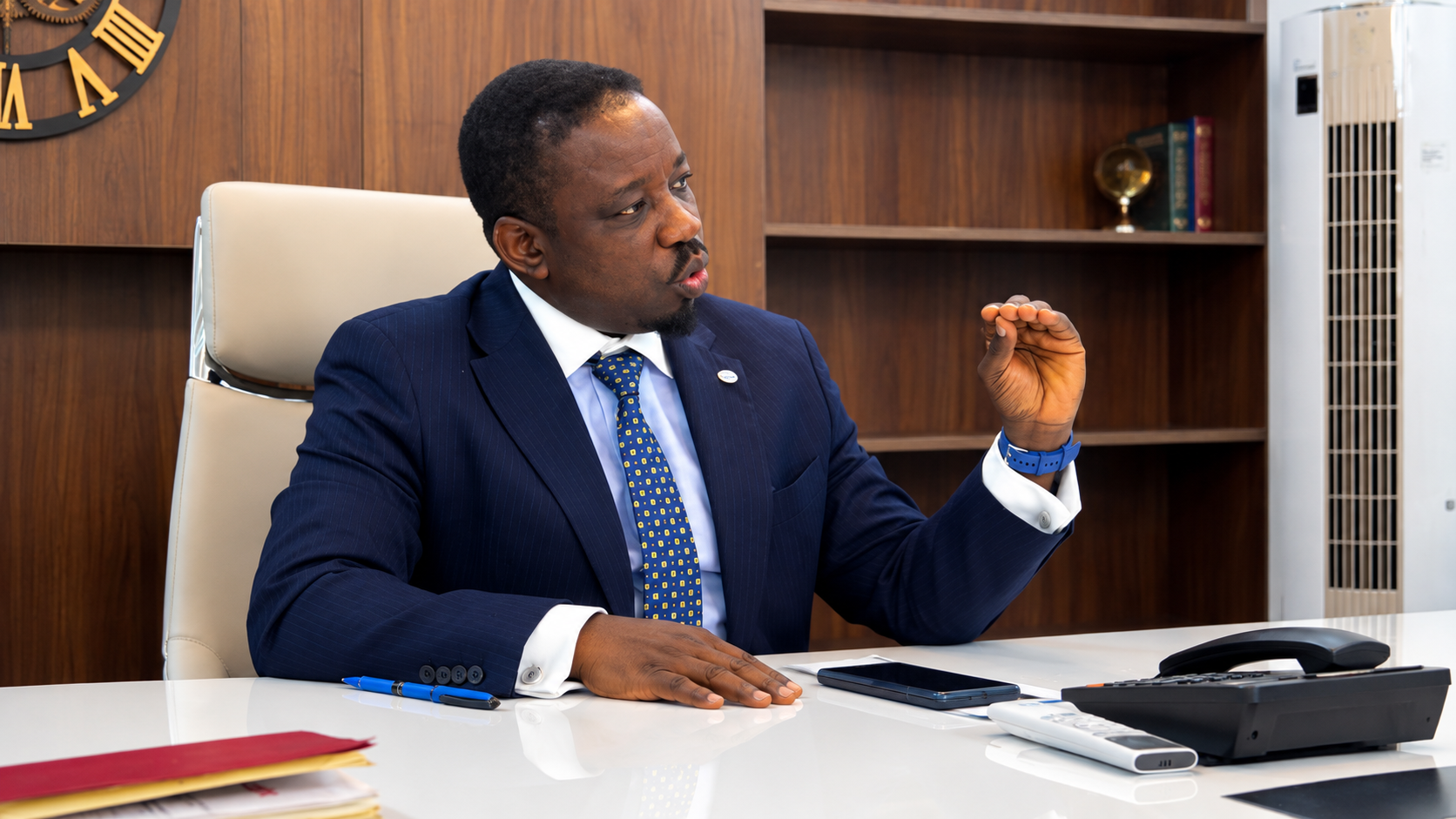
That was the central message from Mr. Okoye Joseph Samuel, FCA, Founder and CEO of O. J. Inspiration Accounting et al TV, during an ICAN On Air session focused on “The Future of Financial Reporting: IFRS Updates and What They Mean for Nigerian Businesses.”
YOU CAN ALSO READ: Fadahunsi and the Case for a Deeper Nigerian Market
A financial expert, veteran banker, educator and IFRS consultant, Samuel used the session to unpack some of the major developments confronting accountants, auditors, finance professionals and business leaders.
At the heart of the conversation was IFRS 18, Presentation and Disclosure in Financial Statements, a new standard that will fundamentally change how companies present information about their financial performance.
Effective for annual reporting periods beginning on or after January 1, 2027, IFRS 18 will replace IAS 1, the standard that has governed the presentation of financial statements for years.
For businesses accustomed to the traditional structure of financial statements, the change will require more than simply changing headings on a page. IFRS 18 introduces defined categories for income and expenses, including operating, investing, financing, income taxes and discontinued operations.
The objective is to create greater consistency in how financial performance is presented and make it easier for users of financial statements to understand where a company’s results are actually coming from.
For Samuel, one of the critical questions businesses must now answer is deceptively simple: What is the real business of the business?
The answer matters because an entity’s specified main business activities will influence how income and expenses are classified. A company may generate income from selling an asset or earning returns from an investment, but those activities may not represent the core engine of the business.
Under the new reporting architecture, understanding that distinction becomes increasingly important. The numbers may not necessarily change, but the way those numbers tell the story will. And that is where preparation becomes critical.
Samuel stressed that Nigerian businesses should not wait until 2027 before addressing the transition. Companies need to examine their accounting policies, reporting structures, chart of accounts and financial systems ahead of the effective date.
One of the practical challenges is comparative reporting. When businesses begin reporting under IFRS 18, they will need comparable prior-period information presented in a way that aligns with the new framework. This means organisations must begin thinking about their transition well before the first mandatory IFRS 18 financial statements are published.
For finance teams, this could mean revisiting systems that have remained largely unchanged for years. For auditors, it could mean adapting audit procedures and reviewing new classifications and disclosures. For business leaders, it could mean understanding financial information in a different way.
Alongside IFRS 18 is a revised IAS 8, now titled Basis of Preparation of Financial Statements, which is designed to operate alongside IFRS 18.
Another major development is IFRS 19, Subsidiaries without Public Accountability: Disclosures. Also effective from January 1, 2027, the standard provides qualifying subsidiaries with reduced disclosure requirements where specific conditions are met.
Samuel explained that the framework is particularly relevant to subsidiaries that do not have public accountability but have a parent entity that prepares consolidated financial statements under IFRS Accounting Standards. The development reflects an attempt to balance transparency with proportionality, ensuring that qualifying entities are not necessarily required to bear the full disclosure burden applicable to publicly accountable entities.
Then comes IFRS 20, Regulatory Assets and Regulatory Liabilities, issued in May 2026 and scheduled to become mandatory from January 1, 2029. The standard will replace IFRS 14 and introduces a new framework for accounting for regulatory assets and regulatory liabilities.
While some of these developments may appear highly technical to the ordinary business owner, their implications can eventually reach the boardroom.
Financial reporting influences decisions about borrowing, investment, profitability, performance measurement, taxation, corporate governance and business strategy. Changes in reporting therefore have the potential to affect how a company communicates its financial story to the outside world.
But the transformation is not happening only at the international level. Nigeria is also moving towards a more centralised financial reporting environment.
Samuel pointed to the Financial Reporting Council of Nigeria’s continued push for public interest entities to electronically file their audited financial statements through the National Repository for Financial Reporting.
The development signals a broader movement towards greater consistency, accessibility and centralisation in financial reporting.
For businesses, the message is increasingly clear: the days of treating financial reporting as a routine end-of-year exercise are disappearing.
The modern finance function is becoming more integrated with technology, regulation, governance, sustainability and strategic decision-making.
YOU CAN ALSO READ: Temi Popoola on the Dangote Refinery IPO and Nigeria’s New Ownership Era
The accountant of the future, therefore, cannot afford to simply know the standards. The professional must understand why they are changing, how they affect businesses and how to translate technical requirements into practical business decisions. That was perhaps the most important lesson from the ICAN On Air conversation.
The future of financial reporting will not be defined merely by new standards printed in accounting manuals. It will be defined by how effectively organisations prepare their people, systems and processes for those standards. For Nigerian businesses, the countdown has already begun.
January 2027 may appear to be some distance away, but for organisations with complex reporting structures, changing an accounting framework is not an overnight task. It requires planning, training, system reviews, policy decisions, communication and implementation.
Because ultimately, IFRS is not simply about numbers. It is about how businesses explain their numbers, how stakeholders understand their performance, and how trust is built around the financial story a company tells.
And as that story enters a new chapter, Nigerian businesses must be ready to speak the new language.