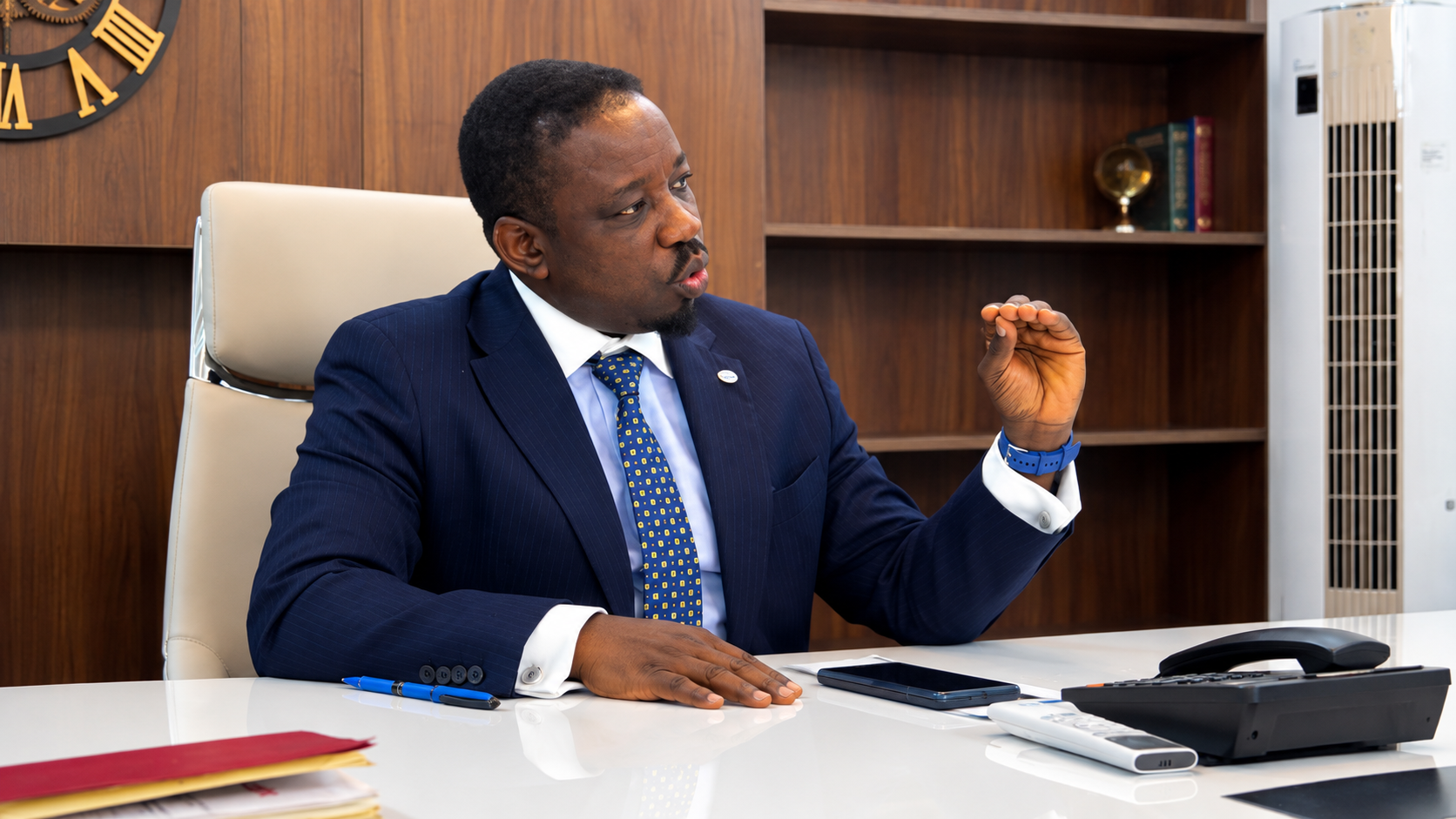
The Chairman of the Nigerian Economic Summit Group (NESG), Olaniyi Yusuf, has challenged policymakers, development actors, businesses and other stakeholders to move beyond policy commitments and ensure that innovations and interventions translate into tangible improvements in the lives of underserved Nigerians.
Yusuf made the call while delivering the opening speech at the fifth edition of the Gender and Inclusion Summit, convened by the Policy Innovation Centre (PIC) of the Nigerian Economic Summit Group, where he stressed that the true measure of innovation is its ability to reach people at the “last mile.”
Speaking against the backdrop of the summit theme, “From My Gender to Action: Making Innovation Count for the Last Mile,” Yusuf said Nigeria must confront the persistent gap between policies designed on paper and the realities experienced by women, girls, young people and persons with disabilities, particularly in underserved communities.
YOU CAN ALSO READ: IMF Chief Praises Nigeria, India for Helping Cushion Global Energy Shock
According to him, after four editions of the summit had identified barriers, generated evidence and secured commitments, the central question confronting stakeholders at the fifth edition was whether those commitments were actually reaching the people who needed them most.
“An innovation only counts when it arrives at the last mile,” Yusuf said, emphasising that well-designed programmes have little impact if they fail to reach the communities and individuals they were created to serve.
He illustrated the importance of last-mile impact through everyday actors who operate closest to communities, including health workers providing services where formal healthcare facilities are unavailable, cooperative leaders extending access to credit where conventional banking services are absent, and mentors helping girls remain in school when existing systems fail them.
For Yusuf, these individuals represent the practical bridge between policy ambition and real-world transformation.
“The strategy in the document” alone, he argued, does not transform communities. Rather, transformation occurs when policies, programmes and innovations are present “at the point of need” and are delivered through people and institutions capable of making a difference.
Yusuf used the occasion to reaffirm the NESG’s longstanding role in promoting dialogue, policy advocacy and inclusive socioeconomic development in Nigeria.
He noted that the organisation has, over the years, championed critical national issues and contributed to shaping Nigeria’s socioeconomic landscape by bringing together stakeholders, generating evidence and advocating policies aimed at inclusive development.
He also traced the emergence of the Policy Innovation Centre to an initiative supported by the Gates Foundation in 2017, when funding was provided to establish an interim policy innovation unit as a proof of concept for applying behavioural insights to improve public-sector outcomes in Nigeria.
Following the success of the initiative, the Policy Innovation Centre was formally launched in October 2021 to deepen the impact of socioeconomic interventions in the country.
Yusuf described the PIC as the first national institutionalised behavioural insights institute in Africa, established to support governments and stakeholders in making behaviourally informed decisions and generating contextually relevant evidence for high-impact policy interventions.
The centre, he explained, deploys two transformative approaches, behavioural insights and gender-transformative approaches , to develop solutions capable of responding to Nigeria’s complex social and economic realities.
It was through this framework that the Gender and Inclusion Summit was established in 2022 as an annual platform for stakeholders to deliberate, collaborate and co-create solutions around gender and inclusion.
Yusuf said the summit was deliberately designed to move the conversation beyond discussions and declarations towards implementation.
He pointed to the summit’s academic conference, which brings researchers from across Nigeria together to examine evidence, as well as its high-impact forums that bring policymakers, innovators and practitioners together to translate research findings into commitments and practical roadmaps.
“Our aim is singular, to move from agenda to action,” Yusuf said.
He challenged participants to use the summit not simply as a platform for deliberation but as a space for designing practical solutions, building partnerships and developing mechanisms capable of delivering impact to communities that remain farthest from opportunity.
Yusuf urged participants to be bold in their thinking, generous in their partnerships and persistent in their commitment to underserved populations.
YOU CAN ALSO READ: Tinapa, Duke and Imoke: The Story Behind Cross River’s Unfinished Tourism Dream
His message placed the “last mile” at the centre of Nigeria’s inclusion conversation, shifting attention from the creation of policies and innovations to the more difficult question of whether those interventions ultimately improve lives.
He said the collective objective should be to build a society that is more just, equitable and prosperous, where every individual has the opportunity to thrive and contribute to national development.
The opening address therefore set the tone for the summit: the next phase of Nigeria’s gender and inclusion agenda must be measured not only by the quality of ideas generated or commitments made, but by how effectively those ideas travel from institutions and policy documents to the communities and people they are intended to serve.