Nigeria’s Minister of Finance and Coordinating Minister of the Economy, Wale Edun, has set out the government’s strategy for navigating rising global uncertainty, emphasising reduced reliance on debt, stronger revenue mobilisation, and an investment-led growth model.
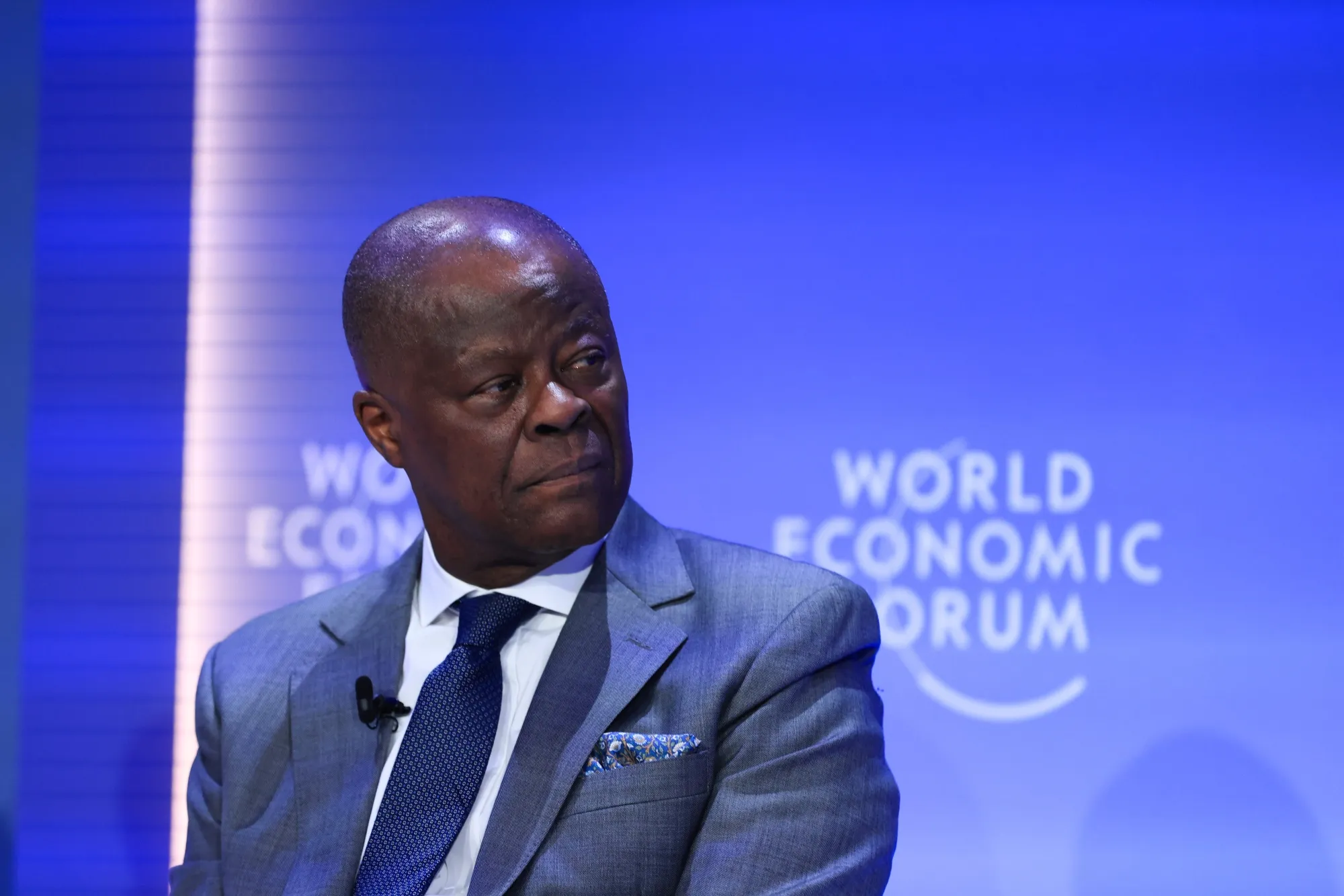
Speaking at the World Economic Forum in Davos, Edun acknowledged that growing protectionism and a retreat from multilateralism pose serious risks for emerging economies. For countries like Nigeria, he warned, weaker global trade would translate into slower growth, reduced investment, and fewer economic opportunities.
“When global trade slows, emerging economies suffer first,” Edun said, noting that fragmentation of the world economy could undermine development prospects if not carefully managed.
YOU CAN ALSO READ: From Stability to Growth: Edun Outlines Nigeria’s Economic Direction for 2026
Despite these risks, Edun said Nigeria is approaching the shifting global landscape with pragmatism rather than alarm. With significant natural resources and critical minerals, the country remains open to strategic partnerships, provided they are mutually beneficial and aligned with long-term national interests.
Nigeria’s projected 2026 budget shows a wider deficit on paper, following approval by the National Assembly. However, Edun stressed that this does not signal a return to debt-driven spending. Under President Bola Ahmed Tinubu’s Renewed Hope Agenda, the government has moved past the most disruptive phase of reform and is now focused on consolidation.
“Our emphasis now is to rely less on borrowing and more on driving investment,” Edun said, adding that Nigeria is using Davos to demonstrate that it has become more investable, supported by a more stable macroeconomic environment.
While Nigeria retains the flexibility to access international capital markets, including Eurobond issuance, Edun said any decision to borrow would depend on market conditions, regulatory limits, and timing. The government’s immediate priority, he said, is to stimulate domestic investment by increasing savings and directing capital into productive sectors of the economy.
Addressing Nigeria’s high debt-to-revenue ratio, Edun said the core issue is revenue generation rather than debt alone. The government is implementing tax reforms aimed at raising the tax-to-GDP ratio from about 13 percent to roughly 18 percent in the near term, with a longer-term ambition of exceeding 20 percent. Technology and automation are also being deployed to close revenue leakages and improve efficiency.
Edun highlighted the role of the private sector, which accounts for around 90 percent of Nigeria’s GDP, as central to the government’s strategy. Improved incentives, clearer policies, and macroeconomic stability are intended to encourage greater domestic investment, as well as capital inflows from the Nigerian diaspora and foreign investors, particularly from cash-rich regions such as the Middle East.
Despite concerns about debt sustainability, Edun said Nigeria has no immediate plans to seek IMF assistance. He argued that the scale of reforms already implemented would normally form the basis of an IMF programme. In the past two and a half years, he said, the administration has corrected long-standing distortions and restored investor confidence.
He pointed to moderating inflation, a more stable exchange rate, and stronger economic growth as evidence of progress. Nigeria’s economy expanded at just over 2 percent in early 2023, but growth has since accelerated to around 4 percent in the first half of 2025—a trajectory Edun said is critical for job creation and poverty reduction.
Edun also underscored Nigeria’s renewed push toward industrialisation and domestic value addition. He noted that roughly 650,000 barrels per day of crude oil that were previously exported are now being refined locally into petroleum and petrochemical products, strengthening industrial capacity and reducing import dependence.
YOU CAN ALSO READ: Tony Robbins’ 114 Companies Generate $12 Billion Annually, Redefining Business Success
Combined with Nigeria’s large domestic market, critical mineral resources, and participation in the African Continental Free Trade Area, Edun said these reforms position Nigeria as a competitive destination for long-term investment, even amid global volatility.
As uncertainty continues to cloud the global outlook ahead of 2026, Edun said Nigeria remains focused on policy consistency and reform continuity. While acknowledging the anxiety created by unpredictability in global trade and geopolitics, he said the government is determined to stay the course.
Nigeria’s message in Davos, Edun concluded, is one of reform, resilience, and readiness to compete—built on investment-led growth rather than expanding debt.