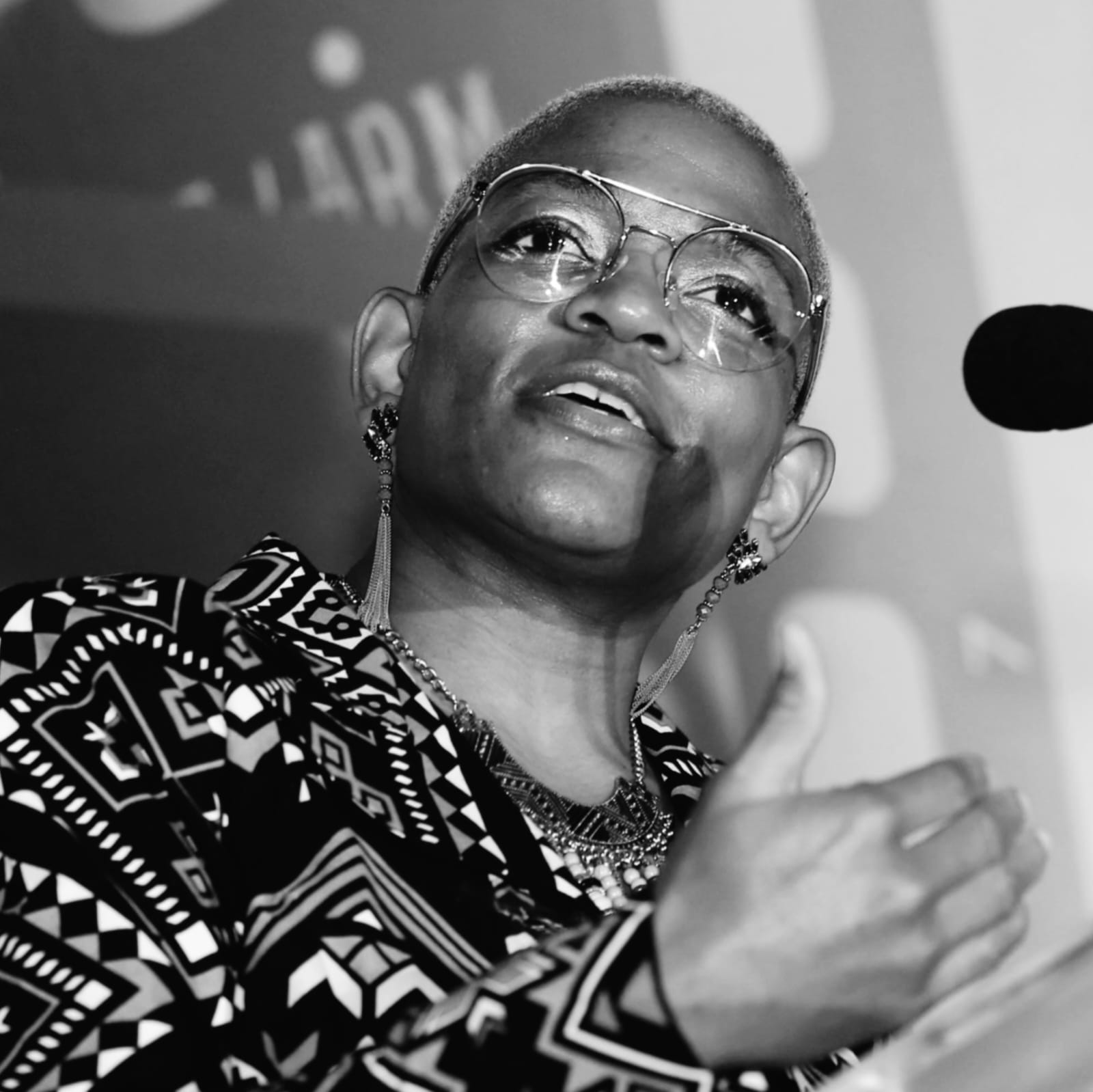
On her column Enterprise Without Borders, EnterpriseCEO’s Editor at Large, Pabara Ebiere spoke with Ada Ibezi at her home in London about her remarkable journey from survivor to global advocate. From rebuilding her life after escaping abuse to training thousands of officers within the Metropolitan Police Service and leading two organizations across the UK and Nigeria, Ada has turned personal adversity into a mission to break the silence around domestic abuse.
From the quiet determination in her voice to the scale of the work she now leads, the journey of Ada Ibezi reflects a powerful form of enterprise that is rarely discussed in conventional leadership circles. It is the kind of enterprise born not from boardrooms or venture capital, but from lived experience, resilience, and the determination to transform personal adversity into institutional change.
Speaking from her home in London, Ada today occupies a position of influence within one of the most significant law enforcement systems in the world. She chairs the London Metropolitan Police Violence Against Women and Girls Independent Advisory Group, where she advises and trains officers on understanding and responding to domestic abuse.
Through her work with the Metropolitan Police Service, she has trained more than 10,000 officers, from new recruits to frontline and mid level leaders. Her work focuses not only on policy awareness but on helping institutions understand the deeper dynamics of abuse that often remain hidden beneath the surface.
At the same time, Ada leads two organisations working across continents. In the United Kingdom she founded Against Domestic Abuse, while in Nigeria she established the Ada Ibezi Foundation. Through both platforms she lectures at universities, advocates for survivors, and builds awareness about the complex realities of domestic abuse.
Her work today touches thousands of lives, but the origin of this mission is deeply personal.
Before becoming a leading voice on domestic abuse awareness, Ada lived what appeared to be a structured and purposeful life. She was a primary school teacher and the wife of a pastor. Together they pioneered a church community while she pursued her aspiration of contributing to education in Africa.
YOU CAN ALSO READ: It Was Always Her: The Global Pattern of Women’s Restriction Across Civilisations
When her husband’s work required them to relocate to Togo, she saw the move as an opportunity to expand that vision.
But beneath the surface of that life was a reality she had not yet fully understood.
“The abuse didn’t start in Togo,” Ada explained. “It had been there for 12 years, woven through our marriage in ways I didn’t recognize.”
For many victims, the early stages of abuse are not always visible. Emotional manipulation, psychological pressure, and coercive control often develop quietly, slowly eroding confidence and independence long before physical violence occurs.
“I knew what physical abuse looked like. Everybody does. But emotional abuse, psychological abuse, coercive control, I had no idea.”
The turning point came when the violence escalated.
“I was assaulted twice in Togo, twice in front of my two daughters. That was my breaking point.”
What followed was a journey of survival that would ultimately reshape her life’s direction.
“I took my daughters and fled at night,” she said. “By road, through two countries, with nothing but the clothes on our backs.”
Their route took them through Lagos before they eventually returned to the United Kingdom, where Ada and her children sought safety in a refuge shelter.
But escaping the abuse did not immediately restore stability.
“I had used all my savings to run and resettle,” she recalled. “My home was taken from me because of the financial trust I’d put in him. I ended up in debt.” Even after leaving the relationship, the psychological effects lingered. “I used to wear a mask when I went out, not because of COVID, but because I was afraid I’d be seen.”
Then a moment inside the shelter changed the trajectory of her recovery. “Someone looked at me and said, ‘You did the right thing.’” Those words became a turning point. “In my mind, I had just broken my family,” Ada said. “Hearing someone say I did the right thing set me free.”
What followed was a period of intense learning and reflection. Ada began studying domestic abuse in order to understand the system of power and control she had experienced.
“I learned that domestic abuse is about power and control. Someone trying to lord it over you,” she explained. “And I had to stand on the truth that nobody was created to control me.”
Gradually, the fear that once defined her daily life began to fade. “I stopped hiding behind the mask. Slowly I began to find myself again.” As she rebuilt her confidence, she also began sharing her story publicly. Speaking engagements followed, and with each conversation she discovered the potential impact of her voice. “I call myself a thriver now,” she said. “The pain gave me purpose.”
In 2022, while still living in a refuge, a tragic story would accelerate that purpose. News broke about the death of Nigerian gospel singer Osinachi Nwachukwu, whose passing was widely linked to domestic abuse.
The story struck deeply. “In that moment I saw what could have been my life,” Ada said. The question that followed became the catalyst for her advocacy. “How many more people are going through this silently?” The answer required action.
In 2023 she founded Against Domestic Abuse in the United Kingdom, an organisation dedicated to education, advocacy, and support for survivors. Through training sessions with the Metropolitan Police Service, she now helps officers understand the complexity of domestic abuse cases, particularly within diverse communities.
“People focus on domestic violence, the physical part,” she explained. “But by the time it gets physical, you’ve already been in it for years.” Her work with law enforcement also provides cultural insight, particularly around the barriers women from certain communities face when reporting abuse.
YOU CAN ALSO READ: Inside Prof. Ogunsola’s Vision for a Stronger University of Lagos
Yet her mission extends beyond Britain. During her escape from Togo, passing through Lagos revealed a reality she could not ignore. Support systems for victims of domestic abuse remain limited across many parts of Africa.
“I had an option,” she said. “But what about the women who don’t have that option?” That question led to the launch of the Ada Ibezi Foundation in Nigeria. The organisation seeks to create safe spaces for survivors while raising awareness about available support systems.
“My heart is for my people,” she said. “I’m proudly Nigerian and I wanted to give back to my community.” Today Ada’s work bridges advocacy, education, and institutional reform across two continents. Through lectures, training programs, and community engagement, she continues to challenge the silence that often surrounds domestic abuse.
Yet despite the scale of her impact, she never forgets where the journey began. “It started in a refuge,” Ada reflected. “With nothing.”
And with five words that changed everything.
“You did the right thing.”
Pabara Ebiere is a UK based Nigerian-born writer, entrepreneur, and cultural advocate focused on storytelling, African identity, and diaspora engagement. She is the founder of cultural initiatives including African children’s books preserving Ijaw heritage and the co-founder of Jollof Life Music, an African-themed music platform supporting artists in marginalized communities across Nigeria.