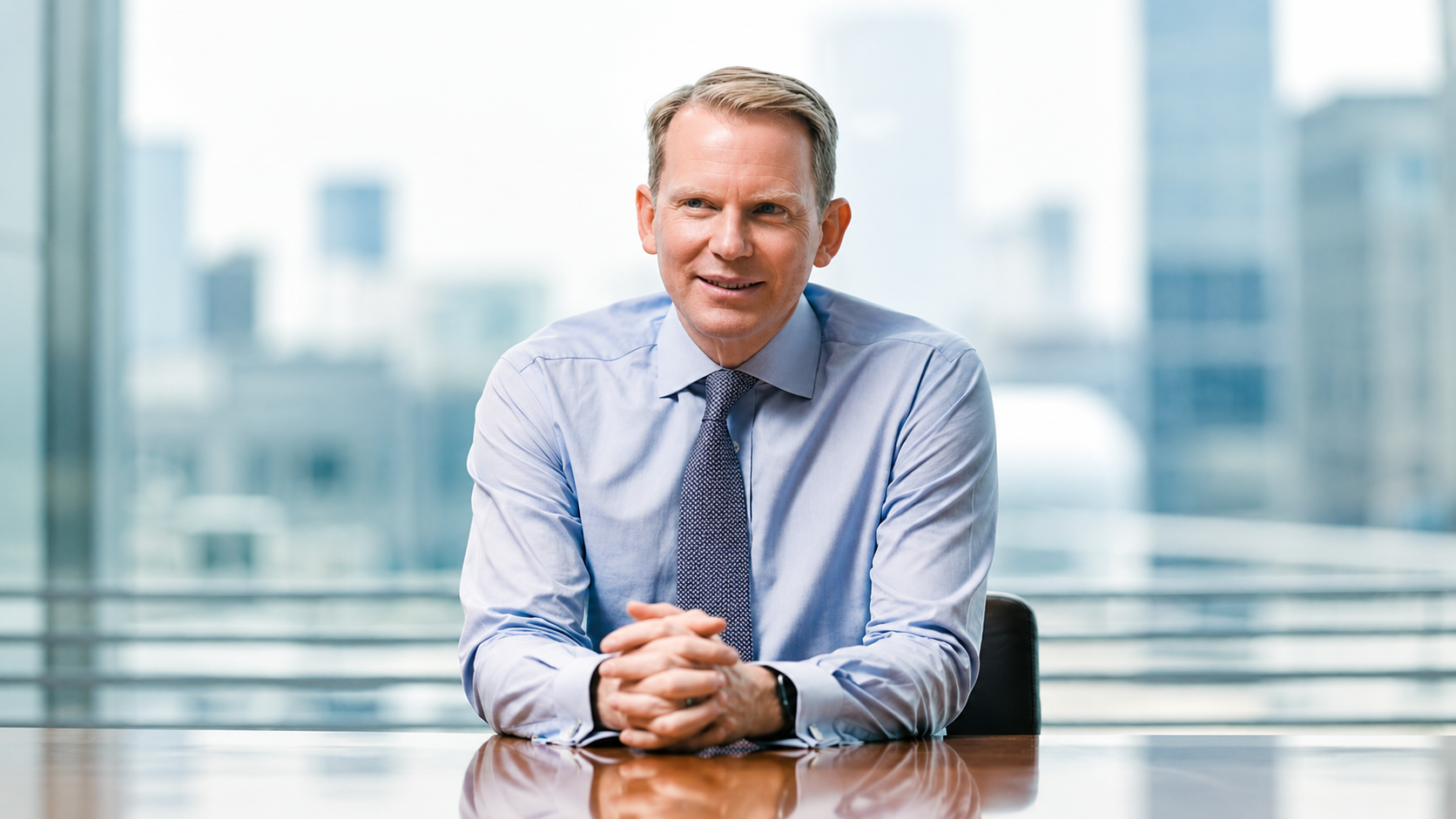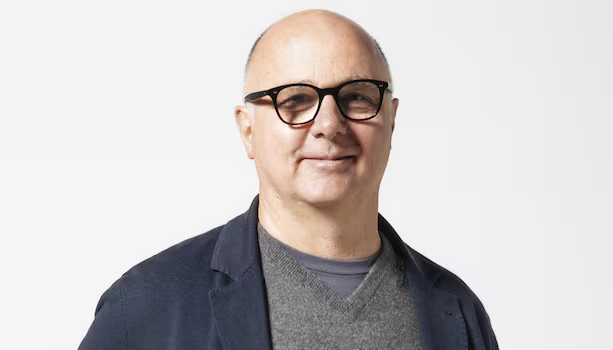
In Milan, where fashion is both heritage and heartbeat, Andrea Guerra is leading a transformation that feels less like disruption and more like a return to essence. At the helm of the Prada Group for just over three years, Guerra is not chasing the noise of the moment. Instead, he is refining something far more enduring: identity.
His vision unfolded in a revealing conversation on In Good Company, hosted by Nicolai Tangen, a dialogue that moved beyond fashion and into philosophy, culture, and the architecture of long-term value.
At a time when the global luxury industry is recalibrating after years of rapid expansion, Guerra’s message is simple and striking: the future of luxury lies in its past.
For Guerra, the industry has stretched itself to the limits of growth. Decades of expansion have created an illusion of permanence, one that is now giving way to a necessary reset. “The new normal is the old normal,” he says, distilling his outlook with quiet conviction.
Luxury, in its truest form, is not about scale or speed. It is about rarity, experience, emotion, and a sense of belonging to something intentional. It is about dreams carefully constructed and meticulously delivered.
This belief sits at the core of Prada’s identity. More than a fashion house, Guerra sees it as a cultural voice shaped by art, architecture, and literature, expressed through every detail of its design, spaces, and storytelling. Nothing is accidental. Everything carries meaning.
Nowhere is this philosophy more visible than in the extraordinary ascent of Miu Miu. Once perceived as Prada’s younger, more experimental sibling, it has emerged as a defining force in contemporary luxury.
Its appeal lies in contradiction. It is rebellious yet accessible, youthful yet ageless, subversive yet inclusive. “You don’t feel wrong wearing it,” Guerra reflects. “It allows you to belong without losing individuality.”
In an industry often obsessed with exclusivity at the expense of connection, Miu Miu has found a rare equilibrium, inviting a broader audience in while maintaining a strong and distinctive voice.
While competitors race to expand footprints and dominate markets, Prada is moving with deliberate restraint. Guerra has resisted the temptation to equate growth with proliferation. Instead, he is reshaping what growth means.
Stores are not simply retail spaces, they are experiences. In Hong Kong, a flagship location has been reimagined as an apartment-like environment curated by creative directors, where clients can gather, linger, and immerse themselves in the brand’s world.
It is a subtle but powerful shift, from transaction to transformation. “Luxury is not about opening doors everywhere,” Guerra implies. “It is about making each door matter.”
At the heart of this strategy is discipline, often expressed in the simplest yet hardest word, no.
No to unnecessary expansion. No to chasing trends. No to short-term gains that dilute long-term identity. This restraint is not conservative, it is strategic. It preserves the integrity of the brand while sharpening its focus.
The acquisition of Versace marks one of the most significant moves of Guerra’s tenure. Yet even here, the approach is measured. Versace, with its bold glamour and deep cultural roots, represents a different expression of luxury that complements Prada’s intellectual minimalism. But transformation will not be immediate. “We are planting seeds,” he says.
It is a long-game strategy that values nurturing over noise and evolution over urgency.
In a world increasingly defined by algorithms and attention scarcity, Guerra remains anchored in a timeless truth: luxury is emotional. “It’s all about dreams,” he says.
Yet Prada is not ignoring the power of technology. Through advanced data and artificial intelligence, the group is refining how it understands and engages its audience, delivering messages that are not only precise but deeply personal. The result is a fusion of intuition and intelligence, storytelling elevated by insight.
Guerra’s leadership style mirrors his philosophy of luxury, measured, thoughtful, and deeply human. He speaks of “resonant leadership,” a model that aligns both the mind and the heart of an organization. It is built on dialogue, debate, and the belief that the best ideas emerge not from consensus but from tension.
Within Prada, conversations are rigorous, sometimes prolonged, but always purposeful. The goal is not compromise at the lowest level but convergence at the highest.
As global markets shift and consumer behaviors evolve, Prada’s strategy stands apart for its clarity. While others chase immediacy, Guerra is building endurance.
With ambitions that stretch toward €10 billion and beyond, the Prada Group is not merely expanding, it is fortifying. Each decision, each acquisition, each creative direction is part of a broader narrative designed to last across generations.
In an era defined by speed, Prada’s greatest strength may be its willingness to slow down, and in doing so, it is not just preserving luxury, it is redefining its future.
This feature draws from a conversation on In Good Company, hosted by Nicolai Tangen. The podcast, produced by Norges Bank Investment Management, offers in-depth insights into the leadership philosophies and strategies of some of the world’s most influential companies.
New episodes are released every Wednesday, providing a closer look at how global leaders are navigating complexity, building resilience, and shaping the future of business.