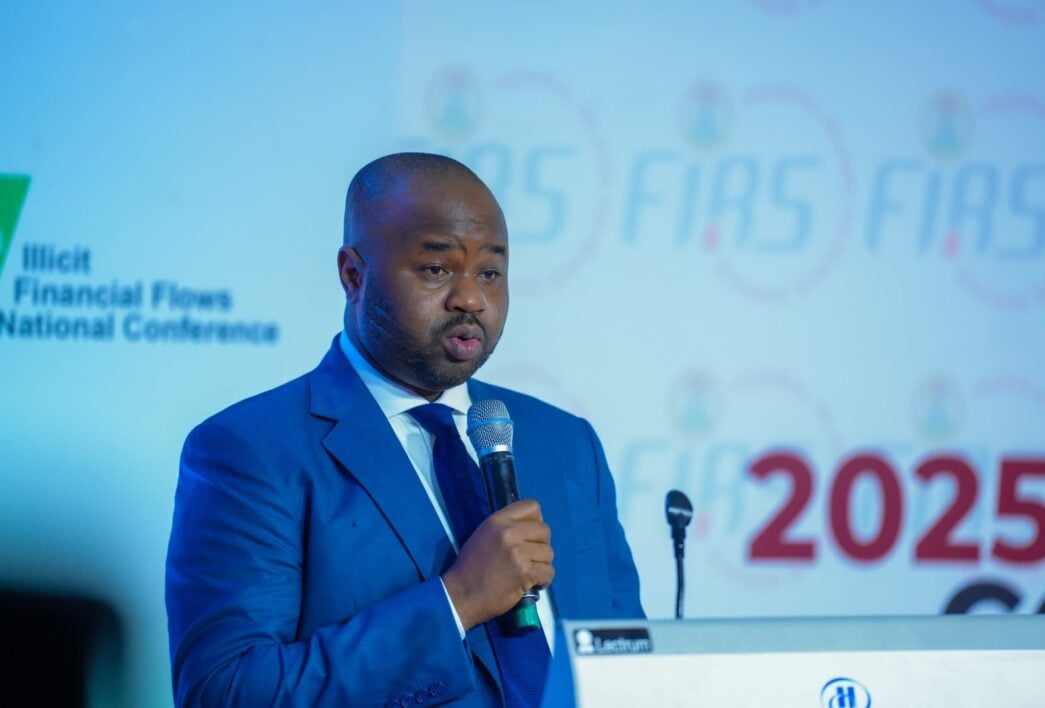
In a moment that blended symbolism with substance, Dr. Zacch Adedeji, Executive Chairman of the Nigeria Revenue Service, stood at the centre of a landmark national milestone, the commissioning of the agency’s new headquarters, a project he framed not simply as infrastructure, but as evidence of a deeper institutional transformation underway in Nigeria.
Measured yet commanding, Adedeji delivered more than a ceremonial address. He presented a sweeping narrative of reform, discipline, and economic recalibration, positioning the new headquarters as a physical embodiment of a renewed fiscal order.
For Adedeji, a technocrat known for his data-driven precision and reformist clarity, the building represents far more than its imposing structure. It is, in his words, a manifestation of a nation choosing discipline over disorder, execution over intent, and structure over fragmentation.
“This is not just a building,” he emphasised. “It is a symbol of a system that is becoming more coherent, more transparent, and more accountable.”
At the heart of his message was a strong endorsement of the sweeping economic reforms under the current administration, which he described as bold, necessary, and historically significant. Nigeria, he noted, had faced a fragile fiscal reality marked by constrained revenues, declining investor confidence, and systemic inefficiencies. What followed, however, was not incremental adjustment but a decisive reset of the country’s economic architecture.
Adedeji’s articulation of this shift was grounded in numbers that underscored the scale of change. From a revenue base of ₦6.8 trillion just five years ago, Nigeria has surged to ₦28.7 trillion in 2025, with a striking 76 percent year-on-year growth recorded in 2024 alone. For him, these figures are not abstract metrics but proof that disciplined reform can yield tangible, sustainable outcomes.
Beyond revenue growth, he pointed to a broader restructuring of fiscal governance. Federation revenues have expanded significantly, while reforms such as the National Single Window have modernised trade processes and reduced inefficiencies. In the energy sector, innovative policies like crude sales in naira have helped reposition the sector from a fiscal strain to a stabilising force.
Calm yet emphatic, Adedeji broke down what he described as three defining policy decisions that reshaped Nigeria’s fiscal trajectory: the removal of fuel subsidy, the unification of exchange rates, and the introduction of crude transactions in naira.
Each, he argued, required political courage and institutional alignment, but together they have restored a level of macroeconomic credibility that Nigeria had struggled to maintain for years.
He painted a stark counterfactual, noting that without subsidy removal alone, Nigeria could have been burdened with tens of trillions of naira in annual costs, consuming the bulk of national resources. Instead, those funds have been freed for broader national priorities.
In presenting these arguments, Adedeji revealed a leadership style that blends technical expertise with persuasive clarity. His references were not rhetorical flourishes but carefully constructed economic scenarios designed to communicate urgency and logic.
Yet, beyond the numbers, his speech carried a deeper institutional message. Reform, he noted, is rarely smooth. It is complex, contested, and often misunderstood at its early stages. But with persistence and alignment, it can produce lasting national value.
That philosophy appears to define his stewardship of the Nigeria Revenue Service. Under his leadership, the agency has not only pursued revenue expansion but has also sought to rebuild trust in public institutions, a goal he described as central to the new headquarters.
The structure itself, spanning three towers and 16 floors with capacity for over 3,000 staff, stands as both a milestone and a mandate. Adedeji was clear that its true value will not lie in its scale, but in its function, the efficiency it drives, the transparency it enforces, and the confidence it builds between government and citizens.
In tone, his remarks balanced institutional pride with forward-looking urgency. The commissioning, he stressed, is not an endpoint but a foundation, a platform from which the next phase of reform must be driven.
Colleagues, partners, and stakeholders received recognition throughout his address, reflecting a leadership approach that acknowledges collaboration while maintaining strategic direction. From policymakers to technical teams, Adedeji framed the achievement as a collective effort anchored in shared national purpose.
Still, the defining thread of his message remained clear: Nigeria is at a pivotal moment, and the choices made today will shape its fiscal future for generations.
In positioning the Nigeria Revenue Service as a central player in that transformation, Adedeji has effectively elevated the agency’s role from revenue collection to institutional leadership within the broader economic reform agenda.
As the ceremony concluded, the significance of the moment extended beyond the unveiling of a new headquarters. It signalled a recalibration of ambition, one that seeks to align systems, strengthen governance, and build a more resilient economic foundation.
For Dr. Zacch Adedeji, the message was unmistakable. Reform is no longer theoretical. It is visible, measurable, and, as the new headquarters now stands to show, firmly under construction in Nigeria’s evolving fiscal landscape.