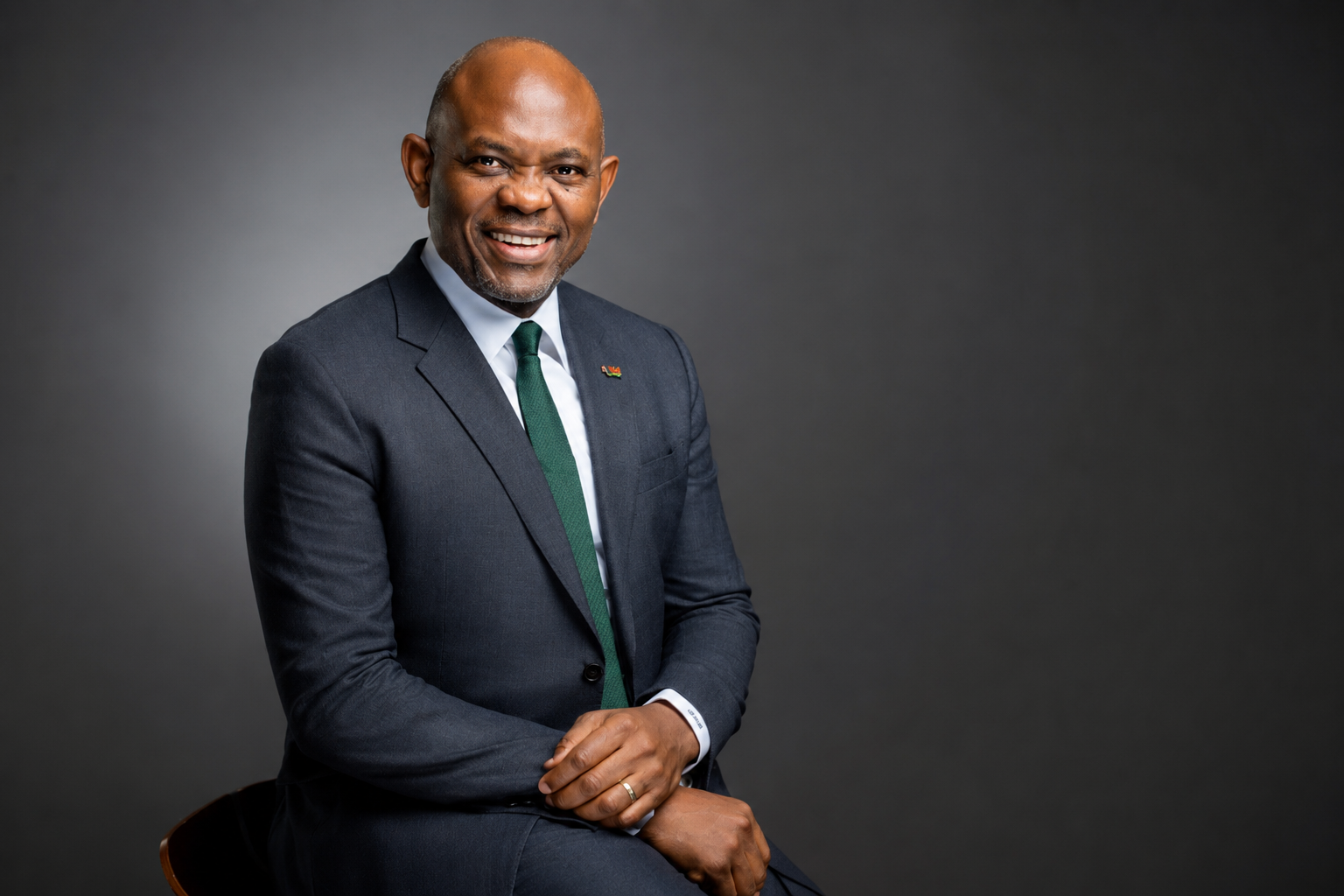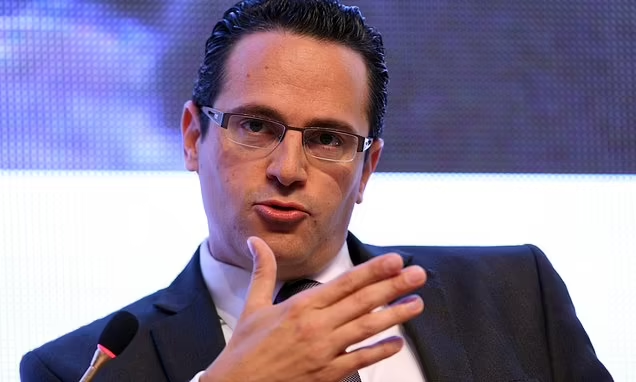
Shell Chief Executive Officer, Wael Sawan joins Francine Lacqua to discuss the oil major’s controversial strategy around the energy transition, and fostering a culture that shifts from “all-knowing” to “all-learning.” He reflects on navigating volatility in the global energy system, emphasizing disciplined decision-making and focusing on what leaders can influence going forward.
In a world where energy markets are increasingly shaped by geopolitics, climate pressure, and technological disruption, leadership in the oil and gas sector has become less about stability and more about constant recalibration. Few executives embody this tension more directly than Wael Sawan, Chief Executive of Shell.
Speaking in a wide-ranging conversation on Leaders with Francine Lacqua, Sawan presents a leadership philosophy rooted in discipline, emotional balance, and a recurring theme: control what you can, and do not get trapped by what you cannot.
At Shell’s helm since 2023, Sawan has overseen a strategic tightening of the company’s focus, emphasizing performance, cost control, and capital discipline. The results, he notes, are already visible in Shell’s relative outperformance against peers in the global oil sector. But beneath the financial metrics lies a more subtle transformation, one that reflects how the world’s energy system itself is being rewritten in real time.
Sawan traces his leadership foundation not to boardrooms, but to family influence and early experiences in sport. His father’s belief that leadership is measured not only in business outcomes but in the lasting impact on people shaped his worldview early on.
That philosophy was tested in formative moments, from captaining a school football team under pressure to navigating early leadership roles at Shell. In one such role, he admits to over-applying textbook management techniques, only to later realize that leadership is not a checklist, but a balance between guidance and restraint.
Over time, he developed a clearer internal framework: when to step in, when to step back, and how to read the emotional and strategic temperature of an organization.
Trained in an engineering culture that values precision and problem-solving, Sawan acknowledges a natural bias toward rational analysis. But he is careful not to separate logic from emotion.
“In tough decisions,” he suggests, “you need both head and heart.”
This duality has become central to his leadership style, particularly as Shell navigates a volatile energy landscape defined by geopolitical shocks, AI-driven demand shifts, and uncertain climate trajectories.
He argues that modern leadership requires a shift from “all-knowing” institutions to “all-learning” organizations. In his view, predictability has given way to complexity, and rigidity has become a liability.
Sawan’s path to the top job at Shell was not defined by certainty, but by gradual realization. During his tenure in Qatar, he began to sense he was being considered for senior leadership, though he never assumed entitlement.
Instead, he describes a persistent internal doubt, believing others were often better qualified. That mindset, while uncomfortable, fostered discipline and a relentless drive to perform.
A turning point came early in his leadership journey when Shell experienced a tragic operational incident under his watch. The loss of colleagues reshaped his understanding of responsibility, accountability, and the human weight of executive decisions.
Under Sawan’s leadership, Shell has made several high-stakes portfolio decisions, including asset sales that have since been debated externally. The 2019 divestment of Permian Basin assets, for example, is often cited as a controversial call given subsequent market developments.
Sawan rejects the framing of regret.
At the time, the decision was driven by balance sheet needs, debt reduction, and portfolio discipline. More broadly, he insists that leadership cannot be anchored in hindsight. Instead, Shell conducts structured post-investment reviews to extract lessons, not to relitigate outcomes.
The same logic applies to exploration decisions, including early exits from assets that later gained strategic value. For Sawan, these are not emotional scars but data points in an evolving system.
One of Sawan’s most pointed arguments is semantic but significant: the world is not undergoing a clean “transition” but rather an “addition” of energy sources.
Oil, gas, renewables, coal, and bioenergy are all being demanded simultaneously, driven by rising global consumption, electrification, and the exponential energy needs of AI and data infrastructure.
In this framing, gas becomes a stabilizing force, particularly liquefied natural gas (LNG), where Shell holds a leading global position. The company’s role, he argues, is to provide reliability in an unpredictable system, not to prematurely abandon core capabilities.
On industry consolidation, Sawan resists the assumption that scale automatically equals success. While acknowledging that size can bring competitive advantages, he warns against M&A driven by ambition rather than value creation.
“Bigger for the sake of bigger is a mistake,” he notes, pointing to the cultural friction and execution risks that often undermine mega-mergers.
At Shell, cultural evolution is a deliberate priority. The company is built on strong values, respect, integrity, and long-term stewardship, but is now pushing toward a sharper performance mindset and deeper organizational integration under the “One Shell” philosophy.
Underlying this is another shift, from engineering certainty to adaptive learning. As artificial intelligence, geopolitical fragmentation, and climate complexity reshape markets, Shell must operate less like a machine optimizing known variables and more like an organism adapting to new ones.
Despite overseeing one of the world’s largest energy companies, Sawan emphasizes control over time and attention as his most important leadership discipline.
His daily structure has shifted from reactive firefighting to intentional decision-making, prioritizing clarity, purpose, and presence. Even routine interactions must have intent, to solve, to decide, or to listen.
That philosophy extends beyond the boardroom. Time with family, exercise, and mental recovery are treated not as luxuries but as operational necessities.
When asked about legacy, Sawan’s answer is institutional rather than personal.
His ambition is not to define Shell, but to leave it stronger than he found it, particularly through leadership development and succession planning. With deep talent pipelines already in place, he sees the organization as an institution designed to outlast individuals.
“We are all replaceable,” he reflects, “but the institution and its values should endure.”
In an industry often defined by cycles of boom and uncertainty, Sawan’s leadership philosophy is anchored in continuity through change, less about predicting the future, and more about building the capability to navigate whatever comes next.