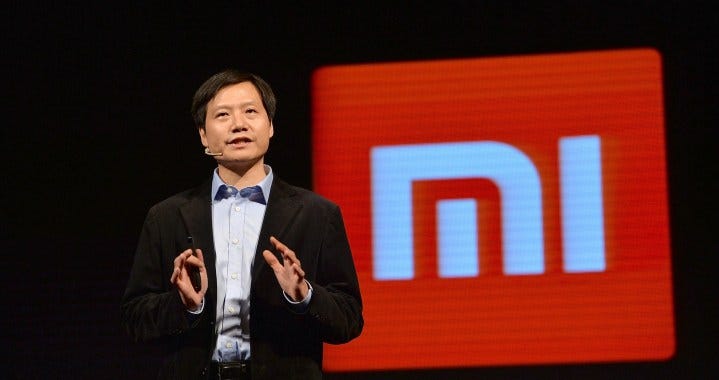
Allan Lam, Chief Financial Officer of Xiaomi, described a company that had moved with such velocity and breadth that it no longer fit neatly into a single industry. What began in 2010 as a smartphone disruptor had, within just 16 years, evolved into a sprawling technological organism spanning mobile devices, smart homes, electric vehicles, artificial intelligence, and humanoid robotics.
In conversation with Nicolai Tangen, CEO of Norway’s sovereign wealth fund, Lam portrayed Xiaomi not as a traditional hardware company, but as what it had increasingly become: a tightly woven “human, car and home ecosystem,” where every product was designed to feed intelligence into the next.
When Xiaomi was founded, it had been a small team chasing a radical idea in a crowded smartphone market: that premium technology did not need premium pricing. Its first phone arrived just a year after inception, an unusually compressed development cycle made possible, Lam said, by China’s deeply mature supply chains and Xiaomi’s own obsession with speed.
That philosophy had remained unchanged even as the company scaled globally. Instead of relying on rigid, standardised component sourcing, Xiaomi had increasingly embedded itself into localised supplier ecosystems, co-developing components in real time. The result, Lam explained, was not just faster production, but a tighter feedback loop between design, manufacturing, and user demand.
Over time, smartphones became only the entry point into a much larger vision. Xiaomi extended its reach into a constellation of connected devices that transformed everyday objects into intelligent systems. Air conditioners, refrigerators, and door locks were no longer static appliances but software-upgradable nodes in a living network. A door unlocking could trigger climate control. A user’s habits could shape device behaviour. The home itself became adaptive.
This shift marked Xiaomi’s transition from product maker to systems architect.
But the company’s boldest leap came in 2021, when it entered the electric vehicle industry. Less than three years later, it unveiled its first car in 2024, compressing what typically takes a decade of automotive iteration into a fraction of the time. Lam attributed this to what he called “China speed,” a combination of industrial depth, engineering density, and organisational intensity that allowed parallel development across software, hardware, and manufacturing.
Xiaomi did not approach cars as mechanical products, but as computing platforms wrapped in steel and motion. Its engineering focus centred on software-defined driving systems, battery intelligence, and integrated user experience. While it outsourced portions of hardware production, it concentrated internal resources on core technologies such as electric motor design, battery architecture, and assisted driving systems.
The scale of internal commitment was striking. Around 3,000 engineers were deployed to develop the first vehicle alone, a workforce Lam noted was roughly ten times larger than many early-stage automotive peers. The strategy was not diversification but concentration: one car, heavily resourced, deeply optimised.
Demand for Xiaomi’s first vehicle exceeded expectations. Tens of thousands of orders were placed within minutes of launch. Many buyers, Lam said, were already Xiaomi smartphone users who had never tested the car physically but trusted the brand enough to commit instantly. That loyalty, he argued, had been built over years of delivering consistent value under what the company called “honest pricing.”
At the centre of Xiaomi’s culture stood founder Lei Jun, a figure Lam described as intensely product-driven and almost compulsively detail-oriented. Lei had personally tested more than 150 car models and required executives to deeply understand the machinery they built. Before the car launch, senior leaders had driven thousands of kilometres in prototype vehicles and obtained professional racing licences, not as symbolism but as enforced product immersion.
This philosophy extended into Xiaomi’s robotics programme, where humanoid systems had been in development since 2019. Unlike its consumer products, however, these robots were initially confined to internal manufacturing environments. Their purpose was not market disruption but operational refinement, improving factory efficiency through precision, repetition, and consistency.
Lam described robotics as a frontier still constrained by data scarcity. While artificial intelligence systems had been trained extensively on text and language, the physical world remained comparatively under-modelled. Xiaomi’s approach was to deploy robots in controlled industrial settings, generating real-world motion data to gradually close that gap.
Artificial intelligence had already become the invisible backbone of Xiaomi’s operations. It was embedded across software development, sales forecasting, marketing generation, supply chain optimisation, and manufacturing inspection. In one instance, the company simulated more than 100 material combinations for vehicle components before using AI systems to identify optimal structural performance. In factories, computer vision replaced manual inspection, scanning components at speeds and consistency levels human operators could not match.
Recently, Xiaomi introduced its own large language model, released as open source. Lam said the decision reflected a broader strategic belief: intelligence systems improve faster when exposed to external developers, ecosystems, and adversarial use cases. Rather than sealing its AI within proprietary walls, Xiaomi had chosen to expand its learning surface area.
This openness mirrored its broader ambition. With hundreds of millions of connected devices already in circulation, Xiaomi had positioned itself as one of the few companies capable of building a continuous feedback loop between human behaviour and machine intelligence at global scale.
In Europe, the company had already established itself as a major smartphone player alongside Apple and Samsung, and was preparing to enter the electric vehicle market. A research centre in Munich, staffed with automotive engineers, had been established to accelerate localisation and innovation. Concept vehicles had already been showcased in European markets, signalling long-term intent rather than opportunistic expansion.
Lam acknowledged that European automakers still led in traditional automotive excellence, particularly in driving dynamics and brand heritage. But he argued that the centre of gravity in the industry was shifting. The future, he suggested, would be defined less by mechanical mastery and more by software intelligence and ecosystem integration.
As the conversation turned to the broader trajectory of technology, Lam described a world increasingly shaped by physical AI systems, where intelligence would not remain confined to screens or servers but would inhabit homes, vehicles, and machines. Xiaomi’s ambition, he said, was to connect all three.
What emerged from the discussion was a portrait of a company operating at the intersection of speed and scale, discipline and experimentation, hardware and intelligence. Xiaomi was no longer simply building devices. It was constructing an interconnected environment where phones, homes, cars, and robots were becoming extensions of a single adaptive system.
And at the centre of it all was a simple but ambitious idea: that technology, when tightly integrated and relentlessly refined, could begin to anticipate life itself.