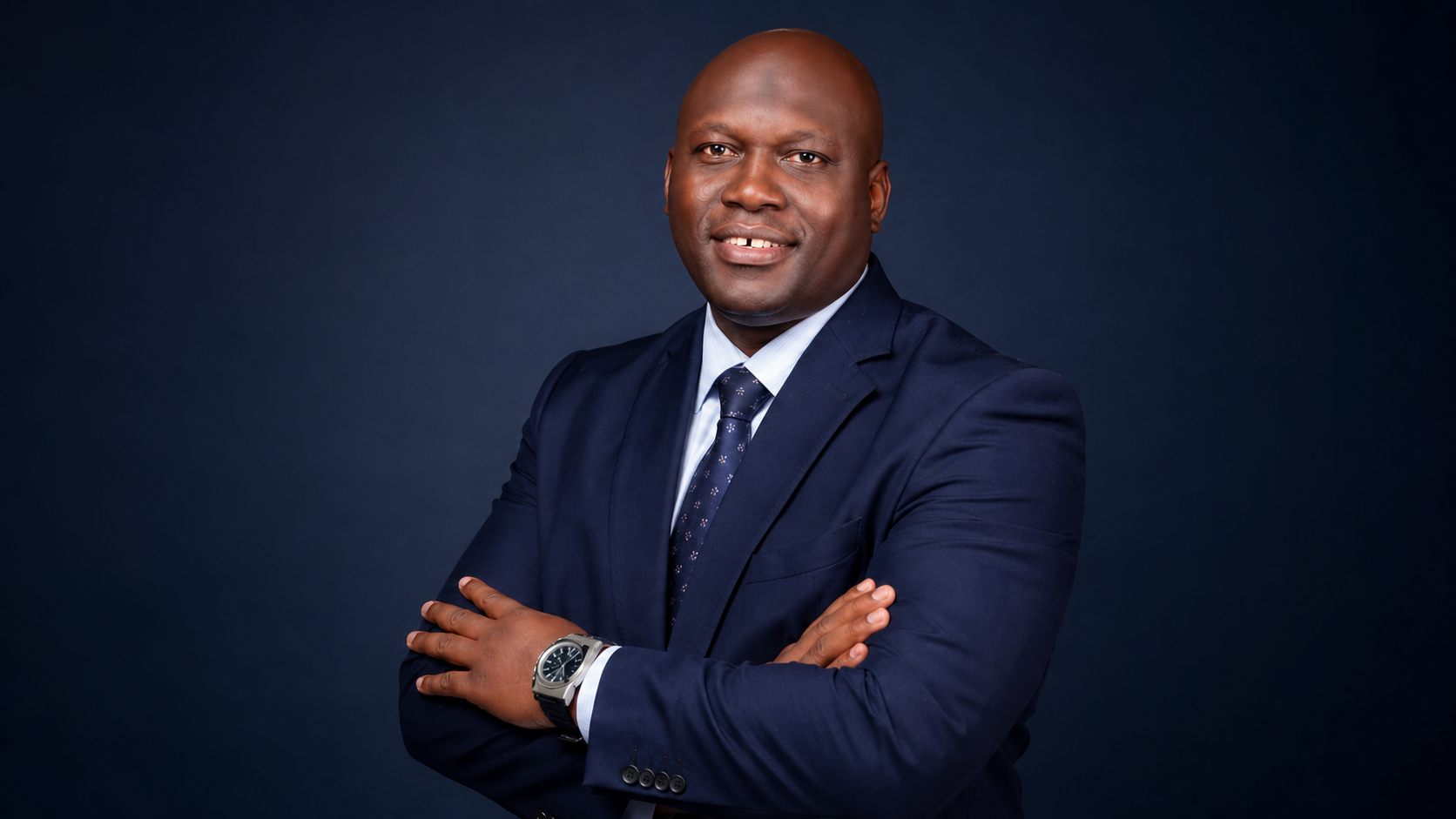
Few entrepreneurs of the modern digital era have matched the pace, scale, and audacity of Marc Lore. A billionaire founder, visionary builder, and co-owner of the Minnesota Timberwolves, Lore has built a career not just on launching companies, but on redefining entire industries. From reshaping e-commerce to reimagining how cities and food systems could function, his trajectory reads less like a traditional business journey and more like a continuous act of reinvention.
On stage, he carries none of the theatrics often associated with high-profile founders. Instead, there is a calm intensity, the kind that reflects someone perpetually in motion. It’s a reputation captured memorably by Walmart CEO Doug McMillon, who once described Lore as “a shark that has to keep swimming.” Lore’s reaction to the quote is understated, almost amused. Yet, in many ways, it perfectly encapsulates the restless drive that has defined his career.
Lore’s entrepreneurial story began early, but it was his breakout successes that cemented his legacy. He built Diapers.com into a dominant online retailer before selling it to Amazon. He followed that with Jet.com, a bold challenger to Amazon that ultimately sold to Walmart in a multi-billion-dollar deal. At Walmart, Lore didn’t simply integrate, he transformed its e-commerce operations, helping reposition the retail giant for the digital age.
Now, with Wonder, he is once again attempting to disrupt a familiar industry, this time food and dining. And beyond that, his ambitions stretch even further, toward Telosa, a conceptual “city of the future” designed to rethink how urban living could function in a more equitable, technology-driven world.
Yet, beneath the scale of these ventures lies a philosophy that is surprisingly simple and brutally honest.
“If I had to sum it up,” Lore says, “the biggest difference between entrepreneurs and everyone else is this: are you willing to work 100 hours a week for something that has a low probability of success?”
It is a stark framing. In Lore’s view, entrepreneurship is not defined by vision alone, but by a willingness to endure uncertainty at an extreme level. While many are comfortable working hard within predictable systems, salaries, bonuses, and structured outcomes, true builders operate in a space where the odds are often discouragingly low.
That mindset, he argues, is what separates aspiration from execution.
It also explains his approach to risk, one that runs counter to conventional thinking. Where most people see safety in maintaining the status quo, Lore sees hidden danger.
“The status quo is often much riskier than people think,” he explains. “And people overestimate the risk of change.”
This belief has shaped some of the most critical decisions of his career. At Wonder, for instance, the company initially deployed hundreds of mobile kitchen trucks designed to cook meals on-site and deliver them fresh to customers. It was an ambitious and innovative model, one that delivered an exceptional customer experience. But the economics didn’t hold.
Faced with mounting realities, Lore made a decision few founders would dare to take. He shut down the core model, accepted a loss of roughly $100 million, and pivoted the company toward a new direction.
It was, by any measure, a high-stakes gamble. But in Lore’s calculus, the greater risk was continuing down a path he knew would fail.
“If you’re truly objective,” he says, “and you know something isn’t going to work, then any alternative with even a small chance of success is better.”
Objectivity, in his view, is one of the rarest and most critical traits in entrepreneurship. Many founders, he notes, overestimate their position and cling to flawed strategies far longer than they should. The ability to confront reality, even when it is uncomfortable, often determines survival.
That same discipline extends to how Lore approaches capital. Over the course of his career, he has raised more than $3 billion in venture funding. Yet, contrary to the caution often preached in startup circles, he dismisses one of the most common founder anxieties: dilution.
“I never think about dilution,” he says plainly. “The question is whether the capital you raise can grow the value of the business more than the percentage you’re giving up. In my experience, the answer is almost always yes.”
It’s a perspective that reframes fundraising not as a defensive exercise, but as a strategic lever for growth.
Behind all of this is a system Lore calls VCP, Vision, Capital, and People. It is not just a framework but a daily operating philosophy. Inside Wonder, this thinking is made literal through a dedicated room filled with whiteboards mapping out every dimension of the business, from strategy and metrics to organizational structure and culture.
Lore spends the majority of his time there, refining, adjusting, and stress-testing ideas with his leadership team.
“Once you get VCP right and you have the right people,” he says, “that’s when the magic happens.”
For early-stage founders, his advice is both practical and uncompromising. Focus less on doing the work yourself and more on building the systems and teams that can scale it. If you find yourself buried in day-to-day execution, he argues, it is often a sign that the right people are not yet in place.
And while the modern startup landscape is increasingly shaped by artificial intelligence, Lore’s guidance remains grounded in fundamentals.
“Yes, companies today need to be AI-native,” he acknowledges. “You can build more with fewer people. But at the core, nothing has changed. You still need to solve real problems and execute better than anyone else.”
Beyond strategy and systems, however, there is a more personal dimension to his philosophy. When asked what advice he gives to young people searching for direction, his answer is direct.
“Follow your passion,” he says. “Because to commit at this level, to work that hard for something uncertain, you have to love it. Otherwise, you’ll take the exit ramp.”
It is perhaps the simplest idea he shares, yet also the most difficult to live by.
Looking back, Lore admits there is one lesson he would offer his younger self: commit fully, but wisely. In his early days, he invested nearly everything he had into his ventures, a move he now describes as both defining and risky.
The principle, however, still stands. Entrepreneurs, he believes, need skin in the game, enough to eliminate easy escape routes and force complete commitment.
That relentless commitment is what ties together every chapter of his career. From e-commerce disruption to food innovation to futuristic city-building, Lore’s ventures may differ in form, but they are united by a singular mindset: build boldly, adapt quickly, and never stand still.
In an era where many chase trends, Marc Lore continues to do something far more demanding, and far more rare. He keeps swimming.