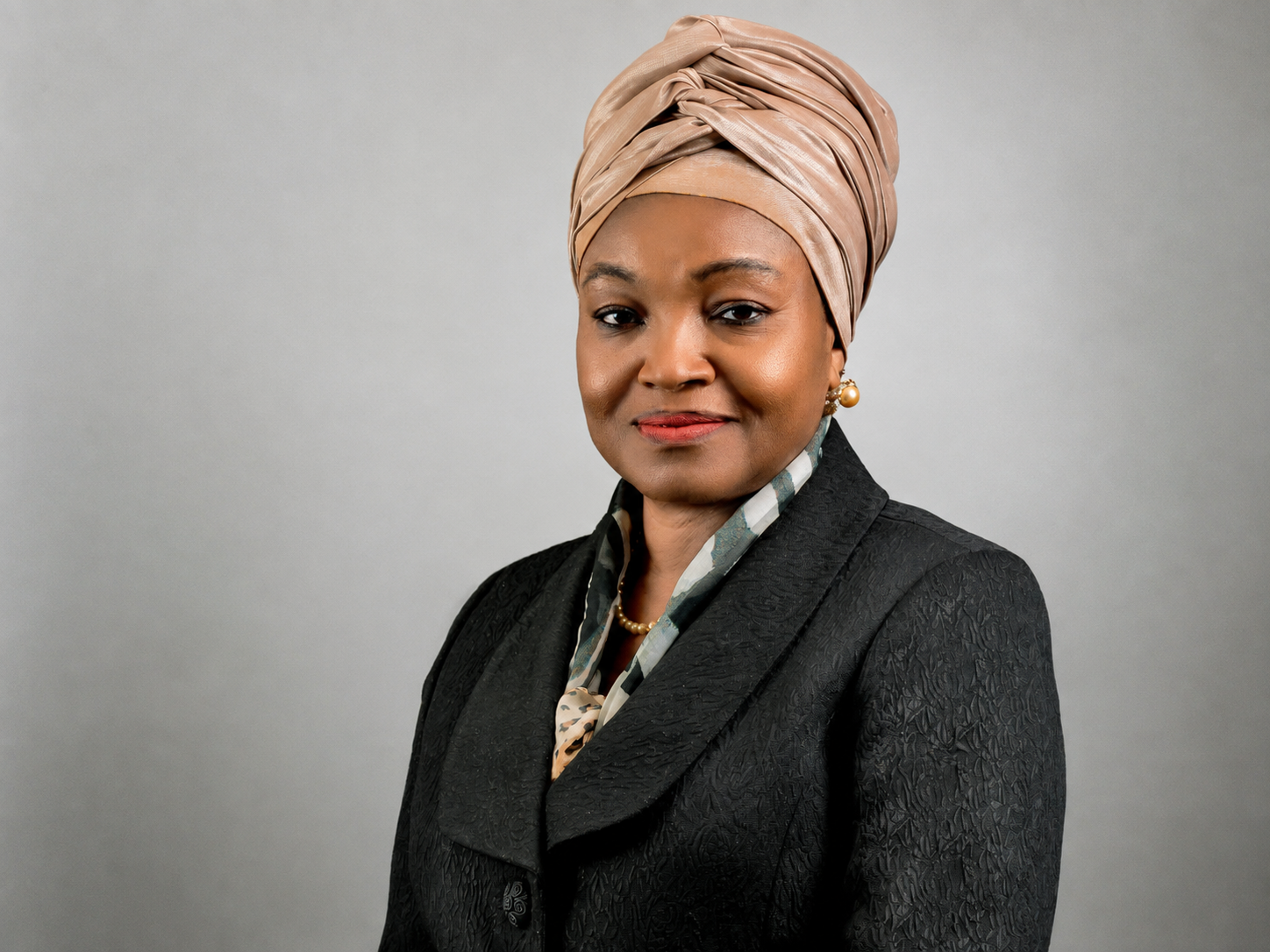
Some careers are defined by titles. Others are defined by the institutions they transform, the people they inspire and the systems they help change. Funke Osibodu’s career belongs firmly in the second category.
For more than four decades, she has navigated Nigeria’s banking, corporate and economic landscape as a banker, chief executive, boardroom leader, mentor and advocate for institutional reform. Her journey has taken her from the early days of Nigeria’s modern banking industry to the leadership of three major banks, the transformation of a power distribution company and influential roles in education, economic policy and corporate governance.
She is the only Nigerian to have served as Chief Executive Officer of three banks, MBC International Bank, Ecobank and Union Bank, a distinction that reflects the breadth of her experience and the confidence placed in her ability to lead institutions through periods of uncertainty and change.
Today, her influence continues through the boardroom. She chairs the Advisory Board of the University of Lagos Business School, serves on the Board of Trustees of Elizade University and sits on the Advisory Board of the Nigerian Economic Summit Group (NESG), where she previously served as Vice Chairman. She has also joined the board of Fidelity Bank Ghana as a non-executive director.
Her corporate governance experience cuts across banking, insurance, payments, pensions, stockbroking, trusteeship and real estate. Her previous appointments include the African Finance Corporation, HFC Bank Ghana, Union Bank UK and the Shell Nigeria Closed Pension Fund, where she served as an independent external director from 2015 to 2024.
But the real story of Osibodu is not the impressive list of positions she has held. It is what she did with each opportunity.
YOU CAN ALSO READ: Dangote Refinery IPO Set to Make African Capital Markets History – Vusi Thembekwayo
Long before the boardrooms and executive offices, Osibodu experienced a failure that could easily have altered the course of her life. As a university student, she failed her first year and had to repeat it after falling short in an elective course. Instead of allowing the experience to define her negatively, she turned it into a personal doctrine. She calls it her “never again” moment.
The lesson was simple: preparation matters, responsibility matters and important things should never be left to chance. That mindset became a recurring feature of her career. For Osibodu, failure is not necessarily defeat. The real failure is experiencing a setback and emerging from it without learning anything. “They are costly only if you don’t learn from it.”
Osibodu’s early professional years exposed her to several financial institutions, including Chase, Nigerian Acceptances and Citibank. At Chase, an unexpected turn of events gave her an early lesson in leadership. When her manager left to pursue further studies, Osibodu was handed responsibilities beyond her formal level. Rather than seeing the additional workload as a burden, she saw it as an accelerated education.
The experience helped shape one of the principles she would later pass on to generations of young professionals: employment offers more than one form of compensation. There is money, but there is also experience.
“Never ever go for cash in life,” she advises. “If you go for experience, you will always be able to cash in on that experience.”
Rather than waiting for promotion before assuming greater responsibility, she advocates learning the job of the person above you and preparing for responsibilities one or two levels beyond your current position. The point, she says, is not to compete with one’s superior but to become capable enough that leadership cannot ignore one’s potential.
Her time at Citibank placed her close to a major period of change in Nigerian banking. At the time, many banking processes were still highly manual, with customers sometimes spending hours moving from one desk to another to complete routine transactions.
Citibank introduced systems that dramatically streamlined these processes. For Osibodu, the significance went beyond faster customer service. It demonstrated the power of technology and process redesign to challenge assumptions that had become accepted as normal.
She also witnessed developments around commercial paper and interbank settlement, including collaboration between financial institutions and the Central Bank that helped move the industry towards faster settlement systems. The experience reinforced a lesson that would follow her throughout her career: real transformation happens when people, institutions and regulators are willing to rethink how things are done.
Osibodu eventually moved from observing transformation to leading it. As CEO of MBC International Bank from 1996 to 2002, she took responsibility for steering a financial institution at a relatively young age. She went on to lead Ecobank from 2002 to 2006 and later became CEO of Union Bank from 2009 to 2012.
Each institution presented different challenges, but together the roles established her as one of Nigeria’s most experienced banking executives. Her career demonstrates that leadership is not simply a transferable title; it is a transferable discipline. The ability to understand systems, manage people, respond to regulation, serve customers and make decisions under pressure can travel from one institution to another, and even from one industry to another.
Osibodu would prove that when she left banking for the power sector. In 2013, she became CEO of BEDC Electricity Plc, taking responsibility for a privatised electricity distribution company.
On the surface, the move represented a dramatic departure from banking. For Osibodu, however, the industries were not as different as they appeared. The same principles applied: financial discipline, systems thinking, customer service, regulation, people management and organisational performance. “Every single thing I learned in banking was relevant and it made a lot of difference.”
Her years in the power sector deepened her understanding of Nigeria’s structural challenges. Problems such as payment culture, infrastructure maintenance, technical and commercial losses, incentives and the relationships among different actors could not be solved through isolated interventions. They required the entire value chain to function better.
Perhaps the strongest thread running through Osibodu’s career is her investment in people. She has consistently treated leadership as more than managing an institution. To her, leadership also means creating the next generation of capable professionals.
During her time at Ecobank, she helped build a strong pipeline of young talent, with thousands of young people entering the institution and receiving training for professional careers. Many of those people would later rise into senior positions themselves.
That, arguably, is one of the most powerful measures of her legacy. Institutions change CEOs. People carry lessons for decades. For Osibodu, a leader should therefore ask not only, “What did I achieve?” but also, “Who became better because I was here?”
Her message to young professionals remains consistent: become useful, remain relevant, keep learning and do not become obsessed with instant success. “Enjoy the ride. Worst case you fail. Best case it propels you into something.”
Osibodu’s career has also given her a distinctive platform in conversations about women and leadership. Her own experience demonstrates that professional ambition and family responsibilities do not necessarily have to be mutually exclusive. She acknowledges the demands involved and the importance of supportive relationships, planning and the ability to multitask.
But she rejects the idea that women should automatically limit their ambitions because of family responsibilities. Her mentoring of women has consequently focused on preparation as much as encouragement. Women need to understand the realities of demanding professional environments, develop competence, build support systems and remain confident enough to pursue leadership.
For Osibodu, breaking barriers is not simply about demanding that doors be opened. It is also about preparing oneself to walk through them when they are.
Her involvement with the Nigerian Economic Summit Group reflects another dimension of her leadership: the belief that business leaders have a role in shaping the environment in which businesses and citizens operate.
Through the NESG, she participated in efforts to strengthen dialogue between the private sector and government and to encourage reforms capable of supporting sustainable economic growth. Her approach to national development is practical rather than abstract: identify the problem, bring together people who can help and start solving it.
She does not believe Nigeria must wait for government alone before meaningful change can begin. “There’s a lot we can do as a private sector to change Nigeria.”
For Osibodu, Nigeria’s youthful population should not be viewed primarily through the lens of unemployment or social pressure. It is an enormous economic opportunity. She argues that universities, businesses and private-sector institutions can do much more to create entrepreneurs, develop skills and build enterprises capable of employing others.
The logic is simple but powerful. One young entrepreneur creates a business. That business creates jobs. Those employees support families. The families participate in the economy. The impact multiplies.
Perhaps the most revealing aspect of Osibodu’s story is the way she interprets the events of her life. Some of the experiences that initially looked like disappointments eventually became opportunities.
A failed university year became a lesson in discipline. An unexpected increase in responsibility became an accelerated education. A career move became an opportunity to acquire new skills. A transition from banking into electricity demonstrated that leadership principles could cross industries.
A long executive career eventually evolved into a boardroom career focused on governance, education and institutional development. In retrospect, the connections become clearer. But Osibodu’s philosophy suggests that people should not wait until the future makes sense before embracing the present. Sometimes the significance of an opportunity is only visible years after it has been taken.
YOU CAN ALSO READ: Dangote Refinery IPO Set to Make African Capital Markets History – Vusi Thembekwayo
Now, after decades in executive leadership and corporate governance, Osibodu is in a position where her influence extends beyond any single institution. Her work in education, economic advocacy, governance and the private sector continues to create platforms through which others can contribute.
Her appointment to the board of Fidelity Bank Ghana adds another chapter to a career that has crossed institutions, industries and national boundaries. Yet her preferred definition of legacy is strikingly uncomplicated: helping young people grow and changing the landscape for young people.
She also finds satisfaction in knowing that some of the innovations and institutional changes she helped introduce have become part of everyday life, even when few people remember who was involved at the beginning.
That may be the most enduring lesson from her career. Impact does not always come with applause. Sometimes it is embedded quietly in a better system, a stronger institution, a more confident professional or a young person who eventually becomes a leader.
Funke Osibodu’s story is therefore less about the offices she has occupied than the possibilities she has created. Her career offers a different definition of leadership: take responsibility before you feel completely ready, learn from failure, embrace change, develop people and use every position as an opportunity to leave something better behind.