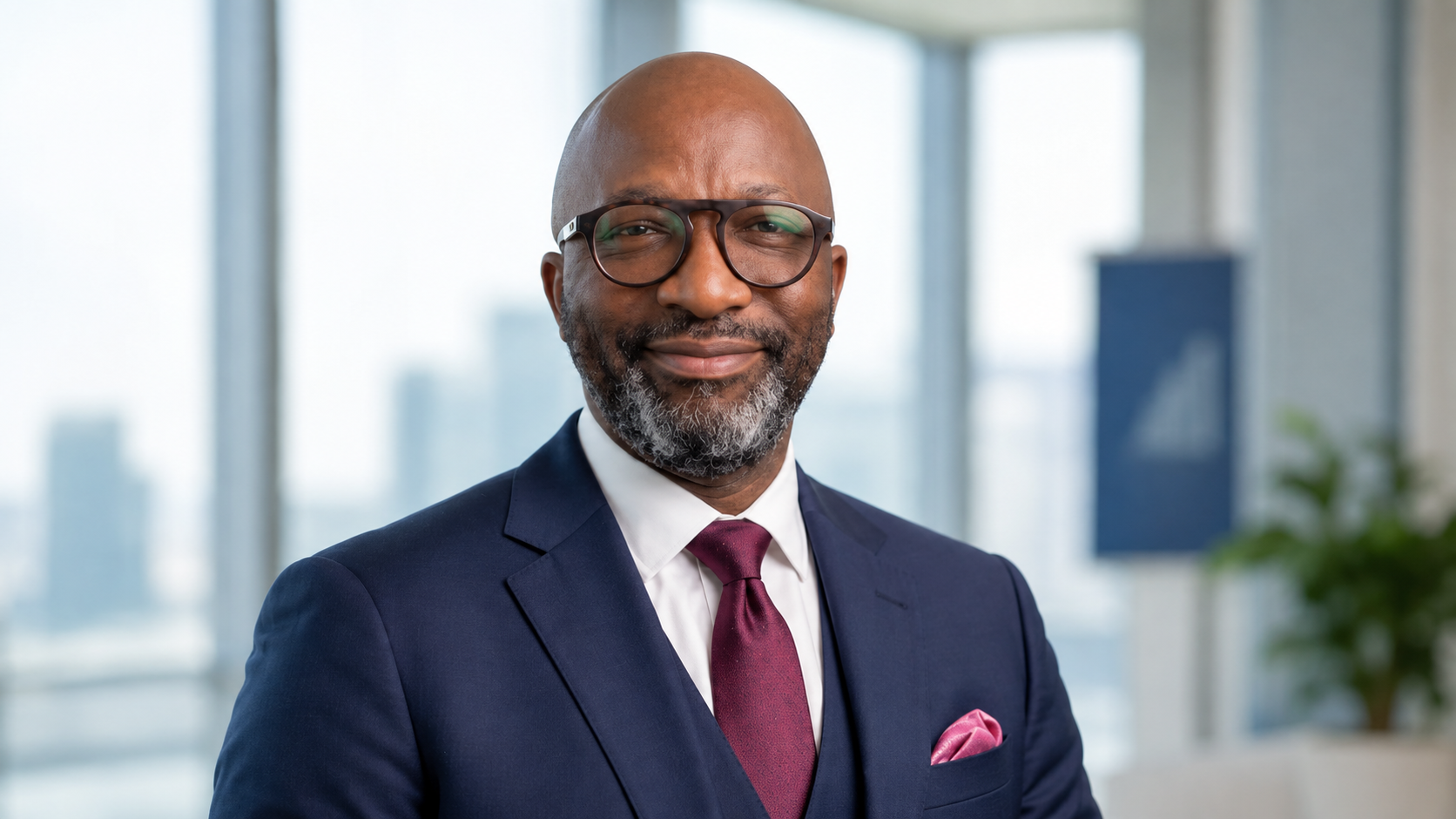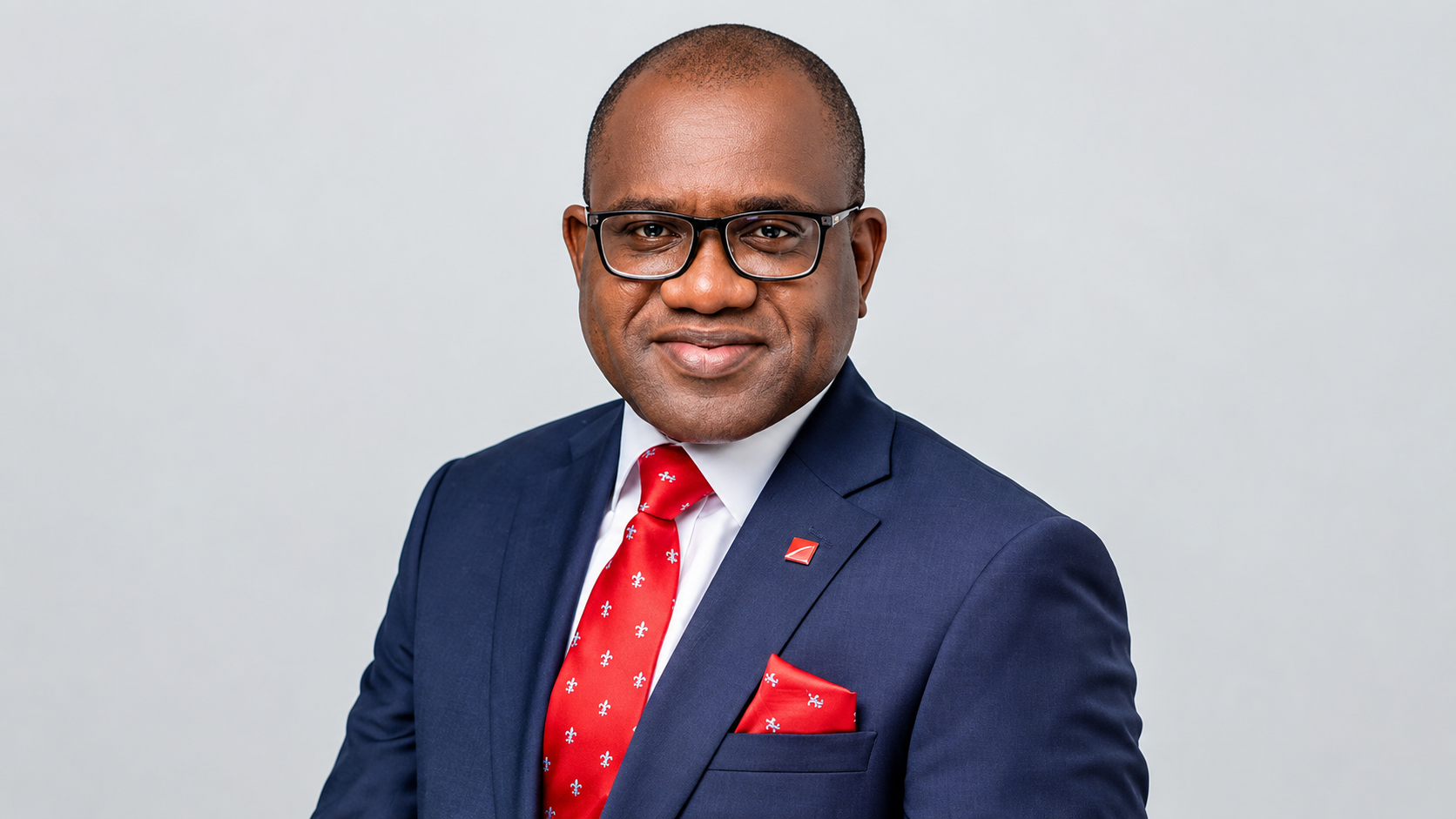
Eight years after taking the helm of United Capital, Group Chief Executive Officer Peter Ashade is overseeing a transformation that has taken the company from a four-business Nigerian capital market operator into a diversified financial services group with seven businesses, two associates and operations spanning 12 African countries.
There was something symbolic about the setting. On a morning when heavy rain could easily have emptied a room, analysts, investors, financial journalists, shareholders and other stakeholders still gathered to listen to Peter Ashade, Group Chief Executive Officer of United Capital Plc, explain what is fueling the company’s growth and where the institution is headed next.
The occasion was United Capital’s first physical investor and analyst roundtable, a departure from the virtual quarterly calls stakeholders had become accustomed to. For Ashade, the decision was deliberate. A company undergoing significant transformation, he suggested, required a different form of engagement. “If you want a different result, you do it differently,” was the philosophy behind the gathering.
Ashade’s own journey at United Capital began in July 2018. He recalled arriving at a company whose share price subsequently fell from about ₦3.30 to approximately ₦2.87 in the months following his assumption of office. It was hardly the sort of beginning that suggested the scale of transformation that would follow, but Ashade saw potential in the institution and that conviction became part of the culture he sought to establish.
Eight years later, the numbers tell a different story. United Capital has evolved from what Ashade described as a four-business capital market operator into a diversified financial services group with seven businesses and two associates. Its activities now span investment banking, asset management, trusteeship, securities, wealth management, consumer finance and microfinance/digital banking.
The group also holds 25 percent stakes in Heirs Life Assurance and Heirs General Insurance and recently acquired a 5 percent stake in Nigerian Exchange Group, a move Ashade described as strategic. The transformation, however, is not merely about adding businesses; it represents a fundamental change in the architecture of the organisation.
YOU CAN ALSO READ: Connecting Africa to Opportunity: Sunil Taldar’s Vision for Airtel Africa
United Capital now operates across multiple regulatory environments and has expanded beyond the traditional boundaries of a capital market operator. At its centre is an operating holding-company structure, with investment banking at the core and the various businesses positioned around it. For Ashade, this is the “new United Capital.”
Perhaps nowhere is the scale of the transformation more visible than in the group’s assets under management. When Ashade and his team were developing their strategy in 2018, United Capital had less than ₦100 billion in total funds under management. The ambition was to reach ₦1 trillion by 2027. The target was achieved five years ahead of schedule, with the group crossing ₦1 trillion in 2022 and reaching approximately ₦2.2 trillion to ₦2.3 trillion by 2026, according to Ashade.
For him, the acceleration was not accidental. It reflected a corporate culture built around three values: execution, excellence and entrepreneurship. Of the three, execution appeared to occupy a particularly important place in Ashade’s philosophy. Ideas, he argued, only become meaningful when organisations have the discipline to implement them. That philosophy has influenced everything from business expansion and product development to corporate structure and talent development.
Perhaps the most revealing part of Ashade’s remarks was not about revenue, assets or share price. It was about people. He repeatedly emphasised that United Capital’s transformation was not the work of one individual but a collective effort involving the company’s leadership and employees.
His personal ambition, he said, is to look back five or ten years from now and see that a significant proportion of CEOs across the Nigerian capital market emerged from United Capital. Rather than judging his legacy solely by the size of the balance sheet, Ashade appears interested in the number of leaders the institution produces.
Every management meeting, he explained, should also be viewed as a training opportunity. The objective is to ensure that employees become better professionals and leaders than they were when they joined the organisation. He pointed to the emergence of former United Capital executives into leadership positions elsewhere, including the appointment of a former group treasurer as CEO of Custodian Asset Management.
Another defining feature of the United Capital story is the company’s approach to product development. Ashade said the group deliberately moved away from thinking primarily in terms of products and began thinking in terms of solutions. The distinction is important: a product can exist because a company wants to sell something, while a solution exists because a customer has a problem that needs to be addressed.
That customer-first philosophy has shaped the group’s expansion into new business lines. The consumer finance business, for instance, was initially expected to mature over a three-year period before the group launched its microfinance operation as a digital bank. Its performance prompted the group to accelerate that timeline.
The broader lesson is that United Capital’s expansion has not been based solely on adding businesses for the sake of diversification. Each new business is expected to respond to a market need while strengthening the wider ecosystem.
Perhaps the most consequential shift in United Capital’s strategy has been geographical. Eight years ago, the company was fundamentally a Nigerian institution. Today, Ashade describes it as an organisation driven by a Pan-African vision. United Capital now operates in 12 African countries, with further expansion under consideration.
Its entry into Rwanda and Ethiopia illustrates the deliberate nature of that strategy. Ashade said United Capital became the first African financial services institution to register in both markets, describing the Ethiopian entry in particular as significant because no Nigerian bank was operating there at the time.
But the group’s African strategy is not based simply on population size. Ashade challenged the conventional tendency to judge African markets primarily by population. Rwanda, with its relatively small population, illustrates his point. For United Capital, the question is not simply how many people live in a market, but what economic value, institutional quality, technology infrastructure, governance and investment opportunities exist within it.
That perspective has shaped the group’s approach to expansion. United Capital, Ashade insisted, is not rushing across the continent indiscriminately. It has developed a playbook to guide market entry and investment decisions. The objective is disciplined expansion rather than expansion for its own sake.
There is also a broader national dimension to the strategy. Ashade said United Capital does not see its African expansion simply as an effort to represent itself. The company also sees itself as representing Nigeria and contributing to the broader integration of African financial markets. For him, Africa is no longer a future opportunity. Africa is now.
The group’s expanding portfolio also serves another strategic purpose: diversification. United Capital operates across both capital-market and money-market opportunities, meaning its earnings are not dependent on a single market cycle. When equities and other capital market activities perform strongly, the group can benefit; when interest rates and money market opportunities become more attractive, other parts of the business can generate value.
This diversification, Ashade argued, gives United Capital greater resilience regardless of where the market cycle moves. It also creates opportunities for cross-business synergies, resulting in a financial services group with multiple engines of growth rather than a single source of earnings.
The transformation has also translated into significant shareholder returns. Ashade said an analysis commissioned by him showed that shareholder wealth had increased by more than 2,500 percent over the preceding eight years. The group has also moved from a period when it did not traditionally pay interim dividends to consistently paying interim dividends in recent years.
For Ashade, shareholder value remains central to business decisions. He expressed the view that United Capital remains undervalued and said he expects the company’s market valuation to better reflect its underlying prospects as its strategic initiatives mature.
If the first eight years were about building the foundation, Ashade appears to believe the next phase will be about exploiting it. He described the organisation as being in a period of retooling, particularly across technology, people, governance and business structure.
The group has strengthened its risk-management architecture as its geographic footprint and technological exposure have expanded. It has also elevated research and investor relations, including the creation of a stronger research-oriented investor relations function and the appointment of a chief economist.
The reasoning is straightforward: an African financial services group operating across multiple markets requires a deeper understanding of economies beyond Nigeria. United Capital’s research output has consequently broadened to cover African markets, providing investors with analysis intended to support decision-making across the continent.
Ashade also acknowledged a fundamental change taking place across the business environment: the accelerating impact of artificial intelligence. The era when companies could confidently work with ten-year strategic plans, he suggested, is disappearing. Even five years can now seem too long because technology can alter markets, customer behaviour and competitive dynamics within months or even weeks.
That means strategy itself must become more adaptive. For United Capital, the response is continued investment in technology, constant validation of assumptions and a willingness to adjust as the operating environment changes. The message is clear: the institution cannot afford to run tomorrow’s business with yesterday’s tools.
Ashade offered a strong signal of confidence when he spoke about what lies ahead in the second half of 2026. He indicated that a series of new initiatives would be introduced between August and December, covering new products, technology and other aspects of the group’s operations.
YOU CAN ALSO READ: From a $15 Million UBA Deal to a $250 Million Exit: Hakeem Belo-Osagie’s Story
For investors and analysts, those announcements could provide a clearer picture of how the new United Capital will translate its expanded capabilities into future earnings. For the media, Ashade had an equally direct message: the story of United Capital should no longer be viewed through the lens of the company that existed in 2018. That company, he argued, has changed.
The most striking element of Ashade’s presentation was perhaps the scale of the ambition. United Capital is positioning itself not simply as a larger Nigerian financial services company, but as an institution capable of participating meaningfully in Africa’s evolving financial ecosystem.
That ambition could eventually include the acquisition of a commercial bank, although Ashade presented this as a future possibility rather than an immediate transaction. The philosophy underpinning the ambition is simple: if something can be envisioned, it can be achieved—but only if the organisation builds the structure and executes the strategy required to make it real.
Eight years ago, United Capital’s story was largely Nigerian. Today, it is increasingly African. Its assets under management have moved from less than ₦100 billion to more than ₦2 trillion; its business lines have expanded from four to seven, supported by two associates; and its geographic footprint now covers 12 African countries.
Its leadership pipeline is being deliberately developed, its governance and risk structures have been strengthened, and its technology infrastructure is being retooled for a more unpredictable future. But Ashade appears unwilling to treat these achievements as the destination. For him, they are evidence that the foundation works.
The next test is whether the institution can use that foundation to build something considerably larger. As the rain fell outside the room where he laid out United Capital’s strategy, Ashade’s message was ultimately less about celebrating how far the company had come than preparing stakeholders for where it intends to go. The old United Capital, he suggested, has already served its purpose.